




Search keywords:
product name, product type, model number,
test method, manufacturer, technique, application
-
Cone Calorimeter
The import of American VTEC, cone calorimeter ultra high cost performance
more
-
Digital Elmendorf Tearing Tester
Pendulum method test material tear strength, operating more simple, more accurate data
more
-
ZwickiLine Materials testing machines
Top of the world's leading universal material testing machine
more
Sweating Thermal Manikin System
BACK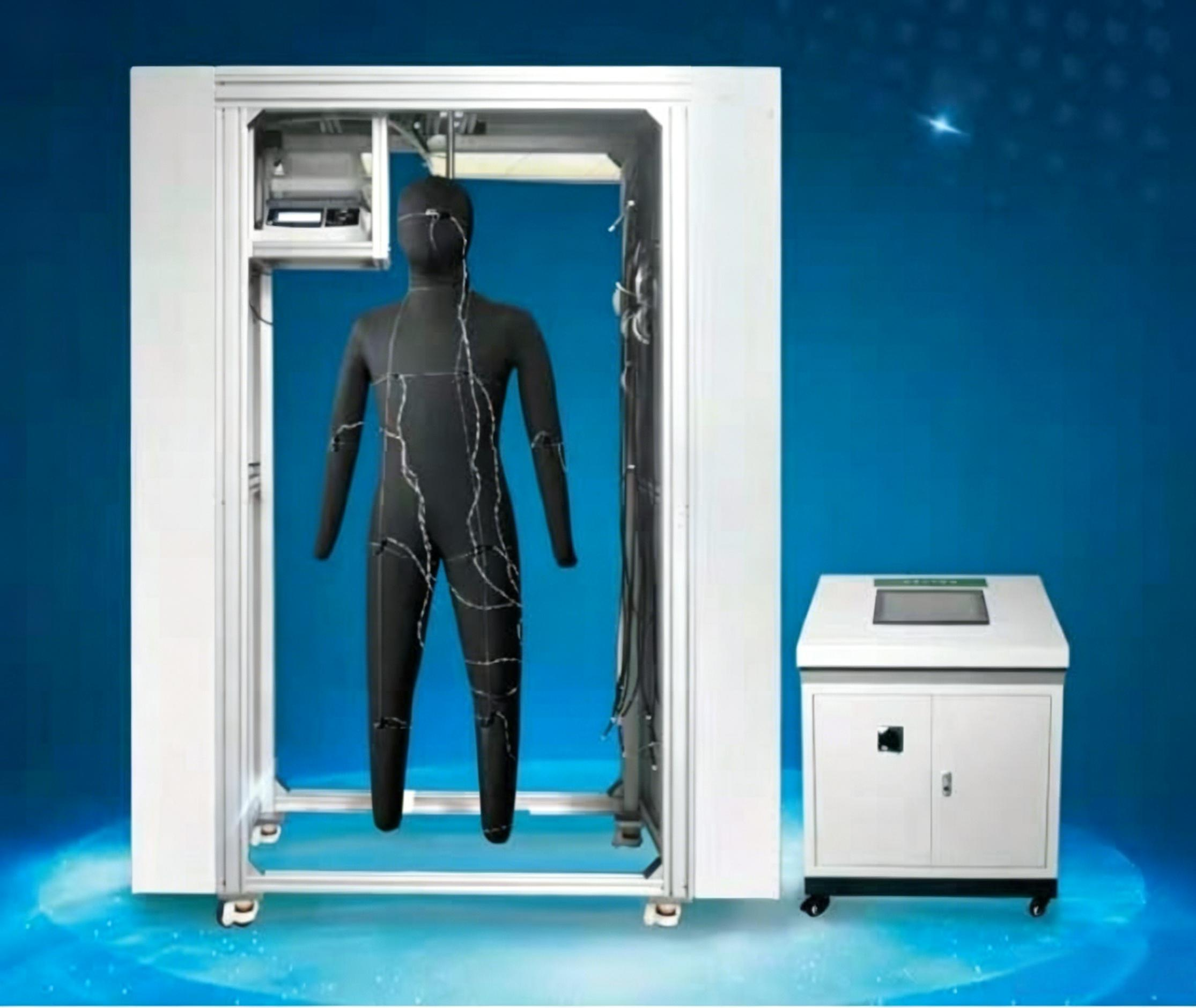


Standards:
Applications:
1. Clothing and Textile Industry
Thermal and Moisture Resistance Evaluation
The system is used to measure the thermal and evaporative resistance of garments under both static and dynamic conditions. It evaluates the breathability and sweat-wicking performance of clothing, and assesses the body’s thermal balance in extreme environments such as cold, hot, or high-humidity conditions.
2. Automotive and Transportation Cabin Testing
The system simulates human thermal sensation inside vehicle cabins to evaluate:
Heating and cooling performance of automotive air-conditioning systems
Airflow distribution and ventilation design
Overall thermal comfort for passengers
This helps optimize HVAC system efficiency and improve in-vehicle environmental comfort.
3. Building and HVAC (Heating, Ventilation, and Air Conditioning)
Indoor Thermal Comfort Evaluation
The system is used to assess how indoor temperature, humidity, and air velocity affect human thermal comfort and perceived hot/cold imbalance.
It supports the optimization of:
Building heating systems
Ventilation layouts
Air-conditioning system design
Energy-efficient indoor climate control strategies
4. Human Physiology and Ergonomics Research
Thermoregulation Model Validation
The system integrates with computational human thermoregulation models to study physiological responses under various conditions, including:
Sweating behavior
Vasoconstriction and vasodilation
Thermal response under different exercise intensities
Human adaptation in extreme climates
This provides valuable data for human physiology research, ergonomics design, and environmental adaptation studies.
Product Information:
The Sweating Thermal Manikin System is a high-precision testing device designed to simulate the human body’s thermoregulation and sweating physiological mechanisms. It consists of a thermal manikin body, a heating control system, and a biomimetic sweating system. The system is primarily used to objectively evaluate the thermal insulation performance of clothing, moisture and breathability characteristics, as well as the thermal comfort of indoor environments.
Product Function
The Sweating Thermal Manikin System is designed for measuring and evaluating the thermal and moisture comfort performance of textiles, garments, as well as dynamic thermal environments inside automobiles and aerospace vehicles.
Under controlled environmental conditions, the system simulates the dry heat transfer processes between the human body, clothing, and surrounding environment through conduction, convection, and radiation, as well as the wet heat transfer process caused by evaporative sweating. It provides a scientific and comprehensive evaluation of the overall thermal performance of garments and environmental conditions.
By eliminating the need for human subject testing, the system enables the quantification and standardization of comfort perception data with high testing accuracy and excellent repeatability. It can effectively support the research and development as well as production of functional fabrics and apparel, while also being used to analyze the influence of environmental conditions on human comfort and determine environmental parameters that satisfy human thermal comfort requirements.
Test Principle
The manikin is designed with the same shape and dimensions as an adult human body. Its “skin” is made of a material containing microporous structures (invisible to the naked eye), which retains water inside the body while allowing moisture to evaporate through the surface to simulate human sweating.
The manikin is placed inside a climatic chamber with controlled temperature, humidity, and airflow conditions. The garment ensemble to be tested is worn on the manikin in the same manner as actual use. The interior of the manikin is filled with water to closely replicate the moisture distribution and body
contour of a real human, while maintaining a body weight similar to that of an actual person, neither excessively light nor heavy. Through a water circulation system, heated water from the central torso area is distributed proportionally throughout the body to simulate the natural temperature distribution of the human body.
Dry heat exchange between the manikin, clothing, and environment occurs through conduction, convection, and radiation, while wet heat exchange is achieved through evaporative sweating. By measuring the average skin temperature of the manikin, ambient temperature, heating power, heat generated by the pump system, evaporative heat loss, and sweat rate per unit time, the system can evaluate thermal comfort performance accurately. Unlike most existing thermal manikins, it requires only a single testing procedure to measure the two most important clothing comfort parameters — total thermal resistance and evaporative resistance.
Technical Specifications
|
No. |
Specification Item |
Description |
|
1 |
Manikin Size |
The manikin is designed based on the average height of an Asian adult male: 172–175 cm. |
|
2 |
Standard Measuring Zones |
≥22 standard measuring zones. |
|
3 |
Segment Area |
Head: 1391 cm²; Chest: 1880 cm²; Back: 1780 cm²; Abdomen & Hip: 1808 cm²; Thigh: 1696 cm² ×2; Lower Leg: 1203 cm²; Foot: 572 cm² ×2; Arm: 1234 cm² ×2. |
|
4 |
System Features |
The system adopts a water circulation structure combined with waterproof and moisture-permeable simulated skin. The simulated skin is replaceable and consists of a PTFE membrane with microporous structures, capable of accurately simulating non-uniform sweating at different perspiration levels. The entire system is easy to disassemble, maintain, and move as a whole unit. |
|
5 |
Joint Connections |
The manikin includes articulated joints at the shoulders, hips, knees, elbows, and ankles. |
|
6 |
Heating Method |
Water circulation heating system. The interior of the manikin is filled with water to closely replicate the moisture contour and weight distribution of the human body, ensuring realistic body mass simulation. Heated water from the central torso area is proportionally distributed throughout the body via the circulation system to simulate natural human body temperature distribution. |
|
7 |
Measurement Principle |
One-step measurement method capable of simultaneously determining the two key clothing comfort parameters: total thermal resistance and evaporative resistance. |
|
8 |
Standard Clothing Size |
Medium size (M) standard garment set. |
|
9 |
Core Temperature Range |
37 ± 0.1°C. |
|
10 |
Temperature & Humidity Sensors |
Equipped with 21 temperature sensors and 11 humidity sensors for precise skin temperature measurement and environmental monitoring. Temperature sensor accuracy: ±0.1°C; Humidity sensor accuracy: ±3% RH. |
|
11 |
Maximum Heating Power |
2200 W/m² under normal operating conditions. |
|
12 |
Environmental Requirements |
Operating temperature: 10–80°C; Relative humidity: 20%–98%. |
|
13 |
Equipment Dimensions |
Large Water Tank: 1250 × 600 × 700 mm; Main Unit & Suspension Device: 1630 × 600 × 2050 mm; Control Cabinet: 800 × 500 × 1100 mm. |
FAQ
1. What is a Sweating Thermal Manikin System?
A Sweating Thermal Manikin System is an advanced testing device used to simulate human body heat and perspiration. It evaluates the thermal insulation, breathability, and moisture transfer performance of clothing, protective garments, and textiles under controlled environmental conditions.
2. What is the working principle of the system?
The system uses a life-sized thermal manikin equipped with independently controlled heating zones and a built-in perspiration (sweating) function. Each body segment can simulate human skin temperature and sweat rate. By placing garments on the manikin inside a climatic chamber, the system measures heat loss, evaporative resistance, and overall thermal comfort performance.
3. What parameters can the system test?
The Sweating Thermal Manikin System can evaluate multiple physiological and thermal comfort indicators, including:
Thermal insulation (clo value)
Evaporative resistance
Heat flux distribution
Local and whole-body heat loss
Moisture permeability and sweat evaporation efficiency
4. Which standards does it comply with?
The system typically complies with international testing standards such as:
ASTM F1291 (Thermal resistance of clothing using a heated manikin)
ASTM F2370 (Evaporative resistance of clothing using a sweating manikin)
ISO 15831 (Clothing — Physiological effects — Measurement of thermal insulation)
ISO 9920 (Estimation of thermal insulation and evaporative resistance)
5. What industries use this system?
The Sweating Thermal Manikin System is widely used in:
Functional and sportswear testing
Military and police protective clothing development
Firefighter protective gear evaluation
Outdoor and extreme environment apparel design
Automotive HVAC comfort testing
Textile and fabric R&D laboratories
