



Search keywords:
product name, product type, model number,
test method, manufacturer, technique, application
-
Cone Calorimeter
The import of American VTEC, cone calorimeter ultra high cost performance
more
-
Digital Elmendorf Tearing Tester
Pendulum method test material tear strength, operating more simple, more accurate data
more
-
ZwickiLine Materials testing machines
Top of the world's leading universal material testing machine
more
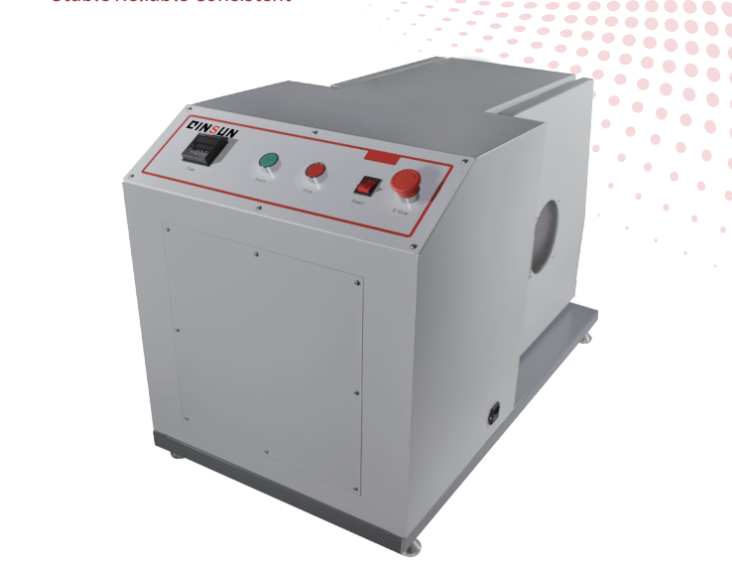
Hexapod Tumbler
BACK

Standards:
BS EN 1471: 1997,ISO 9405: 2001, IWS test methods 247 & 251,ISO 10361: 2000 (BS), Wools of New Zealand test methods 247 & 251.
Applications:
The Hexapod Tumbler Tester is a popular apparatus used in the evaluation of the appearance retention of carpets.
Widely used in the evaluation of the appearance retention of carpets
Can test with underlay underneath the carpet
Provides a rapid method of test - completion within one working day
Product Information:
The G301 Hexapod Tumbler test machine uses a steel ball with spikes or a hexagonal stand to randomly roll inside a rotating drum, with carpet textile samples laid inside. After testing according to standard requirements, changes in appearance are observed. The rollers of the Hexapod Tumbler test machine use a reciprocating motion principle to provide a more realistic representation of pile conditions, effectively controlling production and verifying product performance.
Method
Specimens of carpet are fastened to a flexible backing sheet with double-sided adhesive tape. This assembly is fitted on the inside surface of the drum and can easily be removed at any stage for inspection of the specimens under test. If required, an underlay may be fitted beneath the carpet for direct comparison with normal use.
Details
The drive to the drum incorporates a reversing mechanism to give more realistic pile disturbance, and the required number of revolutions may be preset on a revolution counter. The 3.8kg tumbler has six polyurethane stud feet.
The carpet specimens are treated for 2.000 revolutions, which takes approximately one hour. They are then taken out of the drum on their backing sheet and cleaned using an upright vacuum cleaner simulating practical usage. The specimens are replaced and the treatment repeated, normally six times, giving a total of 12.000 revolutions. After the final vacuum cleaning, the change in appearance is assessed against an appropriate set of ISO reference scales.
The method of test meets the requirements of:
ISO 9405. BS EN 1471 Assessment of appearance change including details of scales (ISO 9405).
BS ISO 10361 Production of changes in appearance by means of Vettermann Drum and Hexapod Tumbler Tester.
Features
Hexapod Foot Design: Six polyurethane feet (3.8 kg total) mimic human walking pressure.
Reciprocating Drum: Rotates at 35 ±2 RPM to simulate bidirectional traffic.
Substrate Testing: Accommodates steel balls or textile samples in the 200 mm deep chamber.
Digital Control: Touchscreen panel for cycle preset, speed adjustment, and real-time monitoring.
Easy Maintenance: Quick-release hexapod feet and corrosion-resistant stainless steel drum.
Wall Thickness: 8 mm drum construction ensures durability.
Technical Parameters
| Parameter | Specification |
|---|---|
| Control Panel | Touchscreen Timing Module |
| Hexapod Foot Weight | 3.8 kg (Six Polyurethane Feet) |
| Power Consumption | 0.5 kW |
| Rotational Speed | 35 ±2 RPM |
| Drum Internal Depth | 200 ±1 mm |
| Cycle Counter Range | 0–999.999 (Presettable) |
| Wall Thickness | 8 mm (Stainless Steel) |
| Power Supply | AC 220V ±10%, 50Hz |
| Dimensions (L×W×H) | 900 mm × 500 mm × 570 mm |
| Net Weight | 75 kg |
| Safety Cover |
Hinged with Sensor Interlock |
Test Procedures
Use double-sided tape to attach the carpet sample to the elastic backing. Then secure it together inside the drum and remove it at any time during testing. A backing can be added under the carpet if needed.
The roller uses a reciprocating motion mechanism to provide a more realistic pile condition. The required number of rotations can be preset using a rotation counter. The 3.8kg roller has six polyurethane feet (these feet can be replaced if damaged, severely worn, or after two years of use).
The carpet sample undergoes 2000 rotations, which takes approximately one hour. Then, remove the carpet sample and clean it using a vacuum cleaner to simulate real-world use. Replace the sample and repeat the process, typically six times, for a total of 12000 rotations.
After the final cleaning, evaluate the appearance change according to the ISO reference chart.