





Successful Installation of Computer-Controlled Torsion Testing Machine in the Me
2026/09/09
Share:

Customer Background
The customer is a professional company in Aldevia specializing in the manufacturing of precision mechanical components and metal products. The company primarily manufactures industrial fasteners, torsion shafts, metal connectors, and other mechanical transmission components, which are widely used in automotive components, industrial equipment, and automated machinery.
With the continuous growth of its export business, the customer had increasingly higher requirements for the consistency of mechanical properties and quality control of its products. The original manual torsion testing method was gradually unable to meet the requirements of production quality control in terms of testing efficiency, data recording, and test result repeatability. Therefore, the customer planned to introduce a computer-controlled torsion testing system.
Problems and Pain Points
Before purchasing the equipment, the customer was mainly facing the following challenges:
1. Low Testing Efficiency
The original testing process relied mainly on manual operation and was relatively time-consuming, making it difficult to meet the testing requirements for large batches of products.
2. Non-Standardized Test Data Recording
Some test results were recorded manually, which could lead to missing data or recording errors and made subsequent quality traceability more difficult.
3. Insufficient Test Result Repeatability
Different operators could have variations in loading speed and operating methods, which might result in certain deviations in test results.
4. Lack of Comprehensive Data Analysis Capabilities
The customer wanted to monitor testing parameters such as torque and torsion angle in real time and automatically analyze the test results.
5. Increasing Quality Control Requirements
As the customer's requirements for product reliability increased, the company needed to establish a more standardized and digitalized torsional performance testing process.
Solution: Computer-Controlled Torsion Testing Machine
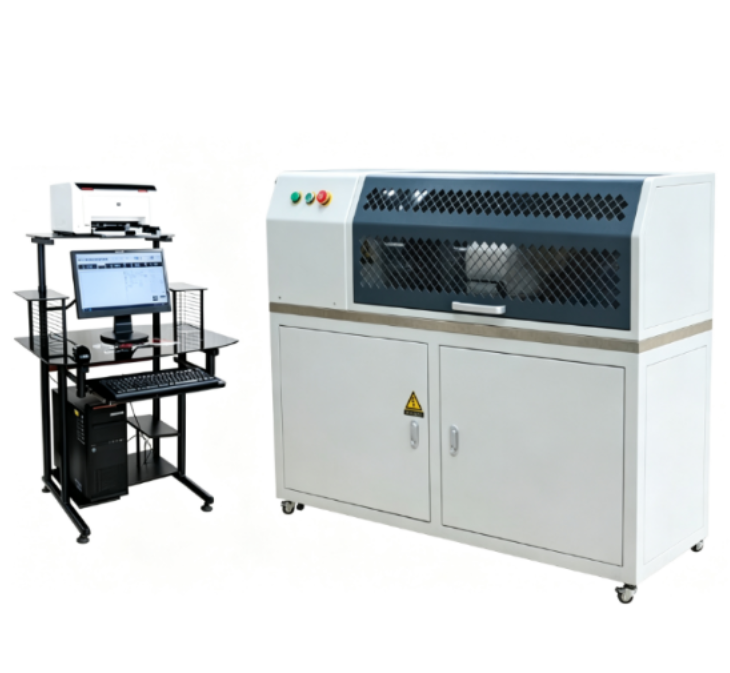
Based on the customer's actual requirements, we recommended and supplied a Computer-Controlled Torsion Testing Machine.
The machine is equipped with a computer control system that allows the required testing parameters to be set according to different testing requirements and enables automatic control of the testing process. During testing, the machine can collect relevant test data in real time and display test curves and results through the computer software.
To meet the customer's requirements for batch testing, we provided targeted configurations for the fixtures, testing programs, and operating procedures, enabling the machine to accommodate torsional performance testing of mechanical components with different specifications.
After installation, our technical engineers provided on-site training for the customer's operators, covering:
Basic equipment operation
Specimen installation and clamping
Test parameter settings
Torsion testing procedure operation
Test data storage and export
Daily maintenance and safe operation
Equipment Advantages and Application Results
After being put into operation, the equipment has been mainly used for testing the torque, torsion angle, and torsional performance of the customer's mechanical components.
Main Advantages
1. Computer-Controlled Operation
The testing process is controlled by a computer system, reducing the influence of manual operation on test results.
2. Adjustable Testing Parameters
Testing parameters can be configured according to different products and testing requirements, improving the equipment's applicability to various testing tasks.
3. Real-Time Data Acquisition
Test data is collected in real time during the testing process, with test results displayed dynamically.
4. Test Curve Display
The software displays test curves, making it easier for engineers to analyze the torsional performance of products.
5. Improved Testing Efficiency
Compared with traditional manual testing methods, the equipment can significantly improve testing efficiency for batch products.
6. Better Data Traceability
Test data can be stored and organized systematically, facilitating quality management and product traceability.
After implementation, the customer has applied the machine to incoming material inspection, in-process quality control, and finished-product performance testing, effectively improving the standardization of its laboratory testing procedures.
Key Problems Solved
Through the installation of the equipment, the customer was able to address the following key challenges:
Improved the relatively low efficiency of traditional manual torsion testing;
Reduced the influence of operator-to-operator differences on test results;
Achieved computer-controlled testing processes;
Improved the recording and management of test data;
Enhanced the consistency and traceability of torsional performance test results;
Provided a more stable testing method for quality control of batch-produced products;
Helped establish a more standardized mechanical performance testing process.
Customer Feedback
The customer's engineering department expressed satisfaction with the overall operation of the equipment and noted that the computer-controlled system made the torsion testing process more intuitive and standardized.
The customer's project manager commented:“The computer-controlled system has made our torsion testing process more efficient and standardized. The test data is easier to record and analyze, which has improved our quality control workflow.”
The customer plans to further expand the scope of mechanical performance testing on its production lines and is considering adding corresponding testing fixtures and testing programs for different product series in the future.
Previous: Electric Rubbing Colour Fastness Tester Installation in Kalantana
N e x t : the last page
