





Kinematic Viscosity Tester Successfully Installed in UAE
2026/09/22
Share:

Customer Background
The customer in this project is located in Abu Dhabi, UAE, and is mainly engaged in the R&D, production, and quality testing of industrial lubricants, engine oils, and hydraulic oils. Its products are supplied to local automotive repair companies, industrial equipment companies, and energy-related enterprises.
As the number of product types continued to increase, the customer needed to conduct more stable and accurate kinematic viscosity testing on different batches of lubricants to determine whether the products met internal quality control requirements and relevant testing standards.
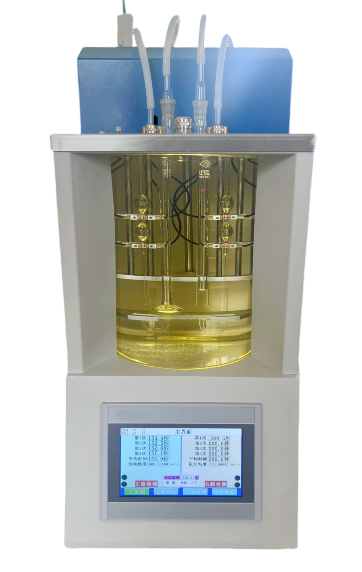
After technical consultations with several suppliers, the customer finally decided to purchase an Automatic Kinematic Viscosity Tester for routine quality testing in its laboratory.
Problems and Pain Points
Before purchasing the equipment, the customer mainly faced the following challenges:
1. Numerous Manual Operating Steps
Traditional kinematic viscosity testing involves manual timing, recording, and data organization. The skill level and operating habits of different technicians may affect testing efficiency.
2. Need for Improved Test Repeatability
Due to differences in testing habits among operators, some test results showed a certain degree of variation. The customer wanted to improve the consistency of test results.
3. Limited Sample Testing Efficiency
As the number of lubricant products increased, the laboratory needed to test multiple samples every day. Traditional testing methods made it difficult to meet the growing testing requirements efficiently.
4. Inconvenient Data Recording
The customer wanted to reduce manual data recording and make test data easier to save, retrieve, and use for quality analysis.
Solution: Automatic Kinematic Viscosity Tester
Based on the customer's laboratory testing requirements, sample types, testing volume, and laboratory workflow, we recommended an Automatic Kinematic Viscosity Tester.
Before installation, we communicated with the customer's engineers to confirm the laboratory space, power supply conditions, operating environment, and equipment requirements. We also provided the operating instructions and relevant technical documents in advance.
After the equipment arrived in Abu Dhabi, the customer's technical personnel cooperated with the installation process. After installation, the equipment was basically commissioned, and actual lubricant samples were used for testing to help the customer become familiar with the equipment's operating procedures.
Through its automated testing process, the equipment reduces manual operating steps, makes kinematic viscosity testing more standardized, and improves the efficiency of routine laboratory testing.
Equipment Advantages and Application Results
1. Automated Testing Process
The equipment reduces manual timing and operating steps, making the testing process more convenient and suitable for continuous sample testing in the laboratory.
2. Improved Test Repeatability
Through relatively stable testing conditions and automated operation, the equipment helps reduce variations caused by manual operation and improve the consistency of test results between different batches of samples.
3. Improved Testing Efficiency
Compared with traditional manual operation, automated testing reduces the operating time required for individual samples, enabling the laboratory to complete routine quality testing more efficiently.
4. Suitable for Various Lubricant Tests
The customer mainly uses the equipment to test the kinematic viscosity of engine oils, industrial lubricants, hydraulic oils, and other samples, providing test data for product R&D and production quality control.
5. Convenient Laboratory Quality Management
Test results can be recorded and organized in a more systematic manner, helping the customer establish a more standardized laboratory testing process.
Key Problems Solved
After the equipment was put into operation, it mainly helped the customer solve the following problems:
Reduced manual timing and operating steps;
Improved the efficiency of kinematic viscosity testing;
Improved testing consistency among different operators;
Met the requirements for routine testing of various lubricant products;
Reduced the workload associated with manual data recording;
Provided more stable testing data for product quality control and R&D.
At present, the equipment has become an important part of the customer's lubricant quality testing process in the laboratory.
Customer Feedback
The customer's technical manager stated that the equipment installation and commissioning process went smoothly, and operators were able to perform routine testing after brief training.
The customer particularly appreciated the equipment's automated testing process. Compared with the previous manual operation workflow, routine testing is more convenient, while the workload associated with timing and data recording has also been reduced.
The customer stated that as the lubricant product line expands and laboratory testing requirements increase, they will consider purchasing additional testing equipment in the future to further improve their laboratory quality testing system.
Previous: Bulk Density Tester Successfully Installed in the Mineral Materials Industry in
N e x t : the last page
