




Search keywords:
product name, product type, model number,
test method, manufacturer, technique, application
-
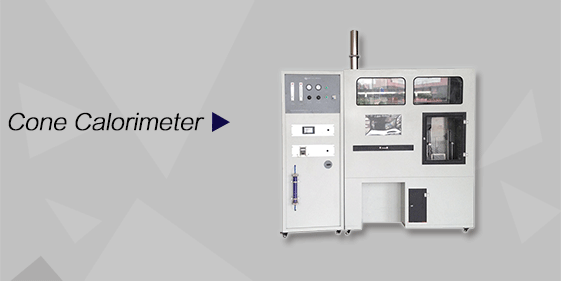
Cone Calorimeter
The import of American VTEC, cone calorimeter ultra high cost performance
more
-
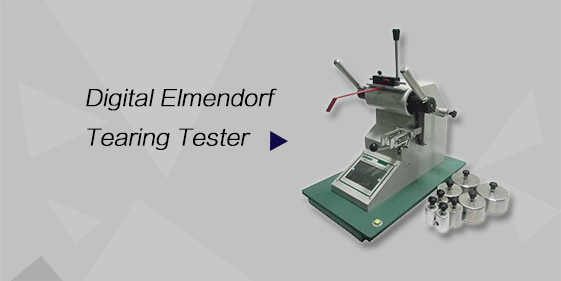
Digital Elmendorf Tearing Tester
Pendulum method test material tear strength, operating more simple, more accurate data
more
-
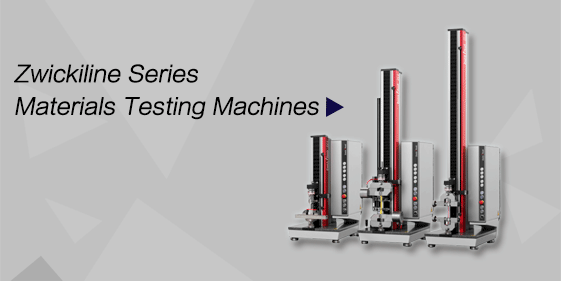
ZwickiLine Materials testing machines
Top of the world's leading universal material testing machine
more
Simple Porometer
BACK


Standards:
Applications:
The unique features of the instrument, especially its ability to generate highly reproducible data quickly, make it highly suitable for quality control and process control operations. The instrument is used in these applications in a wide variety of industries.
Product Information:
Principle
A wetting liquid is allowed to spontaneously fill the pores in the sample and a nonreacting gas is allowed to displace liquid from the pores. The gas pressure and flow rates through wet and dry samples are accurately measured. The gas pressure required to remove liquid from the pores and cause gas to flow is given by
D = 4 γ cos θ / p
where D is the pore diameter, γ is the surface tension of liquid, θ is the contact angle of liquid, and p is the differential gas pressure. From measured gas pressure and flow rates, the pore throat diameters, pore size distribution, and gas permeability are calculated.
Capabilities
● Diameter of the most constricted part of a through pore (pore throat)
● Mean flow pore diameter (50% of flow is through pores smaller than the mean flow pore)
● Bubble Point (the largest through pore throat diameter)
● Pore diameter range
● Pore distribution:
· f = -d[(fw/fd) x 100] / dD
· fw = flow rate through wet sample
· fd = flow rate through dry sample
● Gas permeability in many desired units including Frazier, Gurley, Rayl & Darcy
Features
Fully Automated and User-Friendly
Only a few minutes per test
Preset test parameters
Very little operator time and involvement
Ideal for quick generation of highly reproducible data
Variety of sample shapes and sizes
Very little maintenance
Real-time graphical display
Windows-based software for all control, measurement, data collection, data reduction, and report preparation
Technical Parameters
| Items | Parameters |
| Pressure Accuracy | 0.15% of reading |
| Test Pressure | 100 psi instrument version (700kPa instrument versions) |
| Pressure & Flow Resolution | 1/60.000 of full scale (1 part in 60.000) |
| Maximum Pore Size Detectable | 80 µm |
| Minimum Pore Size Detectable | Varies with intrusion liquid |
| Flow Rates | Up to 200 SLPM (liters per minute) |
| Sample Sizes: | Standard: 0.1 inch diameter (up to 1.5" thick) |
| Sample Geometry | Sheets, Rods, Tubes, Hollow Fibers, Cartridges, Powders |
| Pore Size Range | 80 µm to 0.06 µm |
FAQs
Q1: What is a Simple Porometer used for?
A: It measures pore characteristics of porous materials and filtration membranes.
Q2: Which materials can be tested?
A: It can test compatible filter media, porous membranes, and other porous materials.
Q3: What parameters can it measure?
A: Depending on the model, it can measure maximum pore size, mean flow pore size, and pore size distribution.
Q4: Which industries use a porometer?
A: It is commonly used in filtration, membrane manufacturing, and materials research.
Q5: Why is pore size measurement important?
A: It helps evaluate filtration performance, maintain product consistency, and support quality control.
