




Search keywords:
product name, product type, model number,
test method, manufacturer, technique, application
-
Cone Calorimeter
The import of American VTEC, cone calorimeter ultra high cost performance
more
-
Digital Elmendorf Tearing Tester
Pendulum method test material tear strength, operating more simple, more accurate data
more
-
ZwickiLine Materials testing machines
Top of the world's leading universal material testing machine
more
Vacuum Cleaner Filtration Test System
BACK

Standards:
The Vacuum Cleaner Filters is designed for tests on vacuum cleaners (vac) for household or small business use according to the standard EN 60312. GB/T 38043-2019 Commercial Vacuum Cleaner Performance Test Methods GB/T 4214.2-2020 Noise Measurement for Household Appliances – Vacuum Cleaner Requirements EN 60312 Vacuum Cleaner Performance Test Standard Commission Delegated Regulation (EU) No. 665/2013 Energy Label and Dust Re-Emission Requirements
Applications:
Determination of particle emission of the vacuum cleaner into the exhaust air
Determination of the dust retaining capacity of the vacuum cleaner
Product Information:
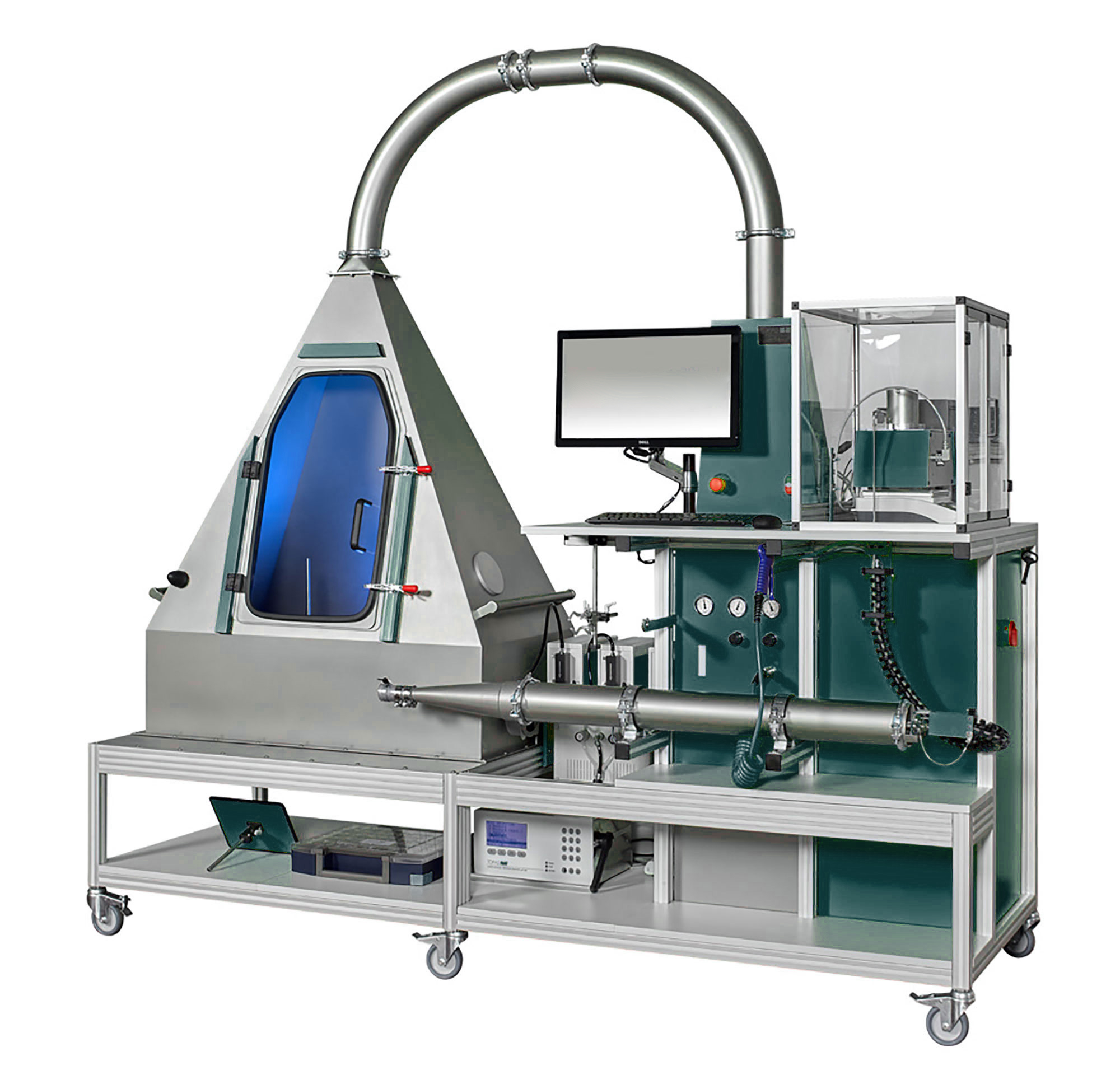
Vacuum Cleaner Filters for emission characterisation of vacuum cleaners (EN 60312)
For emission tests the suction air is prepared with a dust concentration of 550 mg/m³ and passed directly into the hose of the vac.
For dust retaining tests the suction air is prepared with a dust concentration of 100 mg/m³ in the inlet channel (mixing tube) described in the standard.
Features
Manual control for service, calibration procedures and user defined tests
Automatic test procedures in accordance with standard EN 60312
Emission test with determination of the average result and determination of a confidence limit
Filtration efficiency test with determination of a confidence limit
Dust-reemission tests according to Commission Delegated Regulation (EU) No. 665 / 2013; known as ‘Energy Label for Vacuum Cleaners’
Technical data
| Parameter title | Unit | Value |
|---|---|---|
| test flow rate | m³/h | 18 ... 200 |
| power supply | - | 230 V AC; 50-60 Hz; 16 A |
| operating medium, gas/air | - | dry, particle-free compressed air |
| operating medium, gas/air - compressed air supply | bar | min. 5 (min. 5 m³/h) |
| dimensions (w × h × d) | mm | 2600 ×2500 × 850 |
| weight | kg | 350 |
Accessories
control Software VCTWin for Vacuum Cleaner Test Rig VCT 121
Test Procedures
(1) Place the vacuum cleaner in the sealed test hood and ensure airtight connection.
(2) Select the test type: emission test or dust retention test.
(3) Start the dust feeder and set the required dust concentration.
(4) Launch automatic or manual testing program and collect particle concentration and airflow data.
(5) Calibrate sensors (airflow, pressure, environmental conditions) to ensure accuracy.
(6) After the test, export data and generate statistical analysis and test reports.
FAQ
1.What is this product?
This is a vacuum cleaner filtration test system designed to evaluate particle emission, dust retention, and filtration performance of household and small commercial vacuum cleaners.
2.What is this product used for?
It is used for laboratory and production-line testing of vacuum cleaner performance, including particle emission, dust retention, filtration efficiency, and re-emission compliance.
3.Why is this product important?
It ensures vacuum cleaners meet national and international standards, supports product development, quality control, and regulatory compliance (e.g., EU energy label requirements).
4.What industries is this product suitable for?
Household appliance manufacturers, small commercial vacuum cleaner producers, third-party testing laboratories, and R&D facilities.
5.What types of tests can be performed with this system?
Particle emission tests, dust retention tests, filtration efficiency measurement, and re-emission performance evaluation under standardized and controlled conditions.
