




Search keywords:
product name, product type, model number,
test method, manufacturer, technique, application
-
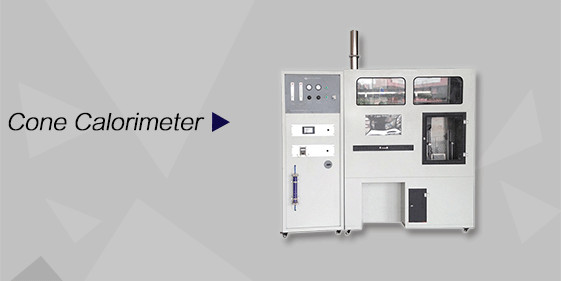
Cone Calorimeter
The import of American VTEC, cone calorimeter ultra high cost performance
more
-
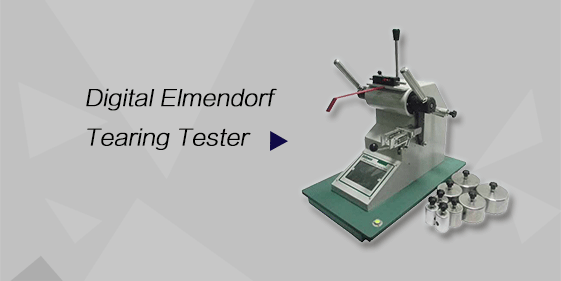
Digital Elmendorf Tearing Tester
Pendulum method test material tear strength, operating more simple, more accurate data
more
-
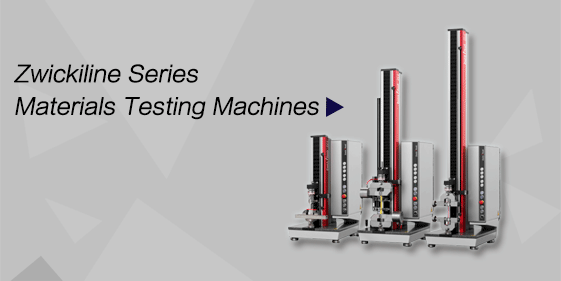
ZwickiLine Materials testing machines
Top of the world's leading universal material testing machine
more
Gas Turbine Filter Test System
BACK

Standards:
The system complies with: (1) ISO 29461-1 – Air filter performance, test methods. (2) ISO 29461-2 – Air filter performance, gas adsorption test. (3) ISO/AWI 29461-4 – Air filter performance, salt removal efficiency. (4) ISO 16890-2 – Air filter classification and testing for general air filters. (5) ISO 16890-3 – Gravimetric efficiency determination. (6) ISO 16890-4 – Fractional efficiency and dust holding capacity. (7) ISO/DIS 29461-7 – Gas turbine filter testing guidance. (8) ISO 12103-1 – Fine test dust (A2) for filter performance. (9) ASHRAE 52.2 – Air filter testing using airflow and particle size distribution. (10) EN 779 – Requirements for high-efficiency air filters. (11) GB/T 12103-1 & GB/T 12103-2 – Test dust and adsorption methods. (12) GB/T 18801-2015 – Performance testing for air purifiers.
Applications:
Testing of gas turbine intake filter systems according to ISO 29461-2 and ISO/AWI 29461-4
Testing of general air filters (ISO 16890, EN 779, ASHRAE 52.2)
Product Information:
Test System for testing air intake filter systems for rotary machinery (ISO 29461). The test system for testing air intake filter systems for rotary machinery is based on the well-established filter test system for general air filters (ISO 16890) and extended to fulfil the specifications of ISO 29461.
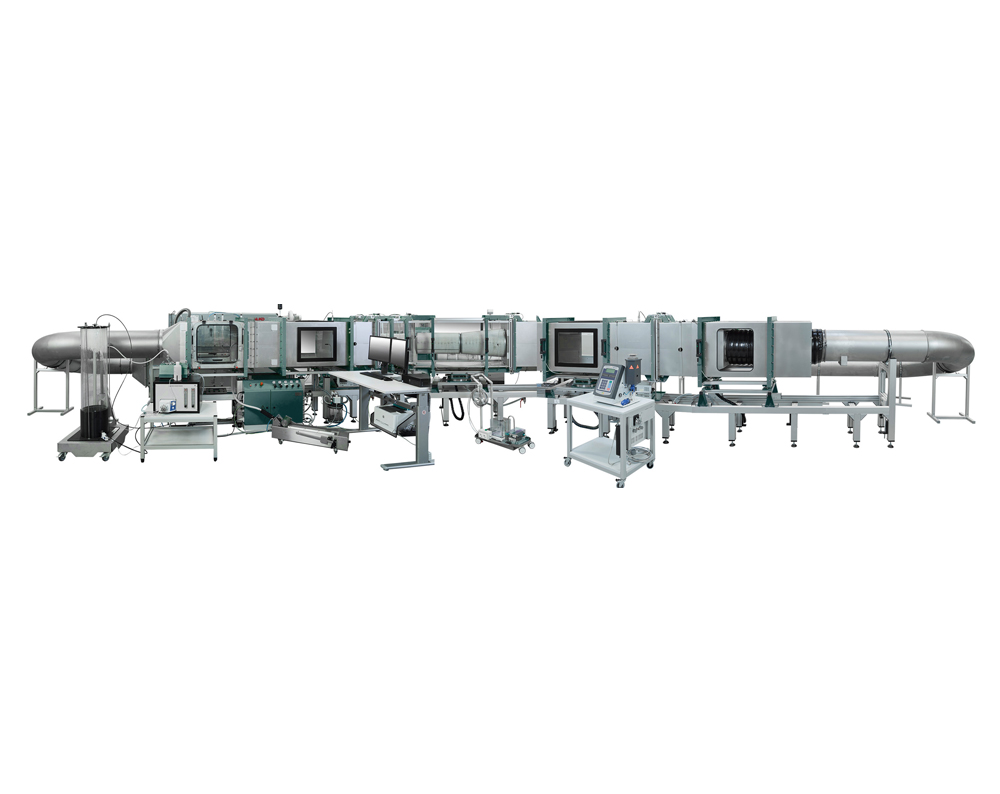
It was developed with the aim of testing filters with different shapes (filter cartridges, cassette filter, filter with filter bags and plane filter media) using varying test aerosols (salt, oil) under adjustable air conditions (air humidity, temperature) within the test duct. By using the test system the following filter characteristics can be determined: differential pressure curves, dust holding capacity, gravimetric efficiency, fractional efficiency, salt removal efficiency (ISO/AWI 29461-4) and water endurance (ISO 29461-2).
Principle
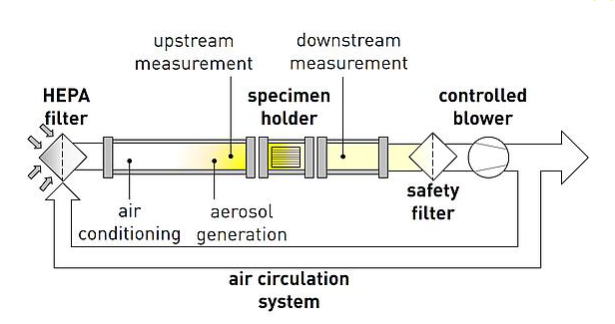
A defined volume flow rate is sucked through a HEPA intake filter, the attached test duct and the safety filter. The test system is composed of 6 sections: aerosol inlet, upstream measurement, specimen holder, downstream measurement, safety filter and flow rate measurement. The measurement sections are equipped with ports for the aerosol characterization and the determination of the pressure drop.
Technical data
| Parameter | Unit | Value |
|---|---|---|
| Test flow rate | m³/h | 800 … 11,000 |
| Test aerosol | – | DEHS, KCl, Ashrae, ISO 12103-A2 (AC fine), ISO 12103-A4 (AC coarse) |
| Test specimen dimensions | – | 610 × 610 mm (pocket and cassette filters); diameter ≤ 400 mm, length ≤ 1500 mm (filter cartridges) |
| Differential pressure of test specimen | Pa | max. 2000 |
| Compressed air supply (operating gas/air) | bar | min. 5 (17 m³/h) |
| Water supply (operating medium) | bar | min. 3 |
| Power supply | – | 3 × 400 VAC, 125 A, 50 Hz |
| Air circulation | % | 0 … 100 |
| Sensors (others) | – | Temperature, relative humidity, air pressure |
| System dimensions (W × H × D) | m | 4.6 × 1.7 × 14.0 |
Features
Circulation mode for control of the test parameters temperature and humidity
Injection of different aerosols (NaCl, KCl, DEHS) into an optimal flow profile
Automated feeding of water droplets and supersaturated vapour
High level of automation, mostly automated test runs with complete operator guiding
Gas-Tight Test Ducts: Ensure accurate particle and gas measurements.
Modular Design: Accommodates different filter types and sizes.
High Automation: Software-driven sequences with automatic data acquisition.
Multi-Medium Testing: Supports various aerosols and pollutant gases.
Standardized Reporting: Automatically generates reports including differential pressure, dust loading, fractional efficiency, and salt removal efficiency.
Environmental Control: Built-in temperature and humidity sensors allow testing under controlled conditions.
Accessories
| Accessory / Consumable | Quantity | Description |
|---|---|---|
| DEHS Aerosol Generator | 1 | For fine aerosol particle testing |
| ASHRAE Dust Generator | 1 | For standardized dust loading tests |
| Optical Particle Counters | 2 | 0.2–10 μm, four channels |
| H14 Air Filter | 1 | For system calibration |
| Temperature & Humidity Sensors | 2 | Monitor test environment |
| Gas Analyzers | 3 | Measure NO₂, H₂SO₄, and other gases |
Operation Instructions
Safety:
Confirm power, gas, and water connections before testing.
Avoid direct exposure to aerosols and gases; ensure good ventilation.
Wear protective equipment when handling hazardous gases.
Standard-Specific Testing:
The system adjusts test conditions automatically according to ISO 16890, ISO 29461-2, or other relevant standards.
After testing, the system generates standardized reports.
Test Procedure
Preparation:
Select the appropriate filter adapter and install the sample.
Configure test airflow, aerosol concentration, humidity, and temperature per standard requirements.
Testing:
Start the automated system; aerosol and gas injection begins.
The system continuously records differential pressure, dust loading, and fractional efficiency.
Data Analysis & Reporting:
After testing, the software analyzes collected data.
Generate reports including pressure curves, dust loading, fractional efficiency, and salt removal efficiency.
Maintenance Information
Regularly inspect aerosol and gas generators for proper operation.
Calibrate sensors periodically for accuracy.
Keep the system clean and free of particulate build-up.
Ensure all safety interlocks and ventilation systems are functional.
FAQ
1.What is this product?
It is a test system for gas turbine and general air intake filters to assess particle and gas filtration performance.
2.What is this product used for?
You use it for filter R&D, quality control, and benchmarking according to ISO 29461, ISO 16890, and related standards.
3.What is the working principle?
Aerosols and gases flow through the filter; differential pressure, dust loading, efficiency, and adsorption performance are measured under controlled environmental conditions.
4.Why is this product important?
It ensures filters meet performance and safety requirements, supporting reliable operation of turbines, HVAC systems, and industrial air filtration.
5.Which industries use this product?
Gas turbine manufacturing, HVAC, clean energy, air purification, and industrial filtration laboratories.
