




Search keywords:
product name, product type, model number,
test method, manufacturer, technique, application
-
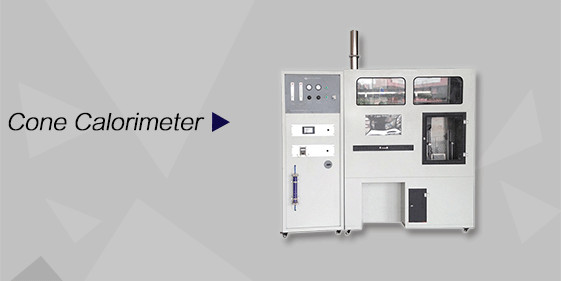
Cone Calorimeter
The import of American VTEC, cone calorimeter ultra high cost performance
more
-
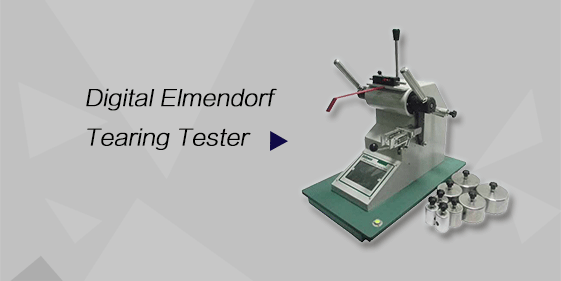
Digital Elmendorf Tearing Tester
Pendulum method test material tear strength, operating more simple, more accurate data
more
-
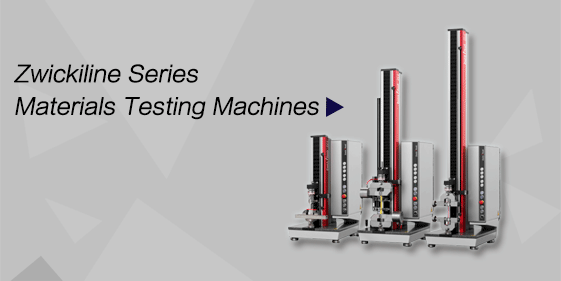
ZwickiLine Materials testing machines
Top of the world's leading universal material testing machine
more
Manual HEPA/ULPA Filter Scanning Test System
BACK

Standards:
(1) GB/T 14295-2008 – High-efficiency air filters (2) GB/T 13554-2020 – High-efficiency air filters (3) GB/T 14295-2019 – Air filters (4) GB/T 6719 – Bag-type dust collector technical requirements (5) GB/T 6165-2021 – HEPA filter performance: efficiency and resistance (6) ISO 29463-4 – Local efficiency and leakage detection (same as EN 1822-4) (7) ISO 29463-5 – Overall separation efficiency (8) EN 1822-4 – Local efficiency and leakage test (9) EN 1822-5 – Overall separation efficiency (10) ISO 29463-3 – Most Penetrating Particle Size (MPPS) test for filter media (11) ISO 14644-3 – Cleanrooms and controlled environments (12) IEST-RP-CC034 – HEPA filter performance standard (13) ASTM D6830-02 – HEPA filter testing methods
Applications:
(1) Filter Production Control: Ensures HEPA and ULPA filters meet ISO 29463 and EN 1822 separation efficiency standards.
(2) Air Purification Industry: Quality testing of filters used in industrial air-cleaning systems and household air purifiers.
(3) Medical Equipment: Testing HEPA filters used in medical devices for efficacy verification.
(4) Automotive Industry: Evaluating HEPA filters in vehicle air purification systems.
(5) Cleanrooms and Laboratories: Periodic inspection and maintenance of high-efficiency air filters.
(6) HVAC Systems: Performance evaluation in industrial and commercial HVAC applications.
Product Information:
The Manual HEPA/ULPA Filter Scanning Test System is designed for quality control of HEPA and ULPA air filters according to ISO 29463 and EN 1822 standards. The system uses a manual scanning approach suitable for existing filter test benches, providing accurate leakage detection, local and overall efficiency measurement, and compliance verification.
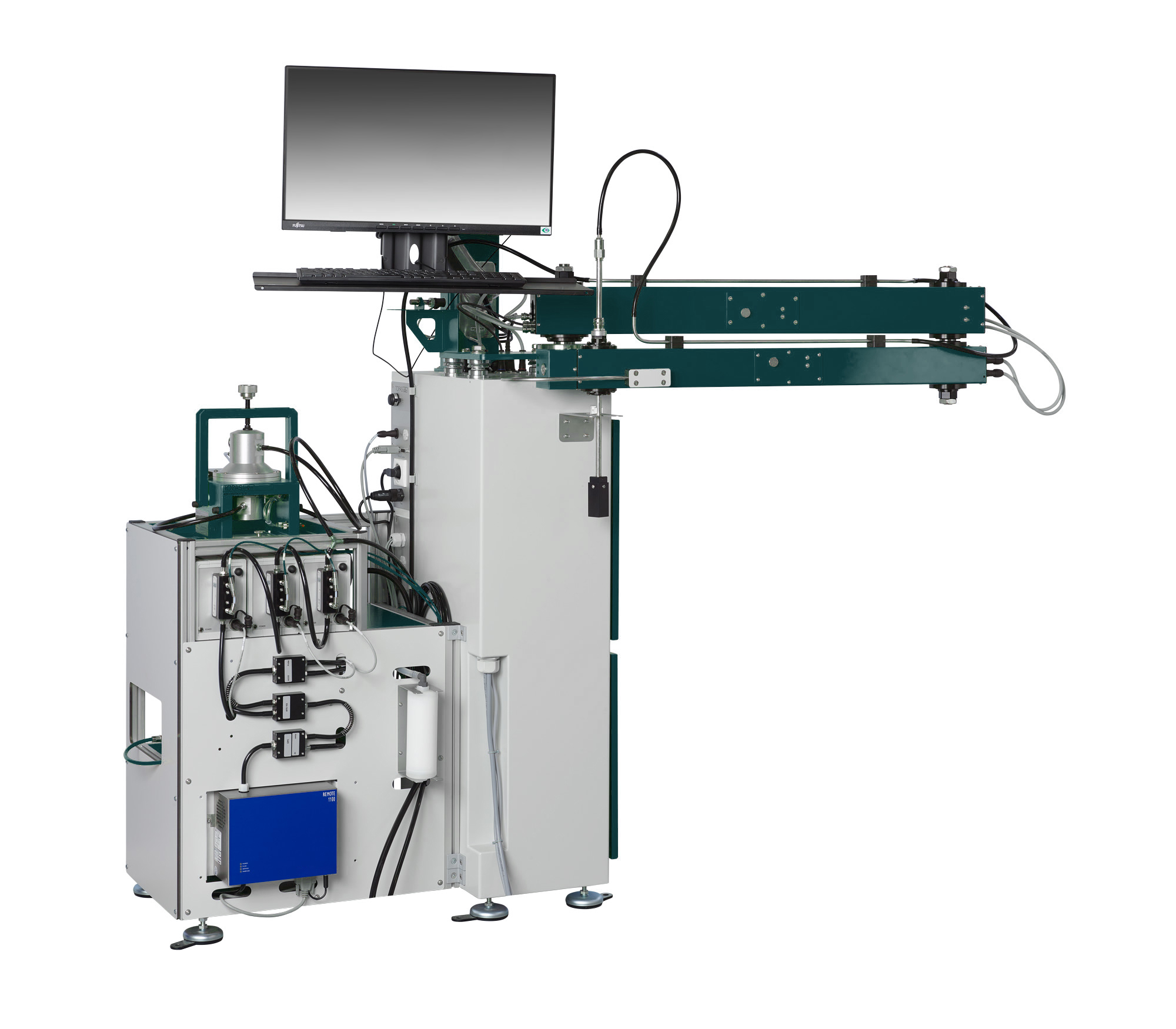
Parameters
| Parameter | Unit | Value |
|---|---|---|
| Maximum Test Flow Rate | m³/h | 1200 |
| Differential Pressure Range | Pa | 0–400 |
| Maximum Sample Dimensions | mm | 1220 × 610 × 300 |
| Aerosol Operating Medium | – | DEHS, PSL |
| Gas/Air Supply | bar | 6 |
| Power Supply | V/A | 230 VAC, 10 A |
| Test Medium Temperature | °C | 0–50 |
| Test Humidity | % RH | 0–100 |
| Operating Temperature | °C | 5–40 |
| Adjustable Adapter | – | Adaptable for different filter sizes |
| System Weight | kg | ~40 |
| System Dimensions (W × H × D) | mm | 450 × 600 × 350 |
Features
High-Precision Testing: Advanced particle counting ensures accurate efficiency and leakage detection.
Standards Compliance: Fully compliant with ISO 29463, EN 1822, and ISO 14644 standards.
Flexible Test Configuration: Adapters and test workflow adjustable for different filter sizes and types.
Automated Aerosol Generation & Data Acquisition: Reduces human error with real-time particle monitoring.
User-Friendly Interface: Touchscreen control, integrated data management, and report generation.
Accurate Leakage Detection: High spatial resolution and rapid particle counters ensure precise measurements.
Compact Design: Small footprint suitable for laboratory and production line use.
Accessories
| Accessory | Specification | Quantity |
|---|---|---|
| Aerosol Sprayer | Standard DEHS aerosol liquid | 1 set |
| Optical Particle Counter | Upstream & downstream concentration measurement | 1 unit |
| Sample Switching Unit | Multi-channel data acquisition | 1 unit |
| Flow Meter | Airflow measurement | 1 unit |
| Filter Adapter | Adjustable for different filter sizes | 1 set |
| Protective Cover | Dust and safety protection | 1 unit |
| Operation Software Win | Interface and data management | 1 set |
Test Principle
Aerosol Generation: DEHS aerosol is produced to simulate operational conditions.
Upstream Measurement: Optical particle counter measures particle concentration before the filter.
Downstream Measurement: Switching unit monitors clean air side particle concentration.
Leakage Detection & Efficiency Calculation: System calculates overall filtration efficiency and visualizes detected leaks.
Data Processing: All data recorded and processed in Win software to generate standard-compliant reports.
Operation Instructions
Safety: Ensure stable connections and avoid aerosol exposure to personnel.
Standard Operation: Follow ISO and EN standard procedures; maintain environmental conditions.
Cleaning & Maintenance: Clean aerosol generator and particle counter after each test; replace consumables regularly.
Standard-Specific Adjustments: Adjust aerosol type or flow according to specific standards (ISO 29463 vs EN 1822).
Experimental Procedure
Preparation: Install filter in adapter; adjust flow, aerosol concentration, temperature, and humidity.
Testing: Start system and manually scan the filter using the scanning probe.
Monitoring: Real-time upstream and downstream particle concentration measurement.
Data Analysis & Reporting: Software calculates overall efficiency and identifies leaks; generates and saves the test report.
Post-Test: Clean equipment; retest if efficiency or leakage is out of specification.
Maintenance Information
Inspect adapters and seals regularly.
Verify particle counters and sensors for calibration.
Clean aerosol generator and scanning probes after each test.
FAQ
1.What is this product?
Manual scanning system for HEPA and ULPA filter quality control.
2.What is it used for?
Leakage detection, local and overall efficiency measurement, production quality verification.
3.Which standards does it support?
ISO 29463-3/4/5, EN 1822-4/5, ISO 14644-3, GB/T 14295, ASTM D6830.
4.Why is this product important?
Ensures accurate, reliable, and traceable testing for filters in cleanroom, medical, automotive, and HVAC applications.
5.Which industries use this product?
Cleanroom facilities, medical devices, air purification, automotive, HVAC, and laboratories.
