




Search keywords:
product name, product type, model number,
test method, manufacturer, technique, application
-
Cone Calorimeter
The import of American VTEC, cone calorimeter ultra high cost performance
more
-
Digital Elmendorf Tearing Tester
Pendulum method test material tear strength, operating more simple, more accurate data
more
-
ZwickiLine Materials testing machines
Top of the world's leading universal material testing machine
more
Air Flow Velocity Distribution Test System
BACK

Standards:
(1) GB/T 1236 Industrial Fans – Performance Testing Methods (2) GB/T 10178 Industrial Fans – Field Performance Testing (3) ASHRAE Handbook – Fundamentals (Air Flow Measurement and Testing Sections)
Applications:
development of filter housings and air-ducting elements in general
comparison of models for flow simulation with measured values
Flow field uniformity analysis of air filters and filter assemblies;
Flow behavior evaluation of engine intake systems and intake filter housings;
Optimization of installation positions for air velocity and mass air flow sensors (e.g. MAF sensors);
R&D validation of ventilation equipment, air supply modules, and air handling units;
Comparison and verification of CFD simulation results with measured data;
Performance assessment of new air duct designs, guide vanes, and flow straightening structures.
Product Information:
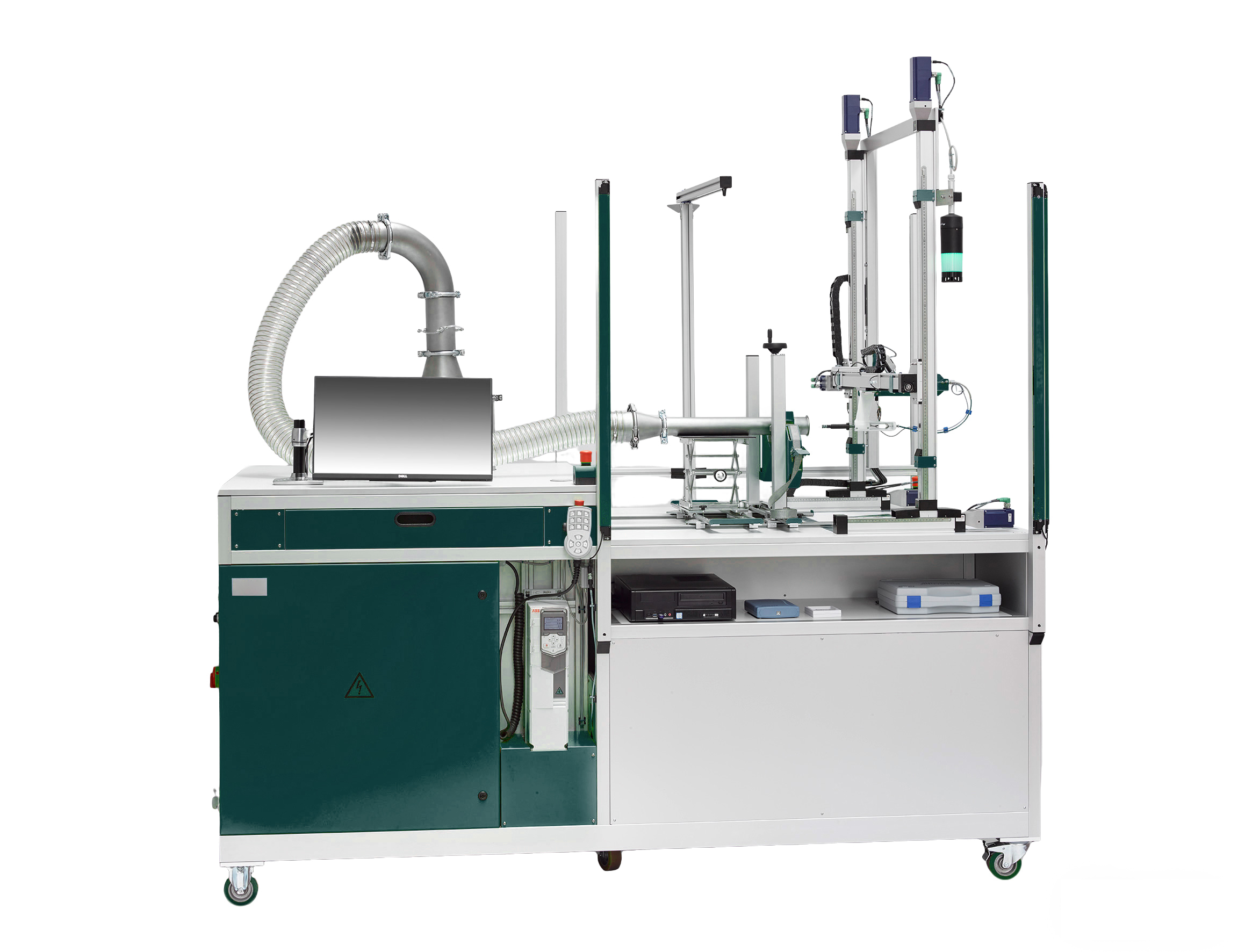
Test System for the characterisation of the air flow velocity profile of components (e.g. tubes, filters).The air flow velocities between 1-40 m/s and turbulences in the outlet of flowed through units under test can be measured.
Through this, a good position for flow velocity measuring devices (for example MAFs) in flowed through parts (for example motor inlet filters) can be found easier, taking into consideration a range of air flow rates. The data created by the flow scanner can also be used to check models for flow simulation.
Technical data
| Parameter | Unit | Value |
|---|---|---|
| Test flow rate | m³/h | 20 … 900 |
| Air flow velocity | m/s | 1 … 40 |
| Test specimen dimensions | mm | max. 485 × 600 |
| Differential pressure of test specimen | Pa | – |
| System dimensions (W × H × D) | mm | 2500 × 2660 × 1300 |
| Weight | kg | approx. 550 |
Features
wide range of air flow rates 20 ... 900 m³/h (expendable up to 1200 m³/h)
up to 100 hPa of pressure drop over unit under test and periphery (connectors, hoses)
fast data acquisition (turbulences) and graphic display of data
Principle
Air is blown through the test specimen and the velocity field is measured on the downstream side with the aid of a hot-wire anemometer. This automatically scans a plane in the air outlet by means of a traversing device.
Accessories
hot wire anemometer set
picoscope (PC-oscilloscope)
Test Procedures
Mount the test specimen securely to the air flow system and ensure airtight connections;
Set the required air flow rate according to the test plan and component specifications;
Position the hot-wire anemometer downstream of the specimen outlet;
Start the automatic scanning process to measure the velocity field across the defined plane;
Record and process the measured velocity and turbulence data;
Analyze the flow distribution results and generate test reports or comparison data for simulations.
Maintenance Information
Regularly calibrate the hot-wire anemometer to maintain measurement accuracy;
Keep the scanning mechanism clean and free from dust or debris;
Inspect hoses, connectors, and seals to prevent leakage;
Avoid exposing the sensor to high temperatures, dust, or liquid droplets;
Store the system in a clean, dry environment when not in use.
FAQ
1.What is this product?
This product is a test system for measuring air flow velocity distribution and turbulence at the outlet of flowed-through components.
2.What is this product used for?
You use it to analyze flow uniformity, turbulence, and velocity profiles of components such as ducts, filters, and engine intake parts.
3.What is the working principle of this product?
Air is blown through the test specimen, and a hot-wire anemometer automatically scans a downstream plane to measure local air velocities and turbulence characteristics.
4.Why is this product important?
It helps you optimize component design, sensor placement, and validate flow simulations, improving overall system performance and reliability.
5.Which industries is this product suitable for?
It is suitable for automotive, HVAC, ventilation equipment, aerospace, energy systems, and research institutions involved in air flow analysis and development.
