




Search keywords:
product name, product type, model number,
test method, manufacturer, technique, application
-
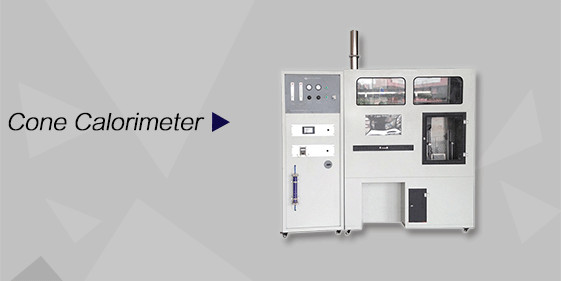
Cone Calorimeter
The import of American VTEC, cone calorimeter ultra high cost performance
more
-
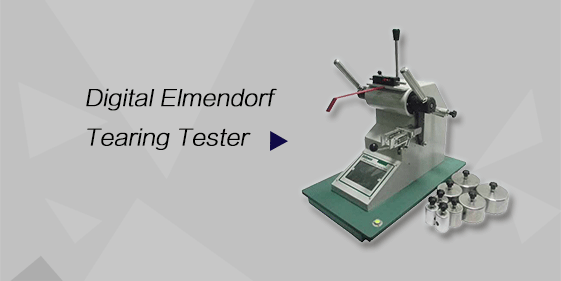
Digital Elmendorf Tearing Tester
Pendulum method test material tear strength, operating more simple, more accurate data
more
-
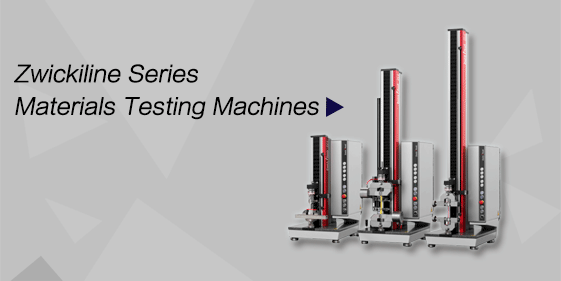
ZwickiLine Materials testing machines
Top of the world's leading universal material testing machine
more
Pump and Valve Contamination Tolerance Tester
BACK

Standards:
(1) ISO 4406:2021 — Hydraulic fluid power — Fluids — Method for coding the level of contamination by solid particles. (2) ISO 18413:2017 — Hydraulic fluid power — Filters — Vocabulary and commercial specifications. (3) ISO 10707:2019 — Petroleum products and lubricants — Determination of demulsibility characteristics. (4) ISO 6403:2018 — Hydraulic fluid power — Filter elements — Verification of collapse/burst pressure. (5) ISO 10372:2016 — Hydraulic fluid power — Filter elements — Method for measuring filtration performance. (6) NFPA T2.6.1 — Standard for Hydraulic Power Units. (7) GB/T 16907-1997 — Hydraulic systems — General technical specifications. (8) GB/T 14039-2002 — Hydraulic transmission — Solid particle contamination code for oil. (9) JB/T 7857-2006 — Evaluation method for contamination sensitivity of hydraulic valves. (10) ISO 12103-A3 — Test dust standard for simulating solid particle contamination.
Applications:
Evaluating the wear resistance and durability of hydraulic pumps and valves simultaneously under contaminated fluid conditions.
Determining the impact of fluid contamination on the performance characteristics (efficiency, leakage, control accuracy, response time) of pumps and valves over time.
Validating the contamination tolerance of pump and valve designs, materials, and manufacturing processes.
Benchmarking the contamination resistance of different pump and valve models or manufacturers.
Research and development of more robust hydraulic components for use in contaminated environments.
Assessing the effectiveness of design modifications in improving contamination tolerance.
Product Information:
Solid particle contamination is a major cause of wear, silting, stiction, leakage, and ultimately failure in hydraulic pumps and valves. A Pump and Valve Contamination Tolerance Tester provides a controlled environment to subject both component types to contaminated fluid and assess their performance over time.
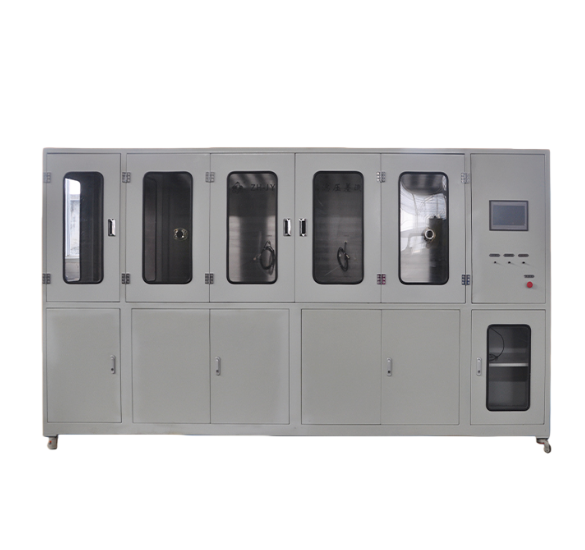
The tester typically consists of a hydraulic test circuit where the pump(s) and valve(s) under evaluation are installed. A reservoir holds a volume of test fluid (hydraulic oil) which is intentionally contaminated with a specific type and concentration of solid particles. The pump circulates this contaminated fluid, and the system includes a loading mechanism (e.g., restrictors, actuators) to operate the pump and cycle the valve(s) under realistic pressure, flow, and temperature conditions.
Throughout the test, which may involve running for extended durations or millions of cycles, the performance of both the pump and the valve(s) is monitored. Pump performance measurements include flow rate (volumetric efficiency), pressure, speed, and potentially power consumption. Valve performance measurements vary depending on the valve type (directional control, pressure control, flow control) but can include leakage rate, pressure control accuracy, flow regulation accuracy, response time, and the force or current required to shift spools. The cleanliness level of the circulating fluid is continuously or periodically verified using fluid sampling and particle counting according to standards like ISO 4406. After the test, component performance is re-measured, and the pump and valve(s) are often disassembled for detailed visual inspection and quantitative measurement of wear on critical surfaces. This comprehensive evaluation provides crucial data on how contamination affects the operational lifespan and performance stability of both pumps and valves.
Features
Provides a comprehensive evaluation of both hydraulic pump and valve performance and wear resistance in a single test setup under contaminated conditions.
Simulates the interaction of contaminated fluid with key components in a hydraulic circuit.
Essential for selecting pumps and valves that can reliably operate in hydraulic systems with expected levels of fluid contamination.
Helps validate component designs and materials specifically for resistance to wear and degradation caused by particles.
Provides objective, quantitative data on the long-term effects of contamination on pump and valve performance.
Supports research and development efforts aimed at improving the robustness and lifespan of hydraulic components.
Technical Parameters
| No. | Technical Parameters | Specifications |
|---|---|---|
| 1 | Test medium | Hydraulic oil |
| 2 | Temperature of medium | 10 ~ 80℃ |
| 3 | Test dust | ISO 12103-A3 |
| 4 | Test pressure range | 0.5 ~ 6MPa |
| 5 | Test flow | 1 ~ 20L/min |
| 6 | Purification cleanliness | -/12/10 (GB/T 14039-2002) |
| 7 | Test tank volume | 40L |
| 8 | Execution standard | JB/T 7857-2006 |
| 9 | Equipment power supply | AC380V / 50Hz |
| 10 | Power of the whole machine | 5.5kW |
Accessoriess
1. Core Functional Components:
Hydraulic test circuit assembly (including piping and connectors)
Reservoir (for holding contaminated hydraulic oil)
Mounting and fixing device for the pump/valve under test
Solid particulate contamination additive assembly (matching standard dust such as ISO 12103-A3)
Loading mechanism (e.g., throttle, actuator, simulating actual working conditions)
2. Monitoring and Control Components:
Pressure gauge (monitoring system pressure)
Flow monitoring device
Temperature control module (adjusting medium temperature)
Control panel (setting test parameters)
3. Auxiliary Components:
Seals (e.g., O-rings, gaskets)
Pipeline cleaning tools
Instruction manual, certificate of conformity
Test Procedures
1. Preliminary Preparation
Check the sealing of all components of the test bench to ensure there are no leaks in the pipelines and storage tanks; Add hydraulic oil to the storage tank, and add the specified type/concentration of solid particulate contaminants (such as ISO 12103-A3 dust) according to the test requirements, stirring to ensure uniform dispersion of the contaminants.
2. Equipment Installation and Parameter Setting
Install the hydraulic pump and valve to be tested onto the corresponding mounting device in the test circuit; Connect the AC 380V/50Hz power supply and set the test parameters (such as medium temperature, pressure, flow rate, etc.) through the control panel.
3. Test Operation
Start the pump to circulate the contaminated hydraulic oil in the circuit; Activate the loading mechanism to simulate the pressure and flow load under actual working conditions, allowing the pump/valve to operate continuously in the contaminated medium; Monitor and record the pump/valve performance data (such as pressure stability, flow rate changes, leakage, etc.) in real time.
4. Post-Test Processing
After the test, first stop the loading mechanism, then turn off the pump;
Remove the pump/valve under test and check its wear, jamming, etc.;
Drain the contaminated oil from the storage tank and clean the pipelines, storage tank, and other components.
5. Data Processing and Equipment Cleanup
Analyze the performance data recorded during the test to assess the pump/valve's contamination tolerance;
Turn off the equipment power, organize the test records, and complete the equipment cleaning.
FAQ
1.What is this product?
This product is a hydraulic test bench designed to evaluate the contamination tolerance of hydraulic pumps and valves using solid particle-contaminated oil.
2.What is this product used for?
You use it to assess wear resistance, performance degradation, and durability of pumps and valves operating in contaminated hydraulic systems.
3.What is the working principle of this product?
The system circulates oil containing standardized test dust through pumps and valves under controlled pressure, flow, and temperature while monitoring performance changes over time.
4.Why is this product important?
It helps you understand how contamination affects component lifespan and reliability, supporting better design, selection, and maintenance of hydraulic systems.
5.What industries is this product suitable for?
Hydraulic component manufacturing, aerospace, construction machinery, industrial equipment, research institutes, and third-party testing laboratories.
