




Search keywords:
product name, product type, model number,
test method, manufacturer, technique, application
-
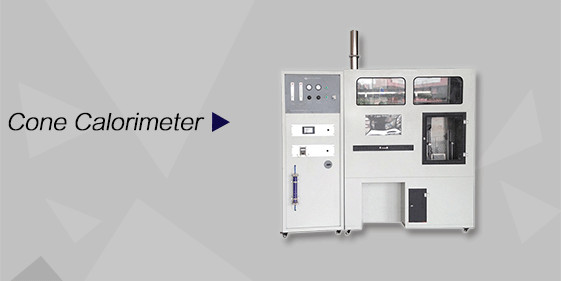
Cone Calorimeter
The import of American VTEC, cone calorimeter ultra high cost performance
more
-
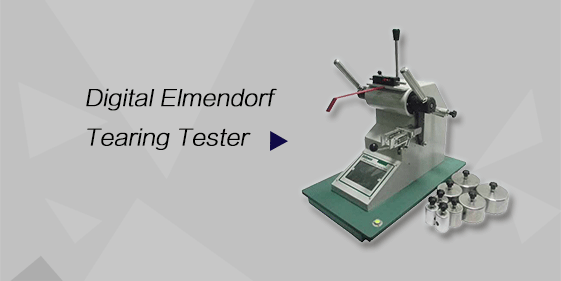
Digital Elmendorf Tearing Tester
Pendulum method test material tear strength, operating more simple, more accurate data
more
-
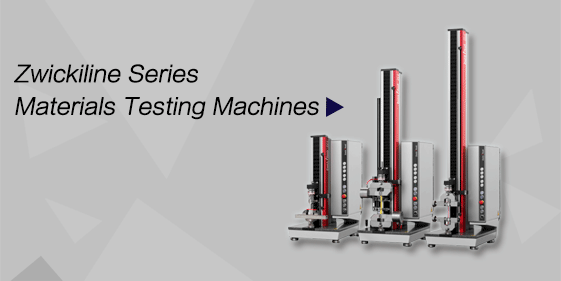
ZwickiLine Materials testing machines
Top of the world's leading universal material testing machine
more
G115 Air Filter Test Bench
BACK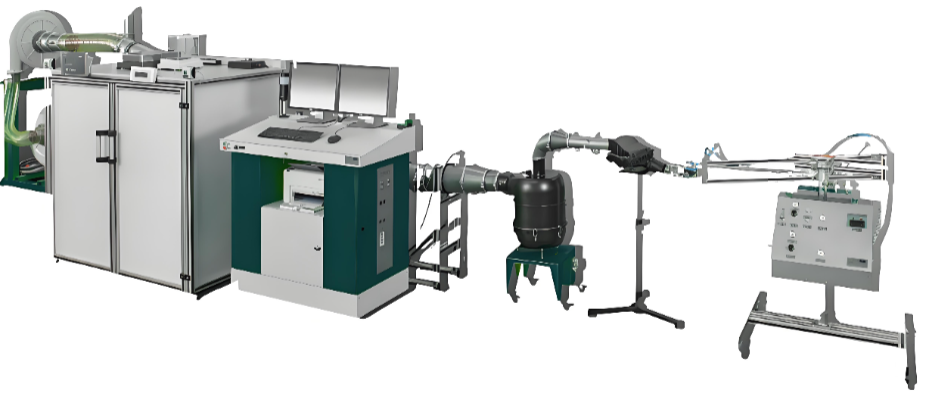


Standards:
Applications:
Engine Air Intake Filter Testing
Compliant with ISO 5011. widely used for testing air filters in engine intake systems of automobiles, heavy machinery, and agricultural equipment.
Industrial Air Intake Filter Testing
Suitable for performance evaluation of intake filters used in industrial machinery, HVAC systems, generators, mining equipment, and other applications.
Customer-Specific Standard Testing
Supports customized testing based on specific customer requirements or industry standards.
Filter Research and Development
Used for the development of new air filters, helping manufacturers optimize filtration performance during product development.
Quality Control and Production Monitoring
Applicable to filter quality control during production processes, ensuring each filter meets industry standards and customer requirements.
Product Information:
Air Filter Test Bench is specially designed for testing industrial filters and engine air filters, in compliance with ISO 5011 standards. The system is primarily used to evaluate the intake performance of air filters, including pressure drop, dust holding capacity, particulate filtration efficiency, and other key performance indicators. It is suitable for quality control and performance evaluation of various industrial filters and engine air filters.
 Test Standards
ISO 5011 — Inlet air cleaning equipment for internal combustion engines and compressors — Performance testing
ISO 12103-1 — Road vehicles — Test dust for filter evaluation
Product Specifications
|
Parameter |
Specification |
|
Test Flow Rate |
2–50 m³/min (under standard conditions of 20°C and 1013 hPa) |
|
Differential Pressure Range |
≤ 15.000 Pa |
|
Operating Gas / Air Supply |
Compressed air supply: 6 bar |
|
Power Supply |
400 VAC, 125 A |
|
Test Aerosols |
ISO 12103-1 A2 (fine dust), ISO 12103-1 A4 (coarse dust) |
|
Water Supply |
Equipped with water injection system and water separation unit |
|
Sensors |
Differential pressure, airflow, temperature, relative humidity, atmospheric pressure sensors |
|
Test System Components |
Solid aerosol generator, colorimetric tubes, air flow meter, weighing system, etc. |
Product Features
Two-Stage Flow Generation System
Equipped with a powerful two-stage flow generation system, supporting a wide range of flow adjustment for different application scenarios.
Accurate Flow Measurement
A high-precision flow measurement system that allows flow adjustment according to application requirements, ensuring accurate and reliable test results.
High Level of Automation
Most system operations are fully automated, providing complete operation guidance, data processing, and report generation.
Quality Control and Protocols
Automatically generates complete test protocols to ensure that each filter’s performance meets standard requirements.
High-Load Dust Feed System
Supports high dust loading capability, meeting the demanding testing requirements of heavy-duty machinery and industrial environments.
Scalable and Customizable Design
The system is designed to be upgraded and expanded according to requirements, supporting customized testing for specific applications.
Accessories and Consumables
|
Accessories / Consumables |
Quantity |
|
Water injection system and water separator |
1 |
|
Additional pressure sensor |
1 |
|
Particulate measurement device |
1 |
|
Cleaning line |
1 |
|
Solid aerosol generator SAG 420 (including standard nozzle and high dust mass flow nozzle) |
1 |
|
Colorimetric tube (for differential pressure measurement) |
1 |
|
Absolute filter housing |
1 |
|
Weighing system (for filter mass measurement with data transmission function) |
1 |
|
Cleaning line (for pre-cleaner testing) |
1 |
|
Water injection system and water separator |
1 |
Test Principle
This system operates based on flow control and dust loading test principles. It uses a variable flow system to control airflow and accurately measure flow rate. A differential pressure sensor continuously monitors pressure changes across the filter to evaluate dust holding capacity and filtration efficiency.
During testing, solid aerosols (such as ISO 12103 fine or coarse dust) are injected into the system to simulate particulate contamination under different working environments. The system evaluates filtration efficiency, dust holding capacity, and durability of the filter.
Dust Loading and Efficiency Testing: Dust is injected at a controlled flow rate to evaluate dust holding capacity and filtration efficiency.
Differential Pressure Monitoring: Real-time measurement of pressure drop across the filter reflects airflow resistance and performance degradation.
Particulate Monitoring: Particle measurement devices record concentrations before and after the filter to calculate stage efficiency.
Operating Instructions
Safety Operation
Ensure all air, power, and water connections are correctly installed before operation.
Avoid direct contact with test aerosols during operation; use appropriate personal protective equipment.
Regularly monitor pressure, flow rate, and temperature to prevent system overload.
Standard-Based Operation
The system automatically adjusts aerosol type, flow rate, temperature, and humidity according to different test standards.
Automated step-by-step guidance assists operators throughout the testing process.
Test Procedure
Preparation Stage
Select the appropriate filter sample and install it into the test pipeline.
Set parameters such as airflow, aerosol concentration, temperature, and humidity according to the required test standard.
Testing Stage
Start the system; dust is automatically injected while differential pressure and particle concentration are measured.
The system executes the predefined test sequence and records data in real time.
Data Analysis and Report Generation
After testing, the system analyzes all collected data and automatically generates a standardized report, including differential pressure curves, dust holding capacity, and particle filtration efficiency.
Users can view, export, or print reports to ensure transparency and traceability of results.
