




Search keywords:
product name, product type, model number,
test method, manufacturer, technique, application
-
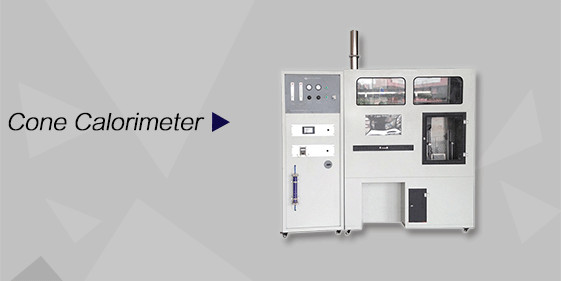
Cone Calorimeter
The import of American VTEC, cone calorimeter ultra high cost performance
more
-
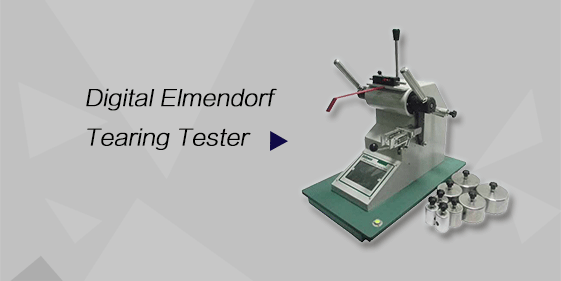
Digital Elmendorf Tearing Tester
Pendulum method test material tear strength, operating more simple, more accurate data
more
-
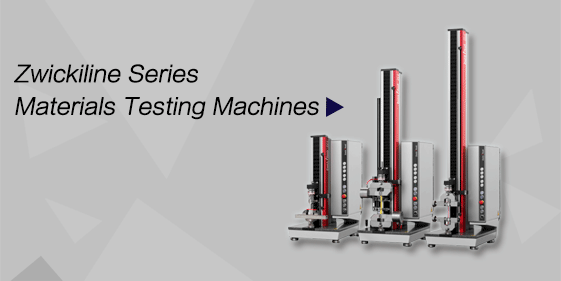
ZwickiLine Materials testing machines
Top of the world's leading universal material testing machine
more
Filter Media Filtration Performance Tester
BACK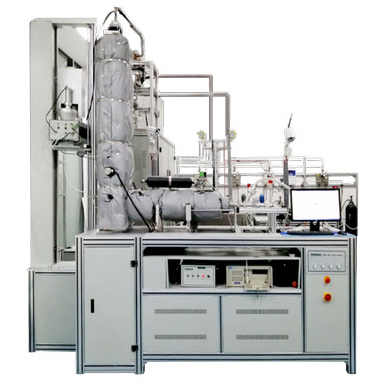


Standards:
Applications:
This instrument is suitable for professional filter media testing. It evaluates the dynamic and static dust removal efficiency and filtration performance of filter materials used in baghouse dust collectors. By simulating real working conditions, it quickly obtains performance evaluation parameters and accurately assesses the quality, performance, and service life of filter media. It provides data support for new filtration material development, product quality control, and performance verification. It is widely used in scientific research, testing, and industrial production.
The G505 Filter Media Filtration Performance Tester evaluates the filtration performance of filter media by testing comprehensive properties such as resistance and efficiency during the clean, aging, and stabilization processes of the filter media. It is suitable for quality control in industrial filter media manufacturing enterprises, product performance verification in filter media R&D companies, filter media performance testing services in third-party testing institutions, and quality supervision of commercial products by environmental protection authorities.
Product Information:
 The G505 Filter Media Filtration Performance Tester is designed to simulate the operating process of filter bags in baghouse dust collectors. It performs aging of filter media according to standard procedures (typically continuous operation over several days) until the filter performance becomes stable. It then evaluates characteristic filtration parameters of a specific aerosol concentration passing through the filter media, including pressure drop curves, residual pressure drop, filtration/cleaning cycles, residual dust cake mass, and dust mass penetrating the filter sample. The results are used to assess the filtration efficiency of filter media in real operating conditions.
Standards
ISO 11057 – Air quality: Test method for filtration performance of cleanable filter media
ASTM D6830 – Standard test method for determining pressure drop and filtration performance of cleanable filter media
VDI/DIN 3926 – Standard test method for evaluating cleanable filter media
GB/T 6719 – Technical specifications for baghouse dust collectors
JIS Z8909-1 – Test methods for filter media for dust collection – Part 1: Filtration efficiency
 Working Principle
Air is first introduced into a vertical dust generation duct to produce a dust-laden airflow. Dust is dispersed in the dust generator using compressed air to form a uniform concentration and is evenly distributed through the vertical duct. It then flows downward, and part of the airflow is guided into a horizontal duct passing through the test filter media, exposing it to a constant airflow and dust concentration to simulate actual operating conditions of cleanable filter media.
Dust forms a dust cake, causing an increase in pressure drop. A differential pressure sensor continuously monitors the pressure drop across the filter media. When the pressure drop reaches a preset value, the system releases a pulse of compressed air toward the dust cake on the dirty gas side, cleaning it without interrupting airflow (online cleaning). The filter then resumes dust collection, repeating the cycle. The cleaning pulse is precisely timed and highly repeatable to ensure uniform loading conditions.
The removed dust cake and residual dust fall to a dust collector at the bottom of the vertical duct. A dust filtration system is also installed to prevent re-dispersion of dust upstream, ensuring stable and accurate dust concentration, especially for critical parameters such as residual pressure drop. This design enables continuous long-term operation without frequent shutdowns for cleaning.
 Main Test Parameters
Outlet dust concentration
Filter media mass change
Initial residual pressure drop, average residual pressure drop, residual pressure drop increment
Average filtration cycle
Dust removal efficiency, penetration rate
Cleaning time, cleaning cycle
Static dust removal efficiency
Dynamic dust removal efficiency
 Features
The G505 Filter Media Filtration Performance Tester is easy to operate, highly efficient, versatile, flexible in application, and provides stable and safe operation. It simplifies routine laboratory testing and improves testing efficiency.
The dust feeder can realize lifting and feeding through simple control, without the need for manual ladder climbing for dust addition. It adopts a continuous, non-interrupting dust feeding mechanism, avoiding manual dust addition during the aging stage, eliminating the need for long-time supervision, greatly reducing labor cost and improving efficiency.
A visual observation window enables real-time monitoring of the test conditions. It not only provides data-based result display, but also facilitates users to observe the actual dust conditions during the testing process.
BEG 1000 brush-type dust generator provides stable and efficient dust generation, ensuring an average upstream dust concentration of 5 g/m³ on the filter media, providing accurate test dust concentration. Different types of dust generators and electrostatic neutralizers can be configured according to your requirements.
The vertical dirty gas duct and clean gas duct are equipped with bidirectional monitoring of pressure and dust concentration, providing accurate test parameters of outlet dust concentration and pressure drop variation.
Dual-cylinder pneumatic fixture provides uniform clamping force. The specimen is held firmly, minimizing deviations in test results caused by leakage due to insufficient clamping force. Push-button clamping operation is convenient and fast.
Equipped with a dirty gas dust accumulation device, preventing dust from re-dispersing upstream of the filter media, which would otherwise cause unclear dust concentration and affect residual pressure drop, making the measurement invalid, and it also enables error-free long-term operation and measurement.
 Technical Parameters
|
Item |
Specification |
|
Equipment name |
Filter Media Filtration Performance Tester |
|
Application |
Used for testing the filtration performance of cleanable filter media |
|
Test dust |
Pural NF, Pural SB, ISO A2 fine powder, ISO A4 coarse powder, lime, silica, gypsum dust, various types of TiO₂ or other non-sticky dry powders |
|
Test samples |
Glass fiber filter media, aramid filter media, metal wire filter media, etc. |
|
Sample size |
150 mm |
|
Exposed diameter |
140 mm |
|
Vertical contaminated air duct dimensions |
Rectangular (W×L 110 mm × 290 mm) |
|
Temperature sensor range |
0–100℃; measurement accuracy: 0.2℃; position: located at the duct intersection |
|
Pressure sensor range |
0–1200 mbar; measurement accuracy: 0.3% |
|
Airflow velocity sensor range |
0–12 m³/h; measurement accuracy: 1% |
|
Solid aerosol generator – airflow range |
0.5–5 m³/h; measurement accuracy: 1% |
|
Solid aerosol generator – dust generation rate |
42–430 g/h; test dust: standard dust, SAE, Fine A2 dust, etc. |
|
Dust generator outlet concentration range |
0.8–100 g/m³; accuracy: < ±5%; deviation of dust concentration in three consecutive tests within 5% |
|
Dust storage tank capacity |
5.5 L, allows long-duration testing; sufficient for one full test dust requirement |
|
Dust generator weighing system |
80 kg load capacity; accuracy: 0.1 g; repeatability: 0.3 g; linearity: ±0.1 g; with automatic calibration function |
|
Dust concentration monitor |
Measurement range: 0–15 g/m³; integration time of luminance meter ≤ 10 s; measures and monitors concentration and dispersion in duct |
|
Cleaning system |
Equipped with automatic cleaning device; pneumatic cleaning of optical lens and reflector; prevents obstruction of optical window and reflector |
|
Clean gas duct flow range |
0–10 m³/h |
|
Pressure and temperature sensor system – pressure drop range |
0–2500 Pa; accuracy: ±0.1%; response time: < 2.5 s; repeatability: 0.1% |
|
Pressure and temperature sensor system – stability |
0.5% FSD/year |
|
Pressure and temperature sensor system – maximum temperature variation |
1% of FSD for 0℃ to 50℃; temperature sensor accuracy: 0.5℃ |
|
Airflow velocity sensor |
0–10 m³/h ±1% |
|
Contaminated air duct pressure sensor |
Accuracy: 500 Pa |
|
Particle size spectrometer – measurement principle |
90° light scattering and filter sampling dual technology; capable of detecting dust, smoke, droplets, etc. |
|
Particle size monitoring range |
0.2 μm–40 μm |
|
Particle concentration monitoring range |
1–4.000.000/L; repeatability: 5%; capable of simultaneously measuring PM10. PM2.5. PM1 |
|
Functions |
Capable of calculating count filtration efficiency; supports graded filtration efficiency testing |
|
Software |
Real-time display of particle size distribution; particle data can be exported to Excel for analysis and calculation |
|
Terminal HEPA filter |
Diameter ≥ 50 mm; exposed to dust diameter ≥ 40 mm; weight < 0.3 g |
|
Pulse device – compressed air tank |
Volume ≥ 4 L; tank pressure: 0–0.7 MPa ±3% (adjustable) |
|
Pulse device – valve opening time |
50 ms–280 ms (adjustable) |
|
Pulse device – filtration |
Equipped with pre-filter and fine filter |
|
Item |
Specification |
|
Flow control system |
Flow control device for filter media sample: 0–50 L/min or 0–120 L/min; flow control device for contaminated air duct: 0–300 L/min |
|
Pneumatic sample fixture |
Uniform clamping force; pneumatic fixture with good sealing performance |
|
Precision analytical balance |
Readability: 0.01 g; repeatability: 0.01 g; linear error: 0.02 mg; typical stabilization time: 1 s |
|
Microbalance |
Readability: 0.01 mg; resolution: 0.01 mg |
|
Chiller |
Provides gas at 3℃ low temperature |
|
Oil-water separation unit |
Oil content after separation: < 2 ppm |
|
Test dust specification |
Pural SB test dust; packaged in 20 kg per barrel |
|
Desiccator |
Transparent glass material; with ceramic plate; with color-changing silica gel desiccant |
|
Air compressor |
Type: scroll compressor; motor power: 1.5 HP / 1.1 kW; noise: 50 dB(A); voltage/frequency/phase: 220 V / 50 Hz / single phase; displacement: 0.11; discharge pressure: 0.8 MPa |
|
System overall |
Dimensions: 2300 mm × 1000 mm × 3500 mm; weight: 350 kg; power requirement: 220 V, 50 Hz/60 Hz, 15 A |
Features and Advantages
Automatic powder feeding system of dust generator
Since long-duration testing is required, an automatic powder feeding system is equipped. In combination with the dust generator weighing system, it enables long-term operation without manual powder replenishment. It ensures automatic dust supply during the entire test process and achieves fully automatic feeding without manual inspection or refilling. 10 kg SB test dust is provided.
Powder feeding time and feeding frequency are both adjustable and controllable.
The powder feeding method adopts a screw-type feeding system, which provides stable and continuous supply with low dust loss rate.
Automatic lifting system of dust generator
The controllable lifting system enables fast powder replacement without the need for climbing ladders, ensuring safety, reliability, and reduced labor and time consumption. In addition, an emergency braking system is equipped.
High-capacity dust collector
Allows a single test to be completed without intermediate dust disposal.
Pneumatic filter media clamping device
The sample fixture adopts a pneumatic clamping method, making disassembly and installation convenient.
Automatic alarm system of dust generator
The dust generator is equipped with an automatic alarm system. When nozzle blockage or unstable air pressure occurs, the alarm is triggered and the system is shut off to reduce losses.
PM2.5 VSCC cyclone combination
The system is software-controlled, allowing selection to provide accurate PM2.5 dust when required. It can be used together with a particle size spectrometer to evaluate the filtration performance of PM2.5. This cyclone combination is an EPA-approved PM2.5 separator and can be used for aerosol separation studies.
Control software
Graphical user interface with bilingual operation (Chinese and English). It can display real-time operating status and parameters such as temperature and humidity, duct pressure, and differential pressure across the sample.
The software displays real-time particle size distribution data collected by the particle size spectrometer and stores and records the data. It also calculates count filtration efficiency and graded filtration efficiency, and includes them in bilingual test reports (Chinese and English).
It features an intelligent and automated operation process with detailed prompts to simplify experimental procedures as much as possible.
It can monitor and plot real-time curves of pressure drop, filtration cycle, and residual pressure drop for each dust-loading and cleaning cycle.
All raw data can be exported and replayed for easy review of test conditions at any time.
Control software
It allows customization of standard test procedures, including back-blowing cycles, back-blowing pressure, and valve opening time.
It can save full-process data of pressure drop, residual pressure drop, and filtration cycle into Excel files for convenient further analysis.
The weighing system supports automatic linear calibration, temperature drift calibration, and time-triggered settings.
Remote control system
The system can be controlled via mobile phone or other computers, enabling unmanned operation.
It supports long-distance monitoring of test status with three-point monitoring of dust generation, software, and main system.
Sample cutter
Electrically controlled with one-button sample cutting. Equipped with a safety protective cover to ensure safe operation during cutting. Different sizes of cutting molds are provided to facilitate sample preparation and fabrication.
Test procedure / test mode / test standards
Standard test procedure
Process A: first 30 constant-pressure pulse-cleaning cycles (varies depending on selected standard)
Process B: 10.000 aging pulse-cleaning cycles (varies depending on selected standard)
Process C: 10 constant-pressure pulse-cleaning recovery cycles (varies depending on selected standard)
Process D: last 30 constant-pressure pulse-cleaning cycles (varies depending on selected standard)
Process E: additional 30 constant-pressure pulse-cleaning cycles (1700 Pa, for ISO standard)
Custom test modes
Constant-pressure pulse-cleaning mode: pulse-cleaning cycles, cleaning pressure, valve opening time, and pulse pressure can be freely set
Timed pulse-cleaning mode: pulse-cleaning cycles, cleaning time interval, valve opening time, and pulse pressure can be freely set
Custom test program: multiple constant-pressure pulse-cleaning modules and multiple timed pulse-cleaning modules can be freely combined into a multi-program sequence
Built-in test standards
GB/T 6719 Standard test for technical requirements of bag filters
ISO 11057 Air quality — Test method for filtration performance of cleanable filter media
VDI/DIN 3926 Standard test method for evaluation of cleanable filter media
ASTM 6380 Test method for determining pressure drop and filtration performance of cleanable filter media
