




Search keywords:
product name, product type, model number,
test method, manufacturer, technique, application
-
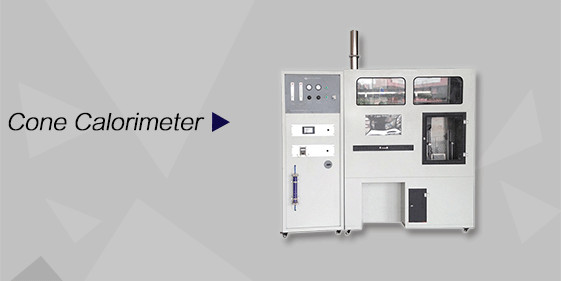
Cone Calorimeter
The import of American VTEC, cone calorimeter ultra high cost performance
more
-
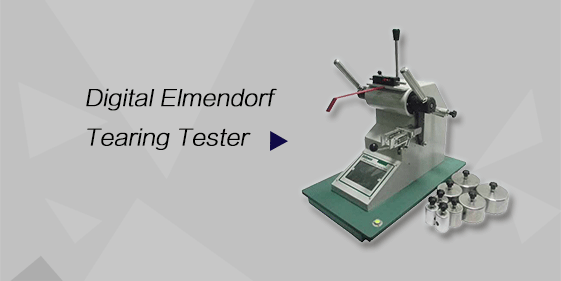
Digital Elmendorf Tearing Tester
Pendulum method test material tear strength, operating more simple, more accurate data
more
-
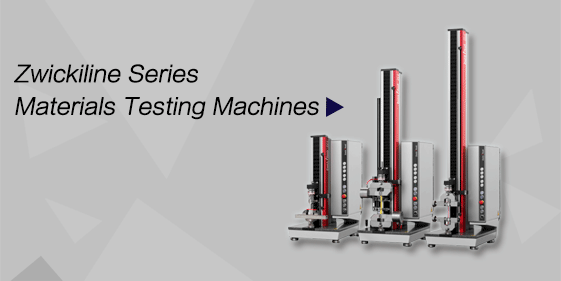
ZwickiLine Materials testing machines
Top of the world's leading universal material testing machine
more
G510 Filter Media Filtration Performance Test Bench
BACK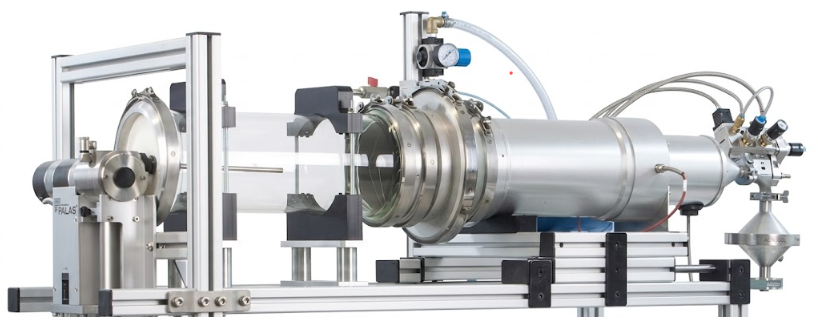


Standards:
Applications:
Product Information:
The new G510 Filter Media Filtration Performance Test Bench adopts the current international mainstream particle counting method and is equipped with a high-efficiency large-flow laser particle counter. It can test basic filtration performance parameters such as filtration efficiency, particle penetration rate, pressure drop curve, residual pressure drop, and filtration/cleaning cycles. The patented interchangeable horizontal and vertical structure truly enables comprehensive testing of filter media and is compatible with more testing requirements. Combined with a lifetime testing module, it can perform cyclic testing of filter media to obtain dynamic filtration performance and effective filtration life.
 Suitable for various filter media testing
The comprehensive filtration performance test system is a testing instrument designed for dynamic and static dust removal efficiency and filter media lifetime evaluation. By simulating the real working conditions of filter media in actual use, it quickly obtains performance evaluation parameters and accurately evaluates the quality, performance, and service life of filter materials. It provides data support for the development of new filtration materials, product quality control, and material performance verification.
The unique patented interchangeable horizontal and vertical structure is not only suitable for horizontal filtration testing but also can realistically simulate actual factory operating conditions through structural replacement, making it the best choice for scientific research, especially in new material development, functional verification, and performance testing.
Compliance with multiple testing standards
EN 779 General ventilation air particulate filters — determination of filtration performance
VDI 3926 Standard test method for evaluation of cleanable filter media
Test principle and application
Test dust or particles are dispersed in the dust generator with compressed air to form a uniform concentration, then evenly distributed in the duct. Through the action of an electrostatic classifier and charge neutralizer, particles with a certain monodisperse value are formed. A suction pump on the other side of the tested filter media generates airflow to draw dust onto the filter media, simulating its operating condition under constant airflow and dust concentration.
By monitoring dust or particle concentration and particle size distribution on both sides of the filter media, the filtration efficiency and particle penetration rate can be quickly obtained.
Dust or particles accumulating on and within the filter media will increase pressure drop. A differential pressure sensor monitors the change in pressure drop in real time across the filter media. The filtration method of air filters leads to both increased energy consumption due to internal dust accumulation and increased penetration rate or reduced efficiency due to structural damage caused by particle impact. By
monitoring filtration efficiency–particle size distribution–pressure drop curves, the service life of the sample can be preliminarily evaluated.
While monitoring dust concentration, the particle size spectrometer can also measure particle size distribution and graded filtration efficiency, evaluating static dust removal efficiency over a certain period and dynamic dust removal efficiency throughout the entire service life.
The unique interchangeable vertical dirty air duct can simulate the actual working process of filter media. It enables not only basic static filtration efficiency testing but also realistic simulation for R&D purposes, allowing multi-functional performance verification of filtration materials.
A bottom dust collector is configured to prevent dust from re-dispersing in the upstream side of the tested filter media, which would otherwise lead to inaccurate dust concentration and invalid measurements (especially the critical parameter: residual pressure drop). This design enables error-free long-term operation without frequent interruption of measurements for dust cleaning.
Comprehensive Filtration Performance Test System
Test dust duct
① Horizontal test dust duct and filter media fixture
② Vertical dust duct and filter media fixture
· Internal wall anti-static treatment smooth horizontal test dust duct.
· Pneumatic filter media fixture, convenient clamping while minimizing invalid test results caused by poor sealing during testing; both ends can also be combined to form a horizontal suction clean air duct.
· Pneumatic fixture driving system, combined with linear guide rail, enables rapid sample clamping and fast switching between the horizontal dust duct and vertical dirty air duct.
Dust generation device
③ Liftable dust generation device
④ Analytical filter for measuring dust concentration
⑤ Pressure detection system
· Liftable dust generation device, meeting dust generation requirements for the horizontal dirty air duct, and can also be raised to the top of the vertical dirty air duct to meet dust generation requirements for the vertical duct. Gas, dust, and droplets, as well as other aerosol types, are available for selection.
· Analytical high-efficiency filter for dust concentration, meeting the testing requirements of obtaining filtration efficiency based on the weight gain method of the secondary filter.
· Switchable multi-point pressure monitoring, which records real-time pressure changes on both sides of the sample. When the preset differential pressure is reached, the pulse cleaning system is activated to start cyclic lifetime testing.
Flow control system
⑥ Flow control unit
⑦ Suction and back-blowing control unit
· Mass flow controller, which keeps the flow rate constant within ±2% of the set value throughout the entire test.
· Motor-driven air pump suction and back-blowing control unit, capable of generating a certain suction airflow to drive the movement of test dust, and providing cleaning pulses at the beginning of the cleaning process.
· Optional particle size spectrometer, used for graded filtration efficiency testing, with high-resolution processing time, and does not affect the pulse cleaning process.
Data acquisition, processing system and others
⑧ Dust collector
⑨ Data acquisition and processing system
· Bottom dust collector, used during vertical dirty air duct testing, prevents dust from re-dispersing in the upstream of the tested filter media, which would otherwise lead to unclear dust concentration.
· Icon-based control software, which controls the operation status of the entire test system and records test results in real time. Multiple test modes are available.
· Optional high-temperature module, enabling high-temperature testing to simulate actual industrial working conditions, in order to evaluate the filtration performance and service life of filter media under different environments.
Technical Parameters
Aerosol Generator
|
Item |
Specification |
|
Type |
Aerosol generator |
|
Dust generation rate |
8–550 g/h (reference dust: SAE, Fine A2 Dust); Pural NF, Pural SB, ISO A2 fine powder, ISO A4 coarse powder, lime, silica, gypsum dust, TiO₂ or other non-sticky dry powders |
|
Airflow range |
5–10 m³/h ±1% |
|
Dust storage tank capacity |
3.2 L |
|
Outlet dust concentration |
0.8–100 g/m³, accuracy < ±7%; three consecutive tests deviation within 5% |
|
Weighing system |
30 kg load cell, accuracy 1 g |
|
Continuous dust feeding system |
Large-capacity automatic feeding system, works with load cell, no frequent manual refilling required |
|
Lifting system |
Suitable for both horizontal and vertical dirty air duct applications |
Transparent Horizontal Dirty Air Duct
|
Item |
Specification |
|
Temperature sensor |
0–100℃, accuracy ±0.3℃ (high-temperature version optional) |
|
Diameter |
Φ160 mm |
|
Airflow |
0–6 m³/h ±1% |
|
Pressure sensor |
0–1100 mbar ±0.5% |
Vertical Dirty Air Duct
|
Item |
Specification |
|
Temperature sensor |
0–100℃, accuracy ±0.3℃, located at duct intersection (high-temperature version optional) |
|
Pressure sensor |
0–1100 mbar ±0.5% |
|
Airflow |
0–6 m³/h ±1% |
|
Optical concentration monitor |
Measures and monitors dust concentration and dispersion in dirty air |
|
Luminance meter |
Integration time ≤ 10 s; laser power 1 mW; wavelength 650 nm ±10 nm |
|
Standard dust concentration monitoring range |
0–10 g/m³ |
Particle Size Spectrometer
|
Item |
Specification |
|
Particle size measurement range |
0.25 μm–32 μm |
|
Functions |
Count filtration efficiency and graded filtration efficiency |
|
Other |
Calibration curves adaptable to different refractive indices |
Filter Media Holder and Sample Fixture
|
Item |
Specification |
|
Clamping method |
Pneumatic clamping |
|
Surface air velocity of test filter media |
0.5–5 m/min < ±2% |
Clean Gas Duct
|
Item |
Specification |
|
Pressure measuring device |
Four pressure drop measurement ports with 4 mm diameter, evenly distributed on the duct wall below the filter sample |
|
Distance between nozzle opening and filter sample |
840 mm ±70 mm |
|
Flow range |
0–6 m³/h |
|
Filter pressure drop sensor |
0–2500 Pa ±0.5% |
|
Response time |
Adjustable within 5 s |
|
Long-term stability |
0.5% FSD/year |
|
Maximum temperature variation |
1% of FS, 0–50℃ |
|
Airflow sensor |
0–6 m³/h ±1% |
|
Repeatability |
0.1% |
|
Blow pipe |
Length 210 mm; minimum inner diameter 28 mm; outer diameter 33.7 mm; nozzle diameter 3 mm; perpendicular to filter sample surface |
|
Absolute filtration device |
Ensures accuracy of clean air concentration measurement |
Pulse System
|
Item |
Specification |
|
Compressed air tank volume |
3.2 L |
|
Tank pressure |
0–0.7 MPa ±3% (adjustable) |
|
Valve opening time |
50–250 ms (adjustable) |
Standard Test Procedure
|
Process |
Description |
|
Process A |
First 30 constant-pressure pulse cleaning cycles |
|
Process B |
10.000 aging pulse cleaning cycles |
|
Process C |
10 constant-pressure pulse cleaning recovery cycles |
|
Process D |
Last 30 constant-pressure pulse cleaning cycles |
|
Process E |
Additional 30 constant-pressure pulse cleaning cycles (1700 Pa, for ISO standard) |
Custom Test Modes
|
Mode |
Description |
|
Constant-pressure pulse mode |
Pulse cycles, cleaning pressure, valve opening time, and pulse air pressure can be freely set |
|
Timed pulse mode |
Pulse cycles, cleaning time interval, valve opening time, and pulse air pressure can be freely set |
|
Custom test program |
Multiple constant-pressure pulse modules and multiple timed pulse modules can be freely combined into multi-program sequences |
Control Software
|
Item |
Specification |
|
Interface |
Graphical display, real-time monitoring of system status and parameters |
|
Language |
Chinese, English |
|
Data export |
Supports raw data export and saving as Excel format |
Intelligent Testing Functions
|
Item |
Specification |
|
Real-time monitoring |
Pressure drop, filtration cycle, and residual pressure drop curves for each dust-loading and cleaning cycle |
|
Data export |
Raw data can be exported for analysis |
|
Custom test settings |
Supports customization of back-blowing cycles, back-blowing pressure, and valve opening time |
|
Data storage |
Full-process pressure drop, residual pressure drop, and filtration cycle data can be saved as Excel files for further analysis |
Air Compressor
|
Item |
Specification |
|
Compressor type |
Scroll type |
|
Motor power |
1.5 HP / 1.1 kW |
|
Voltage / Frequency / Phase |
220 V / 50 Hz / 1 phase |
|
Displacement |
0.11 |
|
Discharge pressure |
0.8 MPa |
|
Noise |
50 dB(A) |
System
|
Item |
Specification |
|
Dimensions |
2050 mm × 1000 mm × 3450 mm |
|
Weight |
350 kg |
|
Power supply |
220 V, 50/60 Hz, 12 A |
