




Search keywords:
product name, product type, model number,
test method, manufacturer, technique, application
-
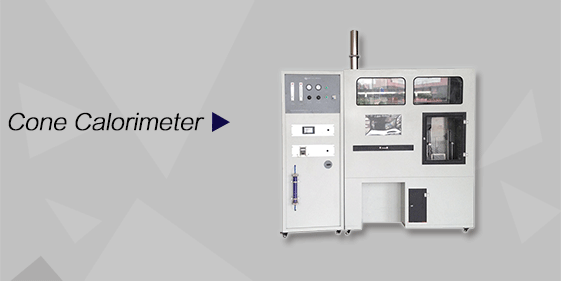
Cone Calorimeter
The import of American VTEC, cone calorimeter ultra high cost performance
more
-
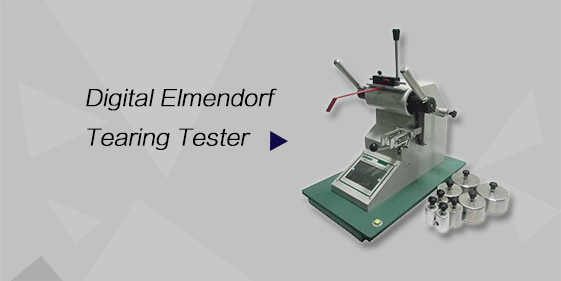
Digital Elmendorf Tearing Tester
Pendulum method test material tear strength, operating more simple, more accurate data
more
-
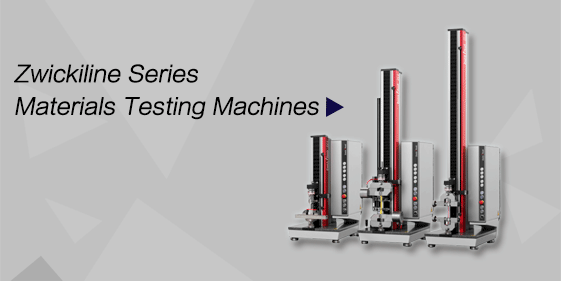
ZwickiLine Materials testing machines
Top of the world's leading universal material testing machine
more
Solid Auto - ignition Point Tester
BACK


Standards:
It meets the requirements of GB/T 21756-2008 "Determination of Relative Autoignition Temperature of Solid Substances for Industrial Use", French National Standard NFT20-036-1985 "Determination of Relative Autoignition Temperature of Solid Solids for Industrial Use", and NY/T1860 "Experimental Guidelines for the Determination of Physicochemical Properties of Pesticides" Part 24: Relative Autoignition Temperature of Solids.
Applications:
This tester determines the self - ignition characteristics of solid chemical products by placing the substances in a 20mm - side - length cubic wire mesh and increasing the temperature. It complies with standards such as GB/T 21756 - 2008 *Determination of the Relative Self - Ignition Temperature of Solid Substances in Chemical Products for Industrial Use* and NF T20 - 036.
Product Information:
This tester determines the self - ignition characteristics of solid chemical products by placing the substances in a 20mm - side - length cubic wire mesh and increasing the temperature. It complies with standards such as GB/T 21756 - 2008 *Determination of the Relative Self - Ignition Temperature of Solid Substances in Chemical Products for Industrial Use* and NF T20 - 036.
Features:
1. It adopts an embedded processor and the Windows CE operating system.
2. With an 8 - inch liquid - crystal touch screen, it can display the test status in real - time.
3. It supports two working modes, the "standard mode" and the "custom mode" (during the custom experiment, it can save the exothermic peak value in real - time, etc.), taking into account both the standardization and flexibility of the test.
4. It integrates high - temperature heat - insulation technology, temperature control, and precise detection technology.
5. It uses an electrically heated muffle furnace with natural air - circulation convection to ensure uniform heating of the samples.
6. The furnace cavity is made of heat - insulating vacuum ceramic fiber, which has a good heat - insulation effect.
7. The cubic wire mesh is hung at the bottom of the furnace cover, making it safe and convenient to place samples.
8. It realizes automatic heating control, temperature control, and combustion detection.
9. A cleaning rod is provided for cleaning the inner cavity's central through - hole.
10. A debris tray is provided to collect samples falling from the wire mesh and residual samples cleaned out by the rod.
11. A cooling bracket is provided to place the assembled furnace cover on it for cooling after the test.
12. It uses a thermocouple sensor to quickly and accurately respond to temperature changes.
13. It displays the time - temperature curve in real - time, and the original data can be viewed.
14. The test process is fully automated, requiring no manual intervention. It supports functions such as parameter setting, data storage, and report viewing.
Technical Parameters:
|
Working Environment |
(5~40)℃, <85%RH |
|
Test Objects |
Solid |
|
Temperature Control Range |
Room temperature~650℃ |
|
Standard Rise Rate |
0.5 ℃/min |
|
Customized Rise Rate |
(0.1~3.0)℃/min |
|
Temperature Measurement Range |
(0~800)℃ |
|
Temperature Measurement Resolution |
0.1 ℃ |
|
Temperature Measurement Accuracy |
±2.5 ℃ below 300 ℃ |
|
Heating Chamber Capacity |
±(0.75% of the reading) above 300 ℃ |
|
Timing Range |
2L |
|
Mesh Cage Size |
(0~96)h |
FAQ:
1. What is a Solid Auto-Ignition Point Tester used for?
It is used to determine the auto-ignition temperature of solid materials, which is critical for assessing fire hazards and material safety in industrial and laboratory settings.
2. Which types of materials can be tested?
The tester can evaluate a wide range of solid substances, including fuels, polymers, composite materials, and other combustible solids.
3. How does the Solid Auto-Ignition Point Tester work?
The device gradually heats the sample under controlled conditions while monitoring temperature and ignition onset, accurately determining the point at which the material spontaneously ignites.
4. What safety features are included?
It is equipped with emergency stops, interlocks, and protective shields to ensure safe operation during high-temperature testing.
5. How often should the tester be calibrated and maintained?
Calibration and maintenance, including sensor checks, cleaning, and inspection of heating elements, should follow the manufacturer’s schedule—typically every 3–6 months depending on usage frequency.
