




Search keywords:
product name, product type, model number,
test method, manufacturer, technique, application
-
Cone Calorimeter
The import of American VTEC, cone calorimeter ultra high cost performance
more
-
Digital Elmendorf Tearing Tester
Pendulum method test material tear strength, operating more simple, more accurate data
more
-
ZwickiLine Materials testing machines
Top of the world's leading universal material testing machine
more
Flame Spread Test Machine
BACK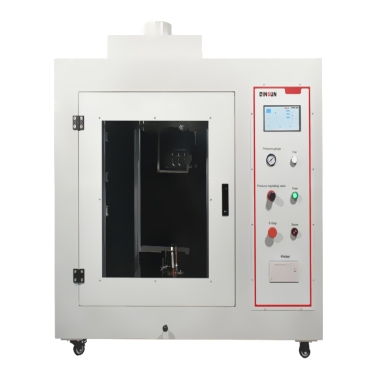


Standards:
Applications:
The Flame Spread Test Machine is applicable to flame spread and ignition hazard assessment across the following industries and products:
(1) Protective Clothing Industry: fire-fighting suits, heat-resistant garments, industrial protective clothing, multi-layer protective apparel
(2) Textile Industry: woven fabrics, knitted fabrics, coated textiles, quilted materials, laminated and sandwich structures
(3) Industrial Fabrics and Covers: curtains, large tents, awnings, door masks, industrial drapes
(4) Building and Interior Materials: decorative fabrics, wall coverings, interior textile panels
(5) Marine and Transportation Industry: marine interior materials, surface finishes, bulkhead and ceiling materials
(6) Aviation Industry: aircraft interior materials complying with Boeing and aviation flammability requirements
(7) Children’s and Safety Products: materials used in products requiring flammability control for safety purposes
(8) Research and Quality Inspection: laboratory testing samples, third-party certification testing, product performance verification
The instrument is suitable for new product development, production quality control, laboratory research, and third-party testing applications.
Product Information:
The Flame Spread Test Machine is designed for evaluating the flame spread performance of protective clothing and related materials under controlled small-flame exposure conditions. The instrument is developed and manufactured in accordance with ISO 15025. enabling accurate assessment of limited flame spread behavior when materials are subjected to ignition hazards.It is used as a professional testing instrument for simulating flame diffusion performance of fire protective clothing, providing reliable data for product development, quality control, and regulatory compliance.
Standards
The instrument complies with and can be applied to the following international and domestic standards (including but not limited to):
(1) ISO 15025:2000 – Protective clothing — Protection against heat and flame — Method of test for limited flame spread
(2) BS EN ISO 15025:2002 – Protective clothing — Protection against heat and flame — Method of test for limited flame spread
(3) GB/T 5456-2009 – Textiles — Determination of flame spread properties of vertical specimens
(4) GB/T 6675.3-2014 – Safety of toys — Part 3: Flammability
(5) ISO 5658-2 – Reaction to fire tests — Spread of flame — Part 2: Lateral spread on building products in a vertical configuration
(6) IMO FTP Code Resolution A.653(16) – Fire test procedures for marine materials
(7) ASTM E1317 – Standard test method for flammability of marine surface finishes
(8) ASTM D3675 – Surface flammability of materials
(9) ASTM E1321 / ASTM E162 – Flame spread and heat release tests
(10) NF P 92-504 – Speed of flame spread test
(11) BS 476 Part 7 – Surface spread of flame test
(12) Boeing BSS 7304 – Aircraft interior material flammability
(13) UL 94 – Tests for flammability of plastic materials
Features
(1) Transparent safety door with heat-resistant glass observation window for continuous monitoring during testing
(2) Fully enclosed test chamber minimizing external environmental interference
(3) Smart touch-screen control system with programmable microcomputer control
(4) Integrated test control, data acquisition, calculation, display, and report printing functions
(5) Adjustable burner angle with multiple mounting aids to meet different combustion angle requirements
(6) Automatic ignition system with precise timing control
(7) Automatic exhaust system ensuring safe removal of combustion gases
(8) Oversized test chamber adaptable to multiple standards by replacing specimen holders
Technical Parameters
| Item | Specification |
|---|---|
| Test Chamber | With observation window, internal black coating |
| Internal Volume | 0.5 m³ |
| Control Screen | Smart touch screen |
| Exhaust System | Automatic exhaust |
| Observation Window | Transparent heat-resistant glass |
| Distance from Burner Tip to Specimen | ≥ 75 mm |
| Flame Height | Adjustable |
| Burner Orientation | Horizontal or inclined |
| Sample Clamp Size | 190 mm × 150 mm (L × W) |
| Ignition Mode | Automatic ignition |
| Burning Timer | Digital timer, accuracy 0.1 s |
| Burner Combustion Tube | 8 tubes Ø 0.9 mm, 1 center tube Ø 1.7 mm |
| Overall Dimensions | 1400 mm × 900 mm × 1450 mm |
| Weight | 120 kg |
Accessories
Test chamber with observation window
Burner assembly
Adjustable specimen holder
Automatic ignition system
Exhaust duct and fan system
Touch screen controller
Power cable
Operation manual
Calibration and inspection documents
Test Procedures
(1) Prepare the specimen according to the applicable standard
(2) Install the specimen in the appropriate holder
(3) Adjust burner position, angle, and flame height
(4) Set test parameters via the touch screen
(5) Start automatic ignition and begin timing
(6) Observe flame spread behavior through the observation window
(7) Record flame spread time, damage length, and other required results
Maintenance Information
(1) Clean the test chamber and burner after each test to remove combustion residue
(2) Regularly inspect ignition and exhaust systems for proper operation
(3) Verify burner flame height and alignment periodically
(4) Check electrical and control components for stable performance
(5) Store and operate the instrument in a well-ventilated laboratory environment
FAQ
1.What is a Flame Spread Test Machine?
A Flame Spread Test Machine is a device used to evaluate the flame spread characteristics of materials under controlled conditions. It simulates fire behavior to determine how quickly flames propagate over a material's surface, which is crucial for assessing fire safety and compliance with various building codes.
2.How does a Flame Spread Test Machine work?
The machine typically involves placing a sample material in a test chamber where it is exposed to a controlled flame. Sensors measure the time it takes for the flame to reach certain distances across the material surface. Results are usually compared against standard benchmarks to classify the material's flammability.
3.Why is flame spread testing important?
Flame spread testing is essential for ensuring that building materials meet safety standards. Understanding how a material behaves in a fire helps architects, builders, and safety officials to minimize fire hazards and protect lives and property. It's also often a regulatory requirement for construction materials.
4.What materials can be tested with a Flame Spread Test Machine?
A variety of materials can be tested with a Flame Spread Test Machine, including textiles, plastics, wood, and composites. Each material type may require specific testing protocols and standards, as their flammability characteristics can vary significantly.
5.Are there different standards for flame spread testing?
Yes, there are several standards for flame spread testing, including ASTM E84 (also known as the Steiner Tunnel Test), NFPA 255. and UL 723. Each standard has specific methodologies and criteria for evaluating materials, catering to different applications and industries.
6.How can I choose the right Flame Spread Test Machine?
When selecting a Flame Spread Test Machine, consider factors such as testing standards required, the type of materials you will be testing, the machine's capacity, and its ease of use. Also, look for machines with reliable data collection features and compliance with industry regulations.
