




Search keywords:
product name, product type, model number,
test method, manufacturer, technique, application
-
Cone Calorimeter
The import of American VTEC, cone calorimeter ultra high cost performance
more
-
Digital Elmendorf Tearing Tester
Pendulum method test material tear strength, operating more simple, more accurate data
more
-
ZwickiLine Materials testing machines
Top of the world's leading universal material testing machine
more
Dynamic Loading Machine
BACK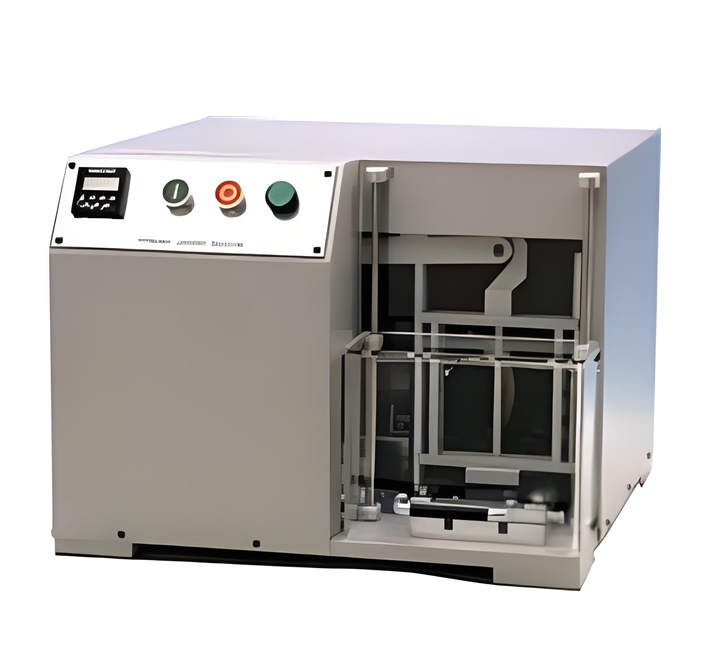


Standards:
ISO 2094 Textile floor coverings - Determination of thickness loss under dynamic loading.
Applications:
Product Information:
The dynamic loading machine gives information on the thickness loss of textile floor coverings, by simulation two of the main actions of walking: compression and shearing effect at the edge of the shoe according to ISO 2094. The weight has two rectangular steel feet, 51mm by 6.5mm and 9.5mm deep, attached to its underside, 38.1mm apart. By means of a pivoted arm, a cam raises the weight and then allows it to fall freely from a controlled height onto the carpet specimen every five seconds. The steel plate to which the specimen is clamped, is slowly and continuously traversed in such a way that there is 3.2mm movement between each drop of the weight. There is thus a half-overlap by the steel feet at each impact. A complete traverse forward and back is completed after every 25 impacts, producing a uniformly compressed area 50mm wide by 90mm long.
Technical Parameters:
| Items | Parameters |
| Dimension | 500(W)x 500(D)x 370(H)mm |
| Power consumption | 250W |
| Steel feet weight | 51mmx 6.5mm, 6.5mm thickness |
Features:
Stainless steel structure, paint spray processing, good anti-corrosion, long service life.
Easy operation. The weight with two rectangular steel feet is repetitively dropped off to impact the floor coverings for periodic dynamic loading test.
Good stability with minor deviation on test results
Stainless steel plate to which the specimen is clamped.
FAQs:
1. What is a Dynamic Loading Machine used for?
It is used to evaluate the performance and durability of materials or components under repeated dynamic loading.
2. What products can be tested?
It can be used for mechanical components, structural parts, materials, and various industrial products.
3. What does the machine evaluate?
It evaluates fatigue resistance, deformation, durability, and failure behavior under dynamic loads.
4. Why is dynamic loading testing important?
It helps assess product reliability and service life under actual or simulated working conditions.
5. Can the loading conditions be adjusted?
Yes. Load, frequency, displacement, and test cycles can generally be adjusted according to the testing requirements.
