



Search keywords:
product name, product type, model number,
test method, manufacturer, technique, application
-
Cone Calorimeter
The import of American VTEC, cone calorimeter ultra high cost performance
more
-
Digital Elmendorf Tearing Tester
Pendulum method test material tear strength, operating more simple, more accurate data
more
-
ZwickiLine Materials testing machines
Top of the world's leading universal material testing machine
more
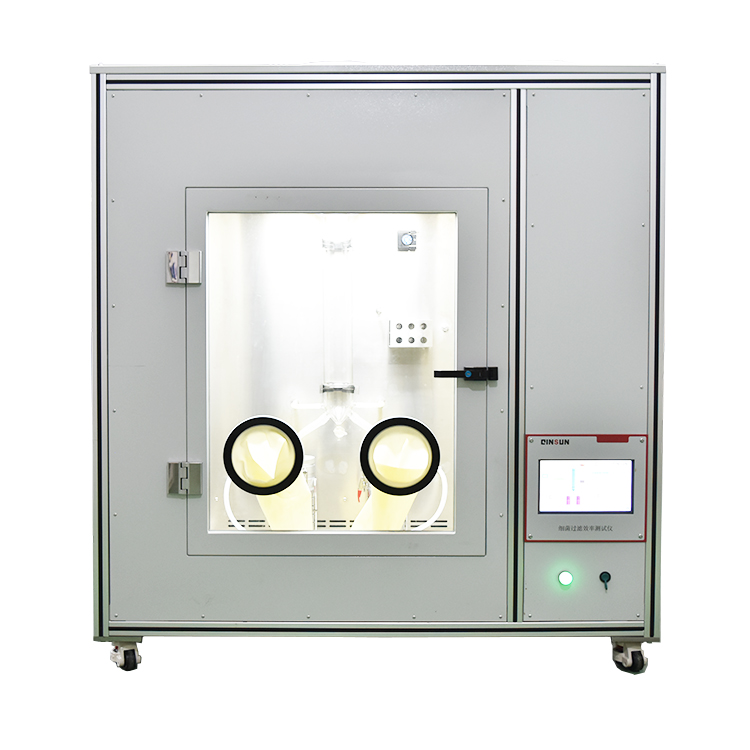
Bacterial Filtration Efficiency Tester-G299
BACK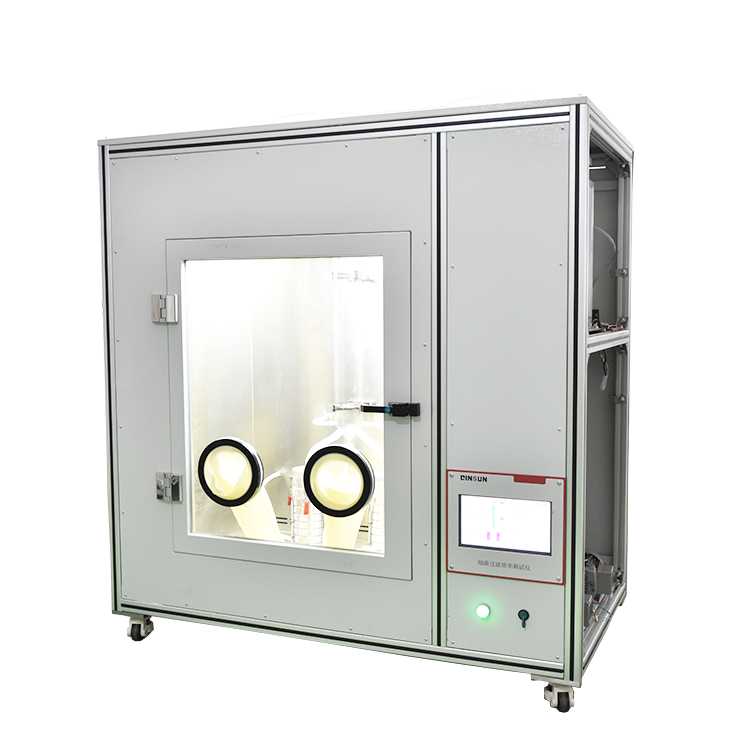


Standards:
Applications:
Mask Bacterial Filtration Efficiency Tester is applied to test the filtration efficiency of mask, can be used in metering calibration department, scientific research institution, mask manufacturer and other related departments.
Product Information:
Mask Bacterial Filtration Efficiency Tester is applied to test the filtration efficiency of mask, can be used in metering calibration department, scientific research institution, mask manufacturer and other related departments.
Standards:
YY 0469-2004 Technical requirements for surgical mask
BS EN 14683-2014 Medical face masks - Requirements and test methods
ASTM F2100-2019 Standard Specification for Performance of Materials Used in Medical Face Masks
ASTM F2101 Standard Test Method for Evaluating the Bacterial Filtration Efficiency (BFE) of Medical Face Mask Materials, Using a Biological Aerosol of Staphylococcus aureus
Feature:
1.Bacterial Filtration Efficiency Tester Of Mask: Negative pressure testing system, which can protect operator’s safety.
2.Peristaltic pump was built in the negative pressure cabinet, A & B two routes 6 level Andersen sampling head.
3.The flow speed of peristaltic pump can be set.
4.The spray flow of bacterial liquid inside the special microbial aerosol generator can be set.
5.BFE tester good atomization effect.
6.Embedded high speed industrial microcomputer control.
7.10.4 "industrial high brightness color touch screen display.
8.USD connector, support USB data archived
9.Mask BFE Tester high brightness light installed in the cabinet.
10.Switching type glass door in front of the machine, easy to observe by the operator.
Specification:
| Specification | Value |
|---|---|
| A Route Sampling Flow | 28.3 L/min; resolution: 0.1; accuracy: ±2.0% |
| B Route Sampling Flow | 28.3 L/min; resolution: 0.1; accuracy: ±2.0% |
| Spray Flow | 0.1–10 L/min; resolution: 0.1; accuracy: ±5.0% |
| Peristaltic Pump Flow | 0.001–3.0 mL/min; resolution: 0.001; accuracy: ±2.0% |
| Negative Pressure Chamber | −90 to −120 Pa; resolution: 0.1; accuracy: ±1.0% |
| Working Temperature | 0–50°C |
| High-Efficiency Particulate Air (HEPA) Filter Properties | ≥99.995% @ 0.3 μm; ≥99.995% @ 0.12 μm |
| Aerosol Generator Particle Size | Average diameter: (3.0 ± 0.3) μm; geometric standard deviation: <1.5 |
| Double-Route Six-Stage Andersen Sampling Apparatus | Stage I: >7 μm; Stage II: 4.7–7 μm; Stage III: 3.3–4.7 μm; Stage IV: 2.1–3.3 μm; Stage V: 1.1–2.1 μm; Stage VI: 0.6–1.1 μm |
| Total Positive Quality Control Sampler Particles | (2200 ± 500) CFU |
| Negative Chamber Flow Speed | 25 m/min |
| Aerosol Chamber Size | At least 600 × 80 × 3 mm |
| Power Supply | 220 V AC, 60 Hz |
| Noise | <65 dB(A) |
FAQ
1. What is the G299 used for?
It measures the bacterial filtration efficiency (BFE) of medical face masks and filter materials. It does this by challenging them with a controlled Staphylococcus aureus aerosol and comparing bacterial counts with and without the specimen in the airstream.
2. Which test standards does it support?
It's designed for the BFE method of EN 14683 Annex B and ASTM F2100. and it can also be adapted for YY 0469 and YY/T 0969 protocols. Test parameters such as spray flow, negative pressure and sampling volume can be set per protocol.
3. Why are there two sampling routes, A and B?
Route A is the control route (no specimen), and Route B is the test route (with specimen). Both routes sample at 28.3 L/min in parallel under identical conditions, so the paired CFU counts give a direct BFE calculation and also compensate for run-to-run aerosol variation.
4. What ensures accuracy and repeatability?
A sealed negative pressure chamber (−90 to −120 Pa) prevents aerosol leakage; HEPA filtration (≥99.995% @ 0.3 μm) protects the operator and environment; the aerosol generator produces a stable 3.0 ± 0.3 μm challenge (GSD < 1.5); and the six-stage Andersen sampler provides size-fractionated deposition. A positive control of 2200 ± 500 CFU verifies organism viability and system recovery.
5. What are the site and operating requirements?
Working temperature 0–50 °C; power 220 V AC, 60 Hz; noise < 65 dB(A); and an aerosol chamber of at least 600 × 80 × 3 mm. Note that the 60 Hz rating needs to be confirmed when the unit will operate on a 50 Hz mains supply.