




Search keywords:
product name, product type, model number,
test method, manufacturer, technique, application
-
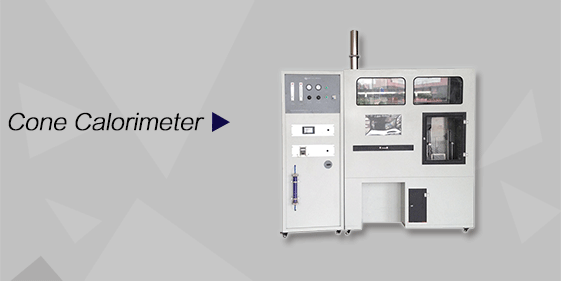
Cone Calorimeter
The import of American VTEC, cone calorimeter ultra high cost performance
more
-
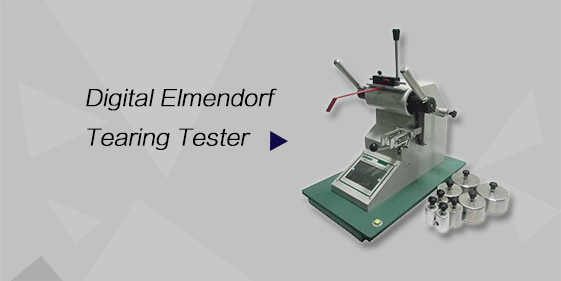
Digital Elmendorf Tearing Tester
Pendulum method test material tear strength, operating more simple, more accurate data
more
-
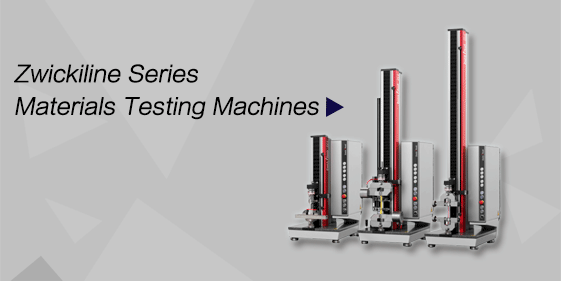
ZwickiLine Materials testing machines
Top of the world's leading universal material testing machine
more
Mask Filter Efficiency Tester
BACK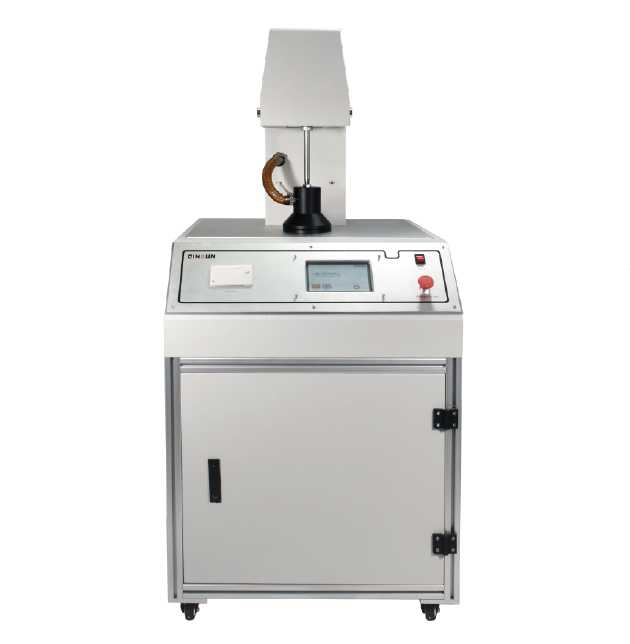


Standards:
Applications:
Mask Particle Filtration Efficiency (PFE) Tester can be used to detect the filtration efficiency and resistance of particles such as masks and filter materials in medical device inspection center, safety protection inspection center, drug inspection center, disease prevention and control center, textile inspection center, hospital, mask research & development and manufacturer.
Product Information:
Mask Particle Filtration Efficiency (PFE) Tester can be used to detect the filtration efficiency and resistance of particles such as masks and filter materials in medical device inspection center, safety protection inspection center, drug inspection center, disease prevention and control center, textile inspection center, hospital, mask research & development and manufacturer.
Technical features
The color high-definition LCD touch screen is adopted, which makes the content more intuitive and the operation more convenient.
It is equipped with a special salt aerosol generator, which can generate aerosols of specific particle size and concentration.
Equipped with a series of special clamps, suitable for the detection of various masks.
Built-in high life photometer module, accumulated sampling time, prompt optical path cleaning.
Automatic control of aerosol generation and automatic calculation of capture efficiency and mask airflow resistance, reducing human intervention.
Built-in high-precision electronic flowmeter and high-performance sampling pump to ensure flow stability.
Built-in compressor with automatic pneumatic clamping function.
Equipped with an anti-static device.
Automatic infrared anti-pinch protection function to protect personnel safety.
No leakage of aerosol, and a high degree of personal protection.
The detection data can be exported via U disk or printed by Bluetooth printer.
Optional oily aerosol generator.
Standards
EN 143 Protection device, particle filter requirement, test, mark
EN 149 Respiratory protection device, microparticle filter with half mask required test mark
NIOSH 42 CFR Part 84 Respiratory protection device
GB/T 2626 Self - priming filter type particulate respirator of Respiratory protective equipment
GB/T 32610 Technical specification for daily protective masks
Several Major Features
Smart touch screen control + test report printing
PLC control system, more efficient and reliable, programmable 7-inch color LCD touch screen,Achieve a variety of functions such as control, detection, calculation and data display.
Multiple test fixtures:
The instrument has a variety of test fixtures that can test different types of masks.
High degree of automation:
The device is designed as a double control pneumatic clamping method, which is easy to operate and has high safety.
Powerful built-in function:
The equipment can test the penetration efficiency, penetration resistance and flow rate. At the same time, the flow pressure difference of the equipment can be set arbitrarily, thus satisfying various experiments, stable performance and good repeatability of test data.
FAQ
1. What is a mask filter efficiency tester?
It is laboratory equipment that measures how well a mask's filter media blocks particles and bacteria. Testers pass a controlled aerosol through a mask sample and compare the particle counts before and after filtration, so the result is expressed as filtration efficiency as a percentage.
2. What does it measure: BFE, PFE or VFE?
A mask filter efficiency tester typically measures bacterial filtration efficiency (BFE) and particulate filtration efficiency (PFE). BFE uses a bacterial aerosol such as Staphylococcus aureus, while PFE uses a polydisperse particle aerosol at a defined size, typically around 0.3 μm. Viral filtration efficiency (VFE) can be measured with additional configurations that use a viral aerosol.
3. Which standards can a mask filter efficiency tester test to?
Common standards are EN 14683 (BFE), ASTM F2100 (BFE and PFE), GB/T 32610 and GB 2626. Before buying a mask filter efficiency tester, check that its aerosol generation, flow rate, sampler stages and pressure control match the standard you need to report.
4. How do I choose the right mask filter efficiency tester?
Match the tester to your target standard first, then compare sampling flow (28.3 L/min is typical), aerosol particle size control (3.0 ± 0.3 μm), chamber sealing and negative pressure range, HEPA filter rating, and whether dual-route A/B sampling lets you run control and test samples at the same time.
5. How often does a mask filter efficiency tester need calibration?
Calibrate flow, pressure and particle counting at least annually, and verify performance with a positive control at each test run (for example, 2200 ± 500 CFU). Use certified reference materials and record the results, so your reports stay traceable and comparable over time.

