Search keywords:
product name, product type, model number,
test method, manufacturer, technique, application
-
Cone Calorimeter
The import of American VTEC, cone calorimeter ultra high cost performance
more
-
Digital Elmendorf Tearing Tester
Pendulum method test material tear strength, operating more simple, more accurate data
more
-
ZwickiLine Materials testing machines
Top of the world's leading universal material testing machine
more
Leather Softness Tester
BACK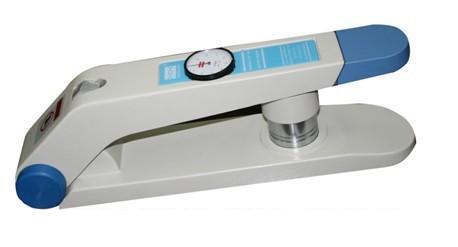


Standards:
IULTCL IUP 36,equivalent EN ISO 17235
Applications:
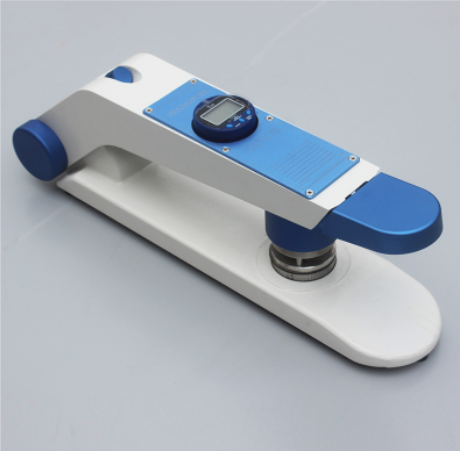
Leather Softness Tester, to determine the softness of leather and coated fabrics and other soft materials. Softness tester does not need samples to be cut from leather prior to testing. This enables a quality system to be set-up between supplier and customer whenever leather softness is a priority.
Product Information:
This machine is designed based on IULTCS.IUP/36. It is characterized by accuracy, beautiful appearance, simple operation, easy maintenance and convenient portability.Softness Tester, to determine the softness of leather and coated fabrics and other soft materials. Softness tester does not need samples to be cut from leather prior to testing.
Parameter details:
Weight:6 kg
Width:500 mm
Depth:100 mm
Height:200 mm
Standards:
ISO 17235:2002: Leather — Physical and mechanical tests — Determination of softness
Features:
Non-destructive testing: Measures the deformation of leather by applying a certain load without damaging the leather.
Standardized testing: Complies with international standards (such as ISO 17235:2002) to ensure the accuracy and consistency of test results.
Multiple testing modes: Offers both analog and digital display modes for user convenience.
Wireless transmission: The latest models support wireless transmission, facilitating data collection and analysis at different locations.
Multiple structural types: Available in both mechanical and electronic versions to meet different testing needs.
High-precision measurement: Utilizes high-precision force sensors to ensure the accuracy of test results.
Parameters:
| Description | Details |
|---|---|
| Load | 530±10g |
| Scale | 0.1——10mm |
| Volume | 13.6×48.5×16.8 cm |
| Weight | 5.3kg |
Accessoriess:
Test rings (such as Φ20mm, Φ25mm standard test rings)
Pressure ring
Metal circular plate (zeroing plate)
Calibration leather (standard softness rubber)
Pressure handle
Upper arm
Upper clamp assembly, etc.
Test Procedures:
1. Instrument Preparation: Place the equipment in the laboratory (recommended temperature 23±2℃, humidity 50±5% RH), ensure the workbench can bear a weight of ≥50kg, connect the power supply, and wait for the instrument to complete initialization.
2. Sample Preparation: Prepare the test samples according to the testing requirements; ensure the size and shape of the test samples meet the testing requirements.
3. Parameter Setting: Set various parameters according to the user manual of the ZY-RRD3000 leather softness tester, such as test clamp width, test speed, and deformation value.
4. Start Testing: Place the prepared sample on the test platform, start the test, the test blade will move downwards, and the test interface will display the test data in real time.
5. Test Completion: After the test is completed, the test blade will automatically reset, and the ZY-RRD3000 leather softness tester will automatically display the test results.
6. Test Results: Click the view button to view the test data; the ZY-RRD3000 leather softness tester has a built-in thermal printer to print the test results.
7. Cleaning and Maintenance: After use, clean and maintain the ZY-RRD3000 leather softness tester promptly.
YouTube video introduction:https://www.youtube.com/watch?v=ycWGikyrEQ0
FAQ:
(1) What is this product?
A leather softness tester is a precision, often portable, instrument designed to measure the pliability, compressibility, and flexibility of leather, hides, and synthetic materials.
(2) What is this product used for?
A leather softness tester is a precision, non-destructive instrument used to measure the flexibility, pliability, and softness of leather and animal skins.
(3) How does this product work?
A leather softness tester measures the flexibility and softness of leather by applying a controlled, non-destructive force to a clamped sample. A digital or analog gauge records the distension or depth of indentation created by a metal rod/plunger. Lower resistance/higher distension indicates softer, more flexible leather.
(4) Why is this product important?
A leather softness tester is a specialized instrument used to objectively measure the flexibility and pliability of leather and similar materials. It is essential for quantifying tactile quality, ensuring batch-to-batch consistency, and optimizing production in footwear, furniture, and garment manufacturing, replacing inconsistent hand-touch evaluations with accurate, standardized numerical data.
(5) Which industries is this product suitable for?
A leather softness tester is a specialized, non-destructive tool used to measure the flexibility and pliability of natural leather, synthetic leather, and nonwoven fabrics. It is widely used for quality control in the tanning industry, footwear manufacturing, luxury goods production, furniture upholstery, automotive interiors, and by testing laboratories.