




Search keywords:
product name, product type, model number,
test method, manufacturer, technique, application
-

Cone Calorimeter
The import of American VTEC, cone calorimeter ultra high cost performance
more
-

Digital Elmendorf Tearing Tester
Pendulum method test material tear strength, operating more simple, more accurate data
more
-

ZwickiLine Materials testing machines
Top of the world's leading universal material testing machine
more
Leather Shoe Hook Core Longitudinal Bending Stiffness Tester
BACK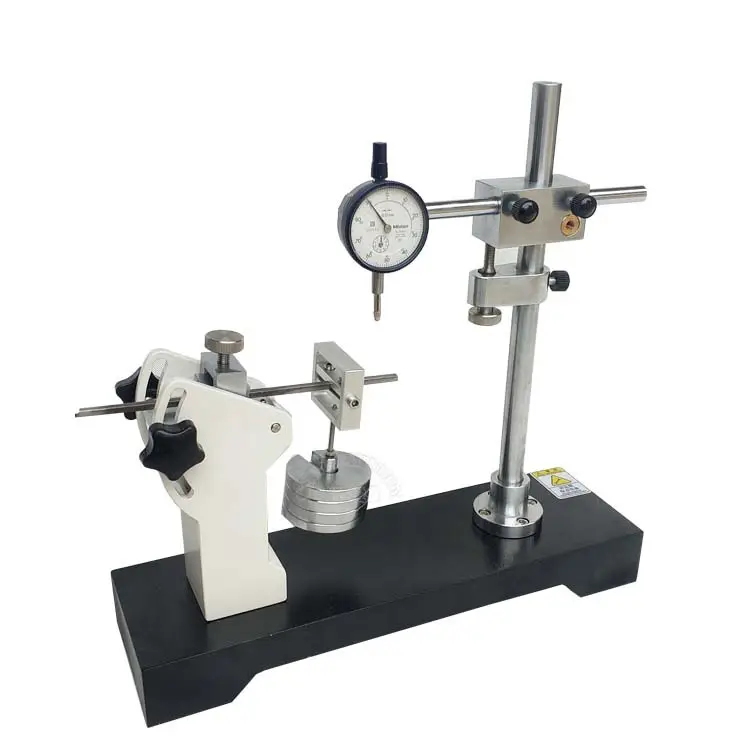


Standards:
Applications:
Shanks Longitidinal Stiffness Tester determines the stiffness in the longitudinal direction of steel shanks used for the reinforcement of the waist region of women’s shoes, men’s shoes and children’s shoes.
Product Information:
The Leather Shoe Hook Core Longitudinal Bending Stiffness Tester is designed to measure the longitudinal bending stiffness of steel shanks used in the waist region of footwear. It quantifies the resistance of shanks to bending under load, providing precise data for footwear design, quality control, and material evaluation. The tester is lightweight, durable, and allows rapid, accurate measurement of hook core stiffness.
Standards:
(1)JBS-5131 / 4.18 — Determination of Shank Longitudinal Stiffness
(2)QB/T 1812 — Footwear Shank Testing Standard
(3)QB/T 1813 — Leather Shoe Shank Stiffness Test Method
(4)EN ISO 20344 — Personal Protective Equipment — Footwear Test Methods
(5)ASTM F-xxxx — Standard Test Method for Footwear Shank Stiffness
Test principle:
Digital display steel hook core tester: this product is suitable for measuring the longitudinal bending stiffness of the shoe hook, the principle is to fix the heel end of the hook core, the front end of the load, so that it produces bending deformation, and then measure the bending deflection of the hook core, to calculate the bending stiffness of the hook core, the instrument is lightweight and durable, easy to operate, good maintenance, the measurement can quickly measure the accurate hook core stiffness.
Test Method:
Shanks Longitidinal Stiffness Tester is suitable for measuring the longitudinal bending stiffness of leather shoes hook center. Its principle is to fix the hook heel, add a certain load to the front end to make it bend, and then measure the bending modulus of hook heel to calculate the bending stiffness.
This machine is light and durable, easy to operate and maintain, as well it can quickly measure the accurate hook stiffness which is dependent on the metal of the shank and its cross section but not on its length.
Technical parameters:
| No. | Item | Specification | |
|---|---|---|---|
| 1 | Rear Clip Claw Length | 32 mm | |
| 2 | Inclination Angle of Front Bar | 10° | |
| 3 | Adjustable Angle of Rear Clamp Seat | 30° | |
| 4 | Length of Special Quantity Card | 60 ± 0.02 mm | |
| 5 | Front Splint Thickness | 12 mm | |
| 6 | Weight | 200 ± 1 g × 4 | |
| 7 | Machine Volume | 33 × 16 × 30 cm | |
| 8 | Machine Weight | 12 kg | |
| 9 | Deflection Scale |
|
Features:
(1)Digital display for precise measurement of bending deflection and stiffness.
(2)Fixes the heel end of the shank and applies a controlled load to the front end for longitudinal bending measurement.
(3)Lightweight and compact design, facilitating easy operation and transport.
(4)Durable construction suitable for continuous laboratory and production use.
(5)Fast and accurate measurement of hook core stiffness, independent of shank length.
(6)Adjustable clamps and inclination angles for different shank sizes and types.
(7)Clear deflection scale (0–10 mm) for intuitive observation of bending results.
(8)Compatible with a variety of shank metals and cross-sectional shapes.
FAQs:
1. What is the tester used for?
It is used to evaluate the longitudinal bending stiffness of leather shoe hook core materials.
2. What materials can be tested?
It is mainly suitable for leather, shoe hook core, and related footwear materials.
3. What does the test measure?
It measures the resistance of the specimen to bending in the longitudinal direction.
4. Why is bending stiffness important?
It helps assess the structural support, flexibility, and durability of footwear materials.
5. How is the test performed?
The specimen is fixed in the tester and subjected to controlled bending, while the bending resistance is measured.
