




Search keywords:
product name, product type, model number,
test method, manufacturer, technique, application
-

Cone Calorimeter
The import of American VTEC, cone calorimeter ultra high cost performance
more
-

Digital Elmendorf Tearing Tester
Pendulum method test material tear strength, operating more simple, more accurate data
more
-

ZwickiLine Materials testing machines
Top of the world's leading universal material testing machine
more
Heel Impact Tester
BACK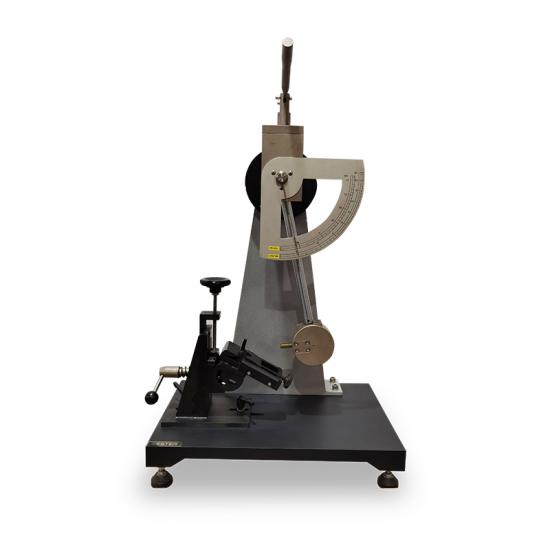


Standards:
Applications:
This Heel Impact Tester is used to determine the impact strength of heels of ladies’ shoes, and the result provides an assessment of the liability to failure under the occasional heavy blows received during wear.
Product Information:
Heel Impact Tester is used to determine the impact strength of heels of ladies’ shoes.
Standards:
BS-5131-4.8.
ISO 19953.
SATRA TM20
Features:
Its principle is, a heel, clamped with the tip uppermost and the stem approximately vertical, is subjected repeatedly to measured blows from a pendulum striker , the energy of the blows increasing successively until the heel fails. While the method is applicable to all types of high heels ,of whatever construction, it is particularly useful for injection molded plastics heels which incorporate a steel dowel reinforcement, giving information on the suitability of the dowel’s hardness or softness.
Parameters:
| No. | Item | Specification |
|---|---|---|
| 1 | Capacity | 0–18.3 J (13.5 ft-lb), minimum indication |
| 2 | Swing Arm | Φ25 mm |
| 3 | Energy of Pendulum Bob with Swing Arm Horizontal | 17.3 N·m (12.7 ft-lb) |
| 4 | Impact Hammer | Φ108 mm, 49.2 mm (D) |
| 5 | Distance Between Hammer Circle Center and Axle Center | 432 mm |
| 6 | Impact Blade | 25 × 6 × 35 mm (W × D × L), 3 mm (R) |
| 7 | Specimen Seat Adjustable Range | 0–25 mm (H), angle 1–45° |
| 8 | Machine Dimension | 63 × 40 × 105 cm |
| 9 | Weight | 101 kg |
FAQs:
1. What is a Heel Impact Tester used for?
It is used to evaluate the impact resistance and durability of shoe heels and heel materials.
2. What does the test determine?
It determines the ability of the heel to withstand repeated impact without cracking, breaking, or permanent deformation.
3. What materials can be tested?
It is mainly suitable for shoe heels made of plastic, rubber, wood, composite, and other heel materials.
4. Why is heel impact resistance important?
It helps assess the safety, durability, and service performance of footwear during walking and impact.
5. How is the test performed?
The heel specimen is subjected to controlled repeated impacts, and the specimen is inspected for damage or deformation after testing.
