




Search keywords:
product name, product type, model number,
test method, manufacturer, technique, application
-
Cone Calorimeter
The import of American VTEC, cone calorimeter ultra high cost performance
more
-
Digital Elmendorf Tearing Tester
Pendulum method test material tear strength, operating more simple, more accurate data
more
-
ZwickiLine Materials testing machines
Top of the world's leading universal material testing machine
more
Shoelace Abrasion Tester
BACK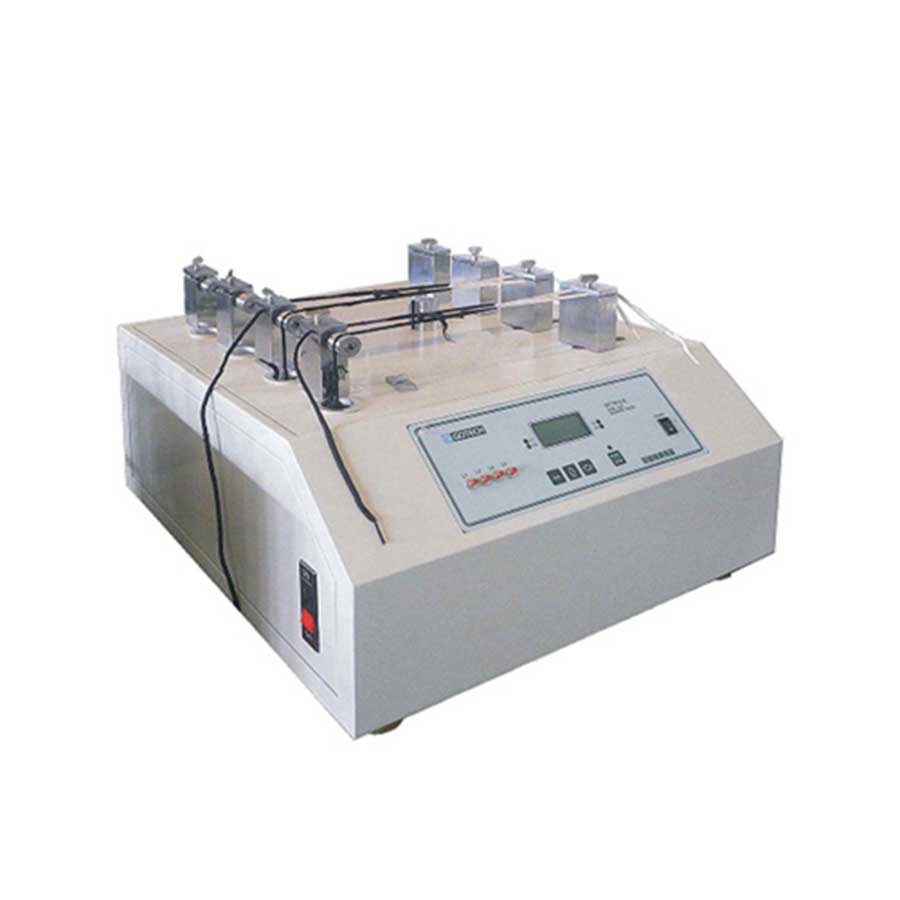


Standards:
Applications:
The tester is suitable for evaluating the abrasion resistance of shoelaces and eyelets in:
(1) Athletic shoes: Running shoes, basketball shoes, football shoes.
(2) Casual shoes: Sneakers, loafers, canvas shoes.
(3) Work and safety footwear: Industrial boots, steel-toe shoes with reinforced eyelets.
(4) Children’s footwear: School shoes and sports shoes with frequent lacing.
(5) Leather footwear: Dress shoes with leather laces and metal eyelets.
(6) Outdoor footwear: Hiking boots, trekking shoes, and waterproof boots.
(7) Footwear R&D: Testing innovative shoelace materials, coatings, or eyelet designs.
Product Information:
The Shoelace Abrasion Tester is designed to evaluate the wear resistance of shoelaces and eyelets by simulating the friction and tension experienced during actual footwear use. The instrument provides objective durability data, including the number of cycles to failure, enabling quality control, R&D, and performance verification of footwear lacing systems.This shoelace abrasion tester is used for shoelace against standard eyelet abrasion testing, or eyelet against standard shoelace abrasion testing. This tester is suitable for all kinds of shoelace and eyelet.
Principle:
Let shoelace cross the eyelet clamped on the fiber board, make the shoelace and eyelet form into 90 degree, make the fiber board and shoelace form into 45 degree. Then straining reciprocated the shoelace under the standard tension by eyelet. While the shoelace is damaged, stop the testing.
Standards:
(1) SATRA TM93 — Footwear: Shoelace and Eyelet Abrasion Test
(2) DIN 4843 — German Standard for Footwear Component Abrasion
(3) QB/T 2226 — Chinese Standard for Shoelace and Eyelet Durability
(4) SATRA TM154 — Footwear Lacing System Durability Testing
(5) ISO 22774 — Textiles and Plastics – Shoelace Abrasion Testing
(6) EN ISO 20344 — Personal Protective Equipment — Footwear — Test Methods
(7) ASTM F2023 — Standard Test Method for Footwear Components
(8) BS 5131:3.6:1991 — British Standard for Footwear Lacing Components
Parameters:
| No. | Item | Specification |
|---|---|---|
| 1 | Positions | 6 positions |
| 2 | Weights | 455 ± 5 g, 6 pcs |
| 3 | Control Method | Touch-screen control, 0–999.999 |
| 4 | Standard Eyelet | Brass, inner diameter: 4.5 mm |
| 5 | Fiberboard | 25 × 25 mm, inner diameter: 5.0 ± 0.2 mm |
| 6 | Movable Stroke | 76 ± 2 mm |
| 7 | Test Speed | 100 ± 5 cpm |
| 8 | Power Supply | 1∮ AC 220 V, 50/60 Hz |
| 9 | Dimensions (W × D × H) | 57 × 58 × 1025 px |
| 10 | Weight (Approx.) | 60 kg (excluding weights) |
Accessories:
(1) Standard weights (455 g × 6)
(2) Fiberboard with pre-mounted brass eyelets (6 pcs)
(3) User manual and calibration certificate
(4) Power cable
(5) Wrench for sample installation
Test Procedures:
(1) Install the fiberboard with standard eyelets into the test fixture.
(2) Thread the shoelace through the eyelets at the specified angles (90° at the eyelet, 45° at the fiberboard).
(3) Attach the standard weights (455 g) to each test position.
(4) Set the desired test speed (100 ± 5 cpm) and stroke (76 ± 2 mm) on the touch-screen interface.
(5) Start the test and monitor the abrasion cycles.
(6) The test automatically stops when the shoelace fails or the preset number of cycles is reached.
(7) Record the number of cycles to failure as a measure of durability.
FAQs:
1. What is a Shoelace Abrasion Tester used for?
It is used to evaluate the abrasion resistance and durability of shoelaces.
2. What materials can be tested?
It is suitable for shoelaces made of cotton, polyester, nylon, and other textile materials.
3. What does the test determine?
It determines the resistance of shoelaces to wear, fraying, and breakage caused by repeated abrasion.
4. Why is shoelace abrasion testing important?
It helps assess the service life and durability of shoelaces during actual use.
5. How is the test performed?
The shoelace is subjected to repeated rubbing under controlled conditions and inspected for abrasion or damage.
