




Search keywords:
product name, product type, model number,
test method, manufacturer, technique, application
-
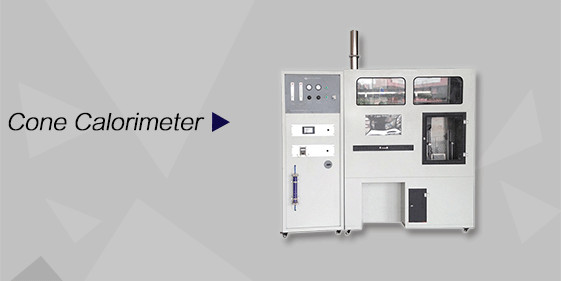
Cone Calorimeter
The import of American VTEC, cone calorimeter ultra high cost performance
more
-
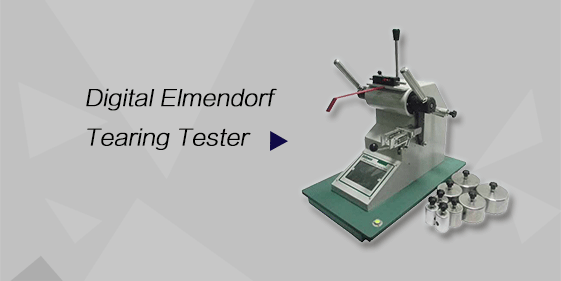
Digital Elmendorf Tearing Tester
Pendulum method test material tear strength, operating more simple, more accurate data
more
-
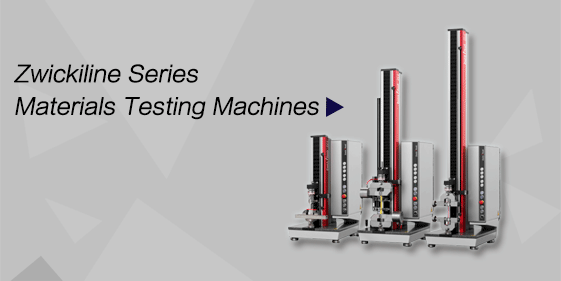
ZwickiLine Materials testing machines
Top of the world's leading universal material testing machine
more
G651 Shoes Bending Tester
BACK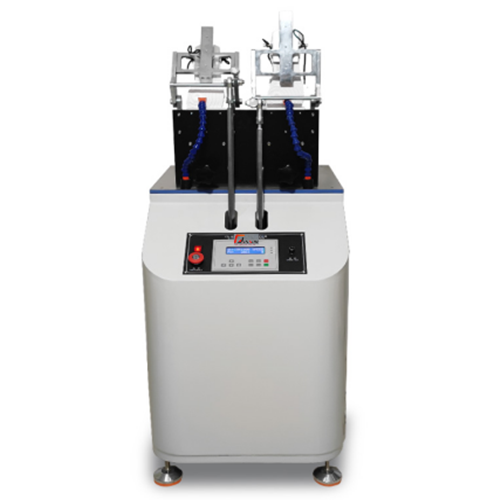


Standards:
Applications:
(1)Testing bending resistance of finished shoes, including sports, casual, and work footwear.
(2)Assessment of sole material durability, including rubber, EVA, and synthetic soles.
(3)Quality control in footwear manufacturing to ensure consistent product performance.
(4)Research and development of new footwear designs or sole materials.
(5)Evaluation of aging effects on footwear under repeated flexing conditions.
(6)Applicable in laboratories, footwear factories, and quality inspection agencies.
Product Information:
The Shoe Bending Tester is designed to evaluate the flexing resistance and durability of finished shoes and sole materials. By applying repeated reciprocating bending at fixed angles and frequencies, the tester measures folding performance and monitors crack initiation or growth, providing objective data for quality control and footwear development.
Standards
(1)GB/T 3903.1 — Footwear Flexing Test Method
(2)HG/T 2871-2008 — Finished Shoe Flexing Test Standard
(3)QB/T 4329-2012 — Whole Shoe Bending Resistance Test
(4)EN ISO 20344 — Personal Protective Equipment — Footwear Test Methods
(5)ASTM F1614 — Standard Test Method for Flexing Resistance of Footwear
Product Features
(1)Reciprocating bending mechanism for repeated flexing of shoes or sole specimens.
(2)Fixtures capable of holding finished shoes or sole materials securely.
(3)Simultaneous testing of one pair of shoes or two sole samples to increase throughput.
(4)Adjustable bending angle from 10° to 50° to control flexing degree.
(5)Variable flexing speed from 5 to 300 cycles per minute for different test protocols.
(6)LCD digital counter to record up to 999.999 flexing cycles.
(7)Robust construction suitable for long-term fatigue testing.
(8)Precision control ensures reproducible and consistent test results.
Technical Parameters
| Item | Specification |
|---|---|
| Specimen | One pair of shoes (two individual shoes) simultaneously |
| Bending angle | 10–50° adjustable |
| Flexing speed | 5–300 cycles per minute adjustable |
| Counter | LCD, 0–999.999 cycles |
| Power supply | AC220V, 3A |
| Dimensions | 450 × 650 × 1500 mm |
Accessories
(1)Fixture set for finished shoes
(2)Optional sole material clamps
(3)Power cable and user manual
Test Procedures
(1)Secure the test shoes or sole specimens in the designated fixtures.
(2)Set the desired bending angle and flexing speed according to the test standard.
(3)Start the machine and allow the reciprocating bending mechanism to operate for the preset number of cycles.
(4)Monitor the LCD counter to track the number of flexing cycles completed.
(5)Inspect the shoes or soles for signs of cracking or damage after testing.
(6)Record the results for performance evaluation or compliance verification.
Maintenance Information
(1)Clean the machine and fixtures after each test to remove dust or debris.
(2)Check moving parts and lubricate periodically to maintain smooth operation.
(3)Inspect electrical connections and control components regularly.
(4)Store in a dry, stable environment to prevent corrosion.
(5)Handle fixtures and specimens carefully to ensure measurement accuracy.
