




Search keywords:
product name, product type, model number,
test method, manufacturer, technique, application
-
Cone Calorimeter
The import of American VTEC, cone calorimeter ultra high cost performance
more
-
Digital Elmendorf Tearing Tester
Pendulum method test material tear strength, operating more simple, more accurate data
more
-
ZwickiLine Materials testing machines
Top of the world's leading universal material testing machine
more
Shoe anti-slip testing machine
BACK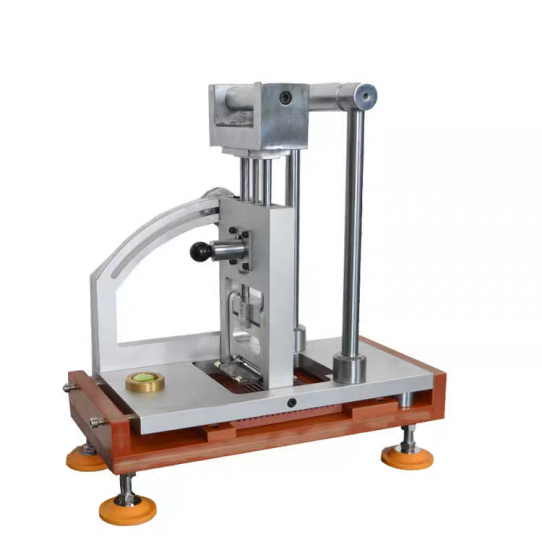


Standards:
Complies with standards such as ASTM F1677.
Applications:
Product Information:
The sole test specimen is attached to the specimen holder of the Portable Slip Resistance Tester. A weight mounted on the rotating support arm is then lowered onto the specimen holder, applying a constant vertical force that presses the test specimen against the flooring surface.By gradually tilting the rotating support arm of the Portable Slip Resistance Tester, the horizontal force acting on the test specimen is progressively increased until the specimen begins to slide instantaneously.The coefficient of friction corresponding to the moment immediately before the test specimen starts to slide is recorded as the maximum static coefficient of friction between the shoe sole and the flooring surface, also referred to as the slip resistance coefficient.
Parameters
|
Item |
Specification |
|
Specimen Size |
76.2 × 76.2 mm |
|
Applied Load |
10 lbs |
|
Floor Requirement |
Level and horizontal surface |
|
Dimensions |
Approx. 40 × 22 × 39 cm |
|
Weight |
Approx. 20 kg |
FAQ
1.What is a Shoe Anti-Slip Testing Machine?
A Shoe Anti-Slip Testing Machine is a specialized testing instrument used to evaluate the slip resistance of footwear soles on different walking surfaces. It measures the coefficient of friction between the shoe outsole and specified floor materials under controlled conditions. The test results help manufacturers assess the safety performance of shoes and ensure compliance with relevant standards.
2.Which standards can the Shoe Anti-Slip Testing Machine comply with?
Depending on the machine configuration, it can be designed to meet various international testing standards, including:
ISO 13287 – Personal protective equipment footwear slip resistance testing
EN ISO 20344 – Test methods for safety, protective, and occupational footwear
ASTM F2913 – Standard test method for measuring footwear traction
SATRA TM144 – Slip resistance testing of footwear
GB/T standards related to footwear slip resistance evaluation
Compliance with these standards helps manufacturers gain access to global markets.
3.What types of footwear can be tested?
The machine is suitable for testing a wide range of footwear products, such as:
Safety shoes
Sports shoes
Casual footwear
Children's shoes
Work boots
School shoes
Outdoor and hiking footwear
Medical and nursing footwear
Different fixtures and testing conditions can be selected according to the product type.
4.What surfaces and contaminants can be simulated during testing?
To better replicate real-world conditions, the Shoe Anti-Slip Testing Machine can evaluate footwear performance on various surfaces and contaminants, including:
Ceramic tiles
Stainless steel surfaces
Vinyl flooring
Coated industrial floors
Dry conditions
Water-contaminated surfaces
Detergent solutions
Oil or glycerol-lubricated surfaces
These simulations provide valuable data on footwear safety in different environments.
5.Why is slip resistance testing important for footwear manufacturers?
Slip resistance testing offers several important benefits:
Enhances consumer safety by reducing slip-and-fall risks.
Supports product development and outsole design optimization.
Verifies compliance with domestic and international regulations.
Improves product quality consistency through routine quality control.
Strengthens brand credibility and competitiveness in the marketplace.
Reliable anti-slip performance has become a key factor influencing purchasing decisions, especially in the safety, occupational, healthcare, and outdoor footwear sectors.
