




Search keywords:
product name, product type, model number,
test method, manufacturer, technique, application
-
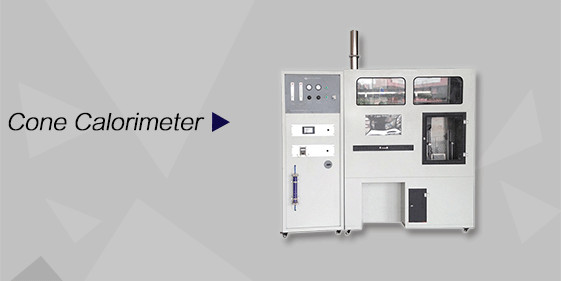
Cone Calorimeter
The import of American VTEC, cone calorimeter ultra high cost performance
more
-
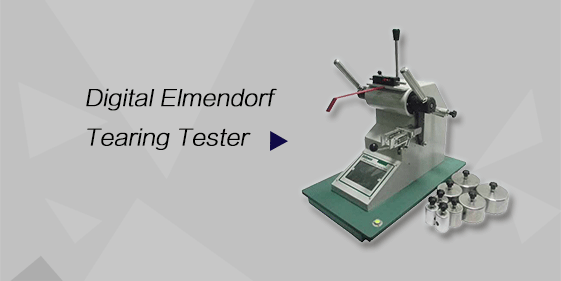
Digital Elmendorf Tearing Tester
Pendulum method test material tear strength, operating more simple, more accurate data
more
-
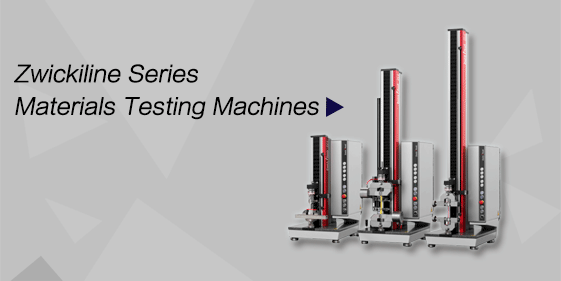
ZwickiLine Materials testing machines
Top of the world's leading universal material testing machine
more
Carbon Black Dispersion Tester
BACK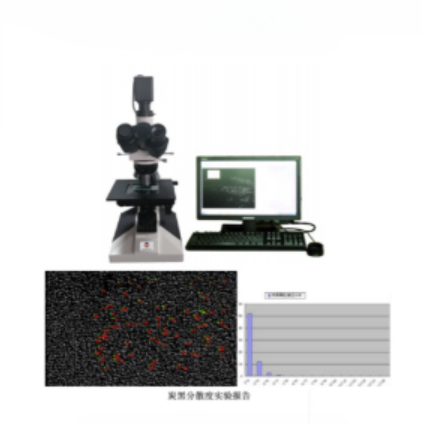


Standards:
Applications:
DW1431 plastic carbon black dispersion measurement system is based on a professional image acquisition system and corresponding software, through the measurement of the scale, form, and dispersion of carbon black particles, effectively evaluate the dispersion state and dispersion uniformity of carbon black particles in polyolefin geosynthetic materials, pipes, pipe fittings and mixed ingredients, pigment or carbon black materials, that is, carbon black dispersion. Carbon black is a good ultraviolet stabilizer, the best light absorber and light screen agent, which can effectively improve the anti-ultraviolet and anti-aging properties of plastic products. The content of carbon black and the dispersion of carbon black in plastic media will have a decisive effect on the UV protection, mechanical properties and life of plastic products. Through the measurement of the scale, shape and dispersion of carbon black particles, the internal relationship between these parameters and macro performance indicators such as mechanical properties, antistatic properties and hygroscopic properties can be established, which will ensure the quality of plastic materials and the production process.
New product research and development has a positive impact, while promoting the rapid improvement of the technical level of enterprises and industries.
Product Information:
The carbon black content tester is a precision instrument specifically designed for measuring the carbon black content in plastics such as polyethylene, polypropylene, and polybutylene, as well as in rubber.
Standard
GB/T 18251-2019:Method for the assessment of the degree of pigment or carbon black dispersion in polyolefin pipes, fittings and compounds
ISO/DIS 18553-1999 ASTM D5596-2003:Corrosion of metals and alloys - Measurement of crevice corrosion resistance of stainless steels by the critical crevice solution method
CJ/T 234- Appendix D-2006:Appendix D (Normative) of CJ/T 234-2006 - [Specific Test Method or Requirement]
GB/T 17643- Appendix E-2011: Appendix E (Normative) of GB/T 17643-2011 - [Specific Test Method or Requirement]
Feature
The optimized design of the heating furnace features an aesthetically pleasing structure, stable performance, and reliable quality;
The openable furnace door structure facilitates sample loading and precise positioning of the sample;
The intelligent temperature control system provides automatic heating and high temperature control accuracy;
Up to 30 temperature program segments can be set, allowing for different heating temperatures, heating rates, and holding times;
The furnace chamber exhibits excellent temperature uniformity and stable temperature control;
Cooling air ducts are installed at both ends of the furnace body, facilitating heat dissipation and sample cooling, improving safety and convenience;
A float-type gas flow meter is used for easy and rapid switching between two gas lines, allowing for precise gas flow adjustment, short stabilization time, and long-lasting durability.
Parameters
| Description | Details |
|---|---|
| Test methods | Microscopy |
| Magnification | >50x |
| Image sensor | CCD camera system |
| Imaging resolution | 976x582 pixels |
| Detection range | 5 - 150um |
| Rating method | Automatic or manual |
| Sample preparation method | Tablet or slice method |
| Power supply | AC 220V 50Hz |
| Overall dimensions | 450x210x450mm |
| Weight | 9KG |
Accessoriess
Heating furnace and main unit
Instruction manual
Power cable
Sample boat (or combustion boat)
Quartz tube
Gas piping system (may include gas tubing, pressure reducing valve connectors, gas connectors, etc.)
Sample hook
Sample boat holder
Exhaust tube
Crucible tongs
Tube plug (may be included with some models)
Temperature sensor (or temperature control probe)
Flow meter and regulating valve (for controlling gas flow)
Test Procedures
Sample preparation: Weigh 1g of the sample to be tested and place it in the combustion boat according to the test procedure.
Instrument preheating: Turn on the instrument, purge with nitrogen for a few minutes, and set the heating program.
Sample placement: Place the prepared sample into the quartz tube.
Start testing: Press the test button. Remove the sample after the test is completed.
Data processing: Calculate the test results according to the formula.
FAQ
1. What is a Carbon Black Dispersion Tester?
The Carbon Black Dispersion Tester is a device used to evaluate the dispersion quality of carbon black in rubber, plastics, or coatings. It helps determine how uniformly carbon black particles are distributed in the material, which affects performance properties such as strength, color, and wear resistance.
2. How does the machine test carbon black dispersion?
The tester typically uses mechanical grinding, mixing, or optical methods to analyze the sample. The degree of dispersion is quantified by measuring particle distribution, agglomerates, or using image analysis under standardized testing conditions.
3. What types of materials can be tested?
It is suitable for rubber compounds, plastic resins, coatings, inks, and other polymer-based materials that incorporate carbon black as a reinforcing or coloring agent.
4. What parameters are measured during testing?
The machine measures dispersion quality, particle size distribution, agglomeration levels, and uniformity of carbon black throughout the material. Some advanced models provide numerical or visual dispersion ratings.
5. Why is carbon black dispersion testing important?
Proper dispersion ensures optimal mechanical properties, consistent color, and wear resistance in rubber and plastic products. It helps manufacturers maintain quality control, improve product performance, and reduce material defects.
