




Search keywords:
product name, product type, model number,
test method, manufacturer, technique, application
-
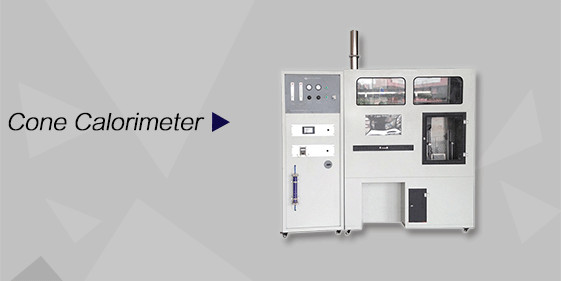
Cone Calorimeter
The import of American VTEC, cone calorimeter ultra high cost performance
more
-
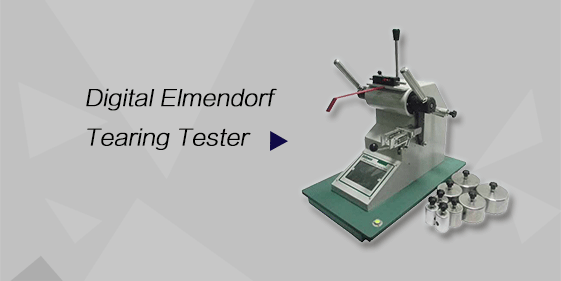
Digital Elmendorf Tearing Tester
Pendulum method test material tear strength, operating more simple, more accurate data
more
-
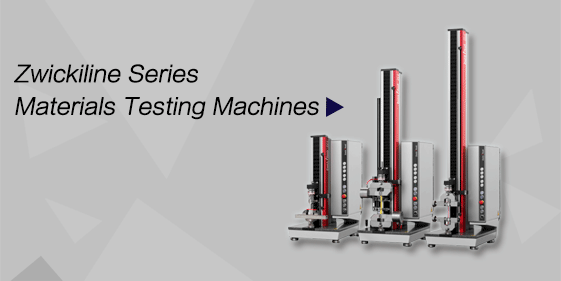
ZwickiLine Materials testing machines
Top of the world's leading universal material testing machine
more
Geosynthetic creep tester
BACK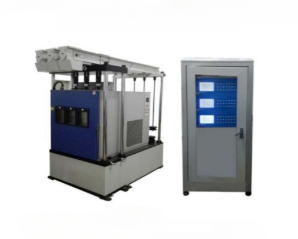


Standards:
Applications:
DW1290 series geosynthetics creep test system is used to determine the tensile creep properties of geosynthetics products.
Product Information:
The geosynthetic material creep testing system is used to determine the tensile creep performance of geosynthetic material products.
Standard
GB/T17637-1998: Geotextiles and geotextile-related products - Determination of the tensile creep and creep rupture behaviour
ISO/FDIS 13431-1998: Geotextiles and geotextile-related products - Determination of tensile creep and creep rupture behaviour (Final Draft International Standard)
ASTM D 5262-2007: Standard Test Method for Evaluating the Unconfined Tension Creep and Creep Rupture Behavior of Geosynthetics
JTG E50 T1131-2006: Test Method for Tensile Creep and Creep Rupture Properties of Geosynthetics for Highway Engineering
QB/T 2854-2007: Creep Testing and Evaluating Method on Plastic Geogrids
Features
The instrument has the advantages of simple structure, beautiful appearance, stable performance, safety and reliability;
Microcomputer control, LCD display, touch screen operation, simple and convenient:
Electronic loading system, sample load is stable and accurate;
High-speed data acquisition and signal transmission system, real-time data acquisition and signal transmission, accurate and reliable;
High precision sensor, rapid response, good repeatability, stable and reliable performance;
Special fixture accessories, prevent sample slip and damage in the test process, sample loading is labor-saving, convenient and reliable;
Can be customized station, can measure multiple samples at the same time, high efficiency and energy saving;
High precision temperature control equipment, good uniformity;
Normal pressure loading system, using large diameter pressure cylinder to achieve convenient and reliable;
Movable normal loading system to eliminate machine system error:
The local displacement measuring device can realize real-time measurement of the change of the elongation between any two points on the sample under normal pressure.
Easy to install, easy to operate, long service life.
Parameters
| Specification | Details |
|---|---|
| Number of stations | 113 stations |
| Model | Horizontal horizontal vertical |
| Loading mode | Electronic; Electronic mechanical |
| Measuring range | 0——50kN; 0——20kN |
| Resolution of force value | 0.01kN |
| Force value accuracy | ±1%FS |
| Maximum tensile displacement | 550mm; 600mm |
| Displacement accuracy | 0.03mm; 0.02mm |
| Speed | 0.3mm——50mm/min |
| Temperature control (optional) | -30——70℃ (can be customized) |
Accessoriess
Main unit: 1 set
Accessories: 1 set
Packing list: 1 copy
Product manual: 1 copy
Product certificate of conformity: 1 copy
Test Procedures
Activate the loading device and slowly apply the load to the set value, maintaining it constant.
Observe the sample deformation to ensure there are no abnormalities (such as slippage or fracture).
The equipment automatically records displacement-time data until the end of the test.
FAQ
1. What is a Geosynthetic Creep Tester?
The Geosynthetic Creep Tester is a device used to evaluate the long-term deformation behavior (creep) of geosynthetics under sustained loads. It helps predict material performance over extended periods in real-world applications.
2. How does the creep test work?
The tester applies a constant tensile or compressive load to a geosynthetic sample over a specified period. The machine continuously records elongation or deformation to analyze how the material gradually stretches or compresses under stress.
3. What types of geosynthetics can be tested?
It can test woven, nonwoven, and knitted geotextiles, geomembranes, geogrids, and composite geosynthetics used in civil engineering, embankments, roads, landfills, and erosion control.
4. What parameters are measured during testing?
The tester measures creep strain, time-dependent elongation or deformation, creep modulus, and sometimes stress relaxation. Data helps predict long-term performance under sustained loads.
5. Why is creep testing important for geosynthetics?
Creep testing ensures that geosynthetics maintain structural integrity and performance under prolonged loading conditions. It helps engineers and manufacturers design materials for durability, safety, and reliability in long-term infrastructure projects.
