




Search keywords:
product name, product type, model number,
test method, manufacturer, technique, application
-
Cone Calorimeter
The import of American VTEC, cone calorimeter ultra high cost performance
more
-

Digital Elmendorf Tearing Tester
Pendulum method test material tear strength, operating more simple, more accurate data
more
-

ZwickiLine Materials testing machines
Top of the world's leading universal material testing machine
more
Rubber and Plastic Material Resistivity Testing Platform
BACK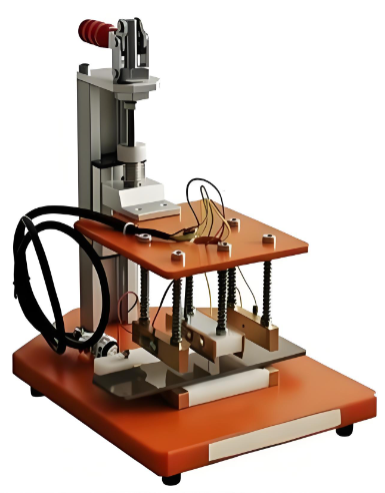


Standards:
Applications:
The instrument is suitable for use in semiconductor film material manufacturers, rubber and plastic material producers, metal film manufacturers, capacitor manufacturers, research institutes, and universities for testing sheet resistance and resistivity properties of semiconductive or rubber-plastic materials.
Product Information:
Functional and Structural Features Overview
Basic Function
The Rubber and Plastic Material Resistivity Testing Platform, when combined with a four-probe instrument, forms a complete testing system. It is a multifunctional integrated measurement device designed for measuring the resistivity/sheet resistance of semiconductive rubber-plastic materials or thin films using the parallel four-knife method and four-terminal measurement principle (hereinafter referred to as the testing platform).It complies with the national standard for rubber and plastic industry:
GB/T 3048.3-94《Electrical Performance Test Methods for Electric Cables and Wires – Volume Resistivity Test for Semiconductive Rubber and Plastic Materials》.
Basic Composition
The testing platform consists of the following components: Sample box、Test electrode assembly、Lifting platform、Support frame、Connection cables.
Compatibility and Supporting Equipment
This testing platform is compatible with all desktop four-probe testing instruments from the same manufacturer. It is also compatible with most four-probe resistivity/sheet resistance testing instruments available from other domestic manufacturers.
Key Advantages
The electrode assembly adopts a fast constant-pressure manual lifting mechanism, offering excellent stability, compact structure, and easy operation.
The sample box is made of high-temperature resistant, corrosion-resistant, and highly insulating materials, and is equipped with conductive terminals. This design allows cleaned standard samples to be conveniently clamped and then subjected to drying, aging, testing, and transportation processes, while preventing contamination caused by direct hand contact, thereby improving measurement accuracy.
Technical Parameters
1.Measurement Range and Resolution (dependent on connected instrument)
(1) Resistivity Measurement Range:
(Thickness d < 2.2 mm, width w < 50 mm)
Basic resistivity range:
1.0 × 10⁻⁶ ~ 5.00 × 10⁵ Ω·cm
Resolution:
1.0 × 10⁻⁷ ~ 1.0 × 10³ Ω·cm
The relationship between cross-sectional area (s) and measurement range is shown in Figure 2-1A.
(2) Sheet Resistance Measurement Range:
Film width: 1 mm ≤ w ≤ 50 mm
Basic sheet resistance range:
5.0 × 10⁻⁶ ~ 2.000 × 10⁶ Ω/□
Resolution:
1.0 × 10⁻⁴ ~ 1.0 × 10³ Ω/□
The relationship between film width (w) and measurement range is shown in Figure 2-1B.
2.Test Knife Holder
Voltage electrode spacing: 20 mm ± 0.2%, blade length 60 mm
