





What is the best tool to measure density?
2025/12/29
Share:

In daily production and life, we often compare the masses of two objects. For the same substance, we know that a larger volume means a larger mass. But what about different substances? For example, an iron ball and cotton of the same fist size will have vastly different masses. The reason for this is their different densities.
Density is one of the most important physical parameters of a substance. Every substance has a certain density, and different substances generally have different densities. Therefore, by measuring density, we can identify the composition of an object, determine the purity of chemical products, and even discover new substances. The well-known "argon" was discovered by calculating the density of an unknown gas.
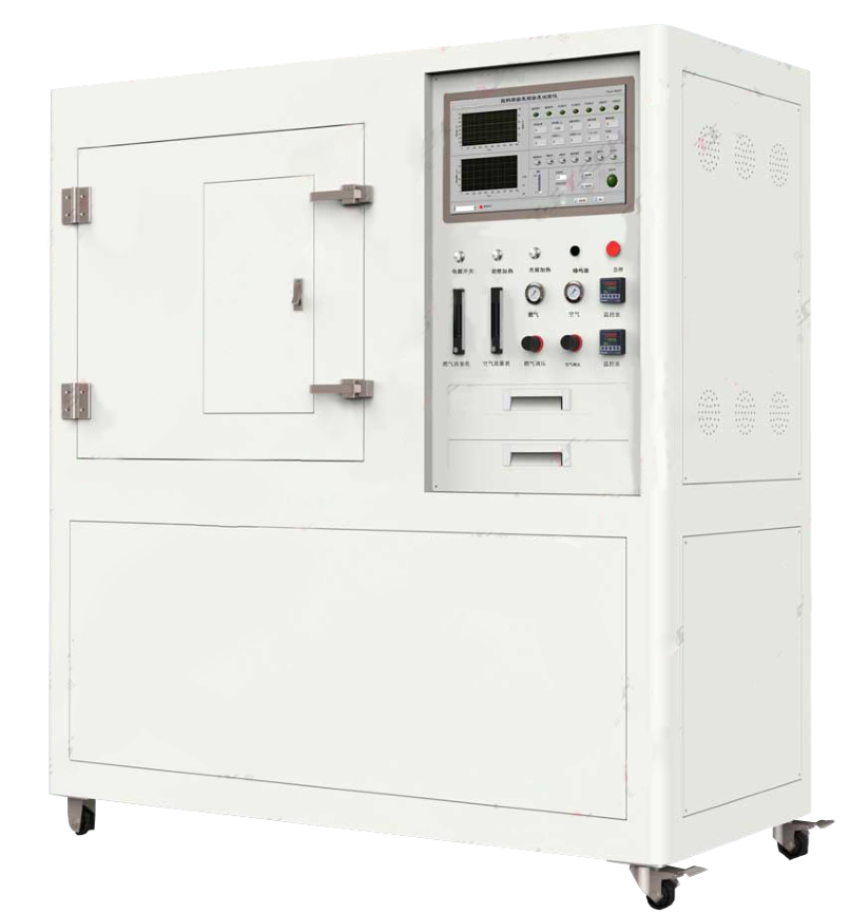
The application of density measurement is also very extensive, involving fields such as petroleum, chemical industry, building materials, light industry, medical care, trade, national defense, and scientific research. It is related to the control, testing, and production management of the quantity and quality of products in various industries.
Density is a physical quantity that measures the intrinsic properties of a substance. It is related to factors such as temperature and pressure, but independent of factors such as mass, volume, shape, and spatial position. It is an inherent property of a substance.
What are some common density testing methods?
Density Bottle Method
The density bottle method, also known as the specific gravity bottle method, is a classic and widely used method for testing density. It can be used to measure the density of both liquid and solid samples. For liquid samples, the principle is relatively simple: a calibrated density bottle is used to hold the sample; the volume of the bottle is the sample volume, and the ratio of the sample mass to its volume is the sample density. For solid samples, the solid sample is placed in a density bottle, a medium is added, and the sample volume is obtained by subtracting the medium volume from the density bottle volume. The ratio of the sample mass to its volume is the density of the solid sample.
Density Balance Method
A density balance is based on an electronic balance, with its program and measuring device designed to perform density measurement. It can be used to test the density of both liquids and solids. There are liquid density balances, solid density balances, and multi-functional solid-liquid dual-purpose density balances.
All related designs utilize Archimedes' principle. When testing liquid samples, a balance is used to determine the mass of the weights in air and in the sample. When the weights are submerged in the sample, their mass is less than their mass in air. The decrease is the mass of the sample displaced by the weights of the same volume. The mass of the displaced liquid divided by the volume of the displaced liquid (the volume of the weights) is the liquid density.
When testing solid samples, the weights of known volume are transformed into a sample of unknown volume. A balance is used to determine the mass of the sample in air and in the medium. When the sample is submerged in the medium, its mass is less than its mass in air. The decrease is the mass of the medium displaced by the sample of the same volume. Dividing this by the medium density gives the volume of the displaced medium. The volume of the sample equals the volume of the displaced medium, thus allowing the determination of the density of the solid sample.
Bulk density: Under specified filling conditions, the mass of powder per unit filling volume is called bulk density. Bulk density, also known as packing density, is a general term for loose packing density and tapped density [3]. Loose bulk density: The bulk density measured after freely filling a standard container under specified conditions; that is, the mass per unit volume of powder when loosely packed. Loose bulk density has many other names, including loose packing density, loosely packed bulk density, loose density, bulk density, etc.
Tap density: A certain mass of powder is filled into a container according to specified filling conditions. The container is then vibrated vertically up and down according to a certain pattern. During the vibration, the gaps between the powder particles gradually decrease until the powder volume no longer shrinks. The volume of the powder at this point is read. The mass divided by the volume is the tap density.
What are the different types of density testing instruments?
Bulk Density Tester
This instrument works by allowing a sample of a certain mass to fall freely through a conical funnel into a cylindrical container of known volume. The mass of the sample filling the container is accurately measured, and the ratio of mass to volume is the bulk density.
Tap Density Meter
This type of instrument can simultaneously measure the loose bulk density and the tapped bulk density of a sample. A sample of a certain mass is added to a graduated cylinder through a funnel, and the volume of the sample is directly read. The calculated density is the loose bulk density. Based on this, the sample is tapped using a specific method; the resulting density is the tapped bulk density. Common tapping methods include fixing the graduated cylinder to a mechanical tapping device and tapping the sample at a specific frequency, as shown in the instrument on the left; or tapping the sample by dropping the graduated cylinder a certain number of times and at a specific frequency, as shown in the instrument on the right.
Neither loose density nor tapped density can completely eliminate the influence of internal voids and interparticle gaps within the particles. To eliminate the influence of these voids and measure the true density of the particles (also called true density, which is the true density of a substance per unit volume of solid after removing internal pores or interparticle gaps), there are two common methods: one is the immersion method, such as the density bottle method and density balance method mentioned earlier; the other is the gas volumetric method.
The testing principle involves adding the sample to a container of known volume, sealing the container, and then introducing a certain gas (usually helium). A pressure sensor measures the pressure inside the container. Then, the gas is diffused into another container with known pressure and volume, and a pressure sensor measures the equilibrium pressure between the two connected containers. Based on gas laws, the true volume of the sample is obtained, and the true density of the sample is calculated.
Regular Cleaning and Calibration
Cleaning the densitometer is fundamental to its maintenance. After each use, the instrument should be thoroughly cleaned to avoid the influence of sample residue, especially liquid samples which may deposit on the sensor area, leading to measurement errors. Use a mild detergent and a soft cloth for cleaning, avoiding corrosive or abrasive materials to prevent damage to the instrument surface.
1. Regular calibration is crucial for ensuring the accuracy of the densitometer. The densitometer should be calibrated according to the calibration cycle provided by the manufacturer, or promptly verified when the operating environment changes. Calibration ensures that the instrument maintains its accuracy under different temperatures and pressures.
2. Maintain the Power Supply and Sensors
The power supply system and sensors of the densitometer are often prone to problems. Insufficient battery power or power failure may cause the equipment to malfunction and even affect the stability of measurement results. Regularly check the battery status and replace it promptly when the battery is low to avoid errors caused by insufficient power.
Similarly, the sensor, as the core component of the measurement, needs to be kept clean and regularly checked for signs of damage or aging. Sensor maintenance typically includes wiping the sensor surface and checking the sensor sensitivity. If a sensor malfunction is found, it should be repaired or replaced promptly. 3. Proper Storage and Environmental Control
The storage environment of the densitometer is crucial to its long-term performance. The equipment should be kept away from high temperatures, high humidity, or strong sunlight, as these conditions can adversely affect the internal electronic components. The ideal storage environment is one with moderate temperature, low humidity, and free from corrosive gases.
Regularly check the external condition of the equipment to ensure it is undamaged, especially if it is not used for extended periods. If the equipment is idle for a long time, it should be turned on periodically to check its operating status and prevent component aging or malfunction.
4. User Operation and Training
Correct operation by the operator is essential for the long-term stable operation of the densitometer. Users should fully understand the equipment's operation manual and receive necessary training to master the instrument's usage procedures and operating techniques. Incorrect operation will not only affect the accuracy of test results but may also cause irreversible damage to the instrument.
During use, operators should strictly follow experimental requirements for sample processing and avoid exposing the instrument to inappropriate chemicals or contaminants.
5. Regular Inspection and Professional Service
Even with the above maintenance measures, the densitometer still requires regular professional inspection and maintenance services. Professional technicians can inspect the instrument's internal and external components to ensure it is operating in optimal condition. Any malfunctions should be repaired by professionals; users should avoid attempting to disassemble or repair it themselves, as this could cause further damage.
Previous: FAQs About Friction Resistance Test
N e x t : FAQs About Vehicle Fabric Abrasion Tester
