





Dry microbial penetration tester,ISO 22612
2026/01/14
Share:

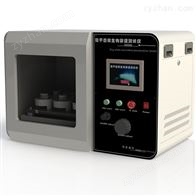
The instrument is typically designed and operated in accordance with relevant standards, enabling objective and quantitative evaluation of a material’s ability to block dry-state microorganisms. It is an indispensable testing tool for material research and development as well as quality inspection.
Background
1. Microbial Penetration and Protective Barriers
Microbial penetration refers to the process by which dry particles carrying microorganisms, such as bacteria or spores, pass through a material barrier and reach the opposite side under defined test conditions. In the field of protective clothing and cleanroom garments, this phenomenon is mainly driven by physical forces such as air movement and mechanical vibration. Penetration may occur through the intrinsic fiber gaps of the material, fabric defects, or interlayer pathways created by external forces acting on the barrier structure.
Compared with wet-state testing methods, such as liquid microbial penetration tests, dry microbial penetration testing more accurately simulates real-use environments in which dry airborne particles challenge protective materials. In practical applications, contamination risks often originate from dry particles suspended in air, including skin flakes, fiber debris, and dust that may carry microorganisms.
Medical protective clothing and surgical gowns are frequently exposed to airborne dry particles during use. Under airflow or mechanical motion, these particles can migrate and penetrate material barriers, thereby compromising protective performance. As a result, the development of a standardized testing method and instrument capable of objectively evaluating resistance to dry microbial penetration has become a critical requirement in the protective materials industry.
2. Differences from Wet Penetration Testing
Wet penetration testing involves microorganisms transported by liquids, such as splashes or contact with contaminated fluids, while dry penetration testing focuses on particle transport under dry conditions. These two approaches reflect material performance under different environmental challenges: wet testing emphasizes liquid barrier properties, whereas dry testing better represents airborne transmission scenarios. Combined application of both methods provides a comprehensive assessment of microbial resistance.
Standards and Testing Framework
To ensure scientific validity and comparability of test results, dry microbial penetration testing has been incorporated into several standardized testing systems. One of the most representative standards specifies a method for evaluating the resistance of protective clothing materials to dry microbial penetration. A corresponding national industry standard adopts a similar methodology and is widely used for assessing the performance of medical protective materials.
These standards define test conditions, sample preparation, vibration mechanisms, and colony counting procedures, ensuring repeatable and comparable results. The standardized approach provides reliable evidence for material selection, protective performance claims, and product certification.
Instrument Structure and Components
A dry microbial penetration tester is a comprehensive testing system consisting of several key components:
1. Air Supply and Vibration System
The instrument is equipped with an air supply system and a vibration mechanism, commonly using a pneumatic spherical vibrator, to generate high-frequency vibration. This vibration causes dry particles carrying microorganisms to impact the sample surface, simulating airborne movement and mechanical disturbance encountered in real use.
Vibration frequency and force are critical design parameters. High-frequency vibration ensures that dry particles possess sufficient kinetic energy to challenge the material barrier effectively.
2. Test Chambers and Sample Holding Devices
The tester typically includes multiple test positions, each equipped with an independent container for fixing test specimens. Samples are clamped at the top of the container, while sedimentation culture plates are placed at the bottom to collect penetrated particles. Containers are usually made of corrosion-resistant stainless steel to ensure durability and ease of cleaning.
3. Particle Carrier and Collection System
Dry particles carrying microorganisms are commonly prepared using bacterial-contaminated talcum powder, often containing bacterial spores. In addition to a control container, all test containers are loaded with the contaminated powder. Culture plates placed at the bottom collect particles that penetrate the sample. After testing, microbial colonies on the plates are cultured and counted to evaluate penetration performance.
4. Control and Display System
Modern testers are equipped with computerized or touchscreen control systems that allow users to set test parameters, initiate vibration programs, record test data, and generate reports. Some systems also include lighting and negative-pressure safety enclosures to improve visibility and operational safety.
Test Principle and Methodology
1. Principle Overview
The basic principle of dry microbial penetration testing is to simulate the passage of airborne dry particles carrying microorganisms through a material barrier under vibration and airflow. Penetrated particles are collected on sedimentation plates, cultured, and quantified to determine the material’s resistance to dry microbial penetration.
The process includes the following steps:
Contact between dry microbial particles and the material surface
Selective penetration of particles through fiber gaps or structural pathways
Sedimentation and collection of penetrated particles on culture plates
Cultivation and colony counting for quantitative analysis
2. Sample Preparation and Installation
Before testing, representative samples such as surgical gown materials or cleanroom fabrics are selected and cut to specified dimensions. Samples are installed flatly on the test containers, ensuring secure edge clamping without damaging the material structure.
3. Preparation of Dry Particle Carriers
Except for the control container, contaminated talcum powder containing dry bacterial particles is added to the test containers. The particle size of the talcum powder is comparable to human skin flakes and other airborne particles, making it suitable for penetration testing.
4. Vibration and Culture Collection
After setting vibration frequency and force, the vibration system acts on the test containers, simulating airflow and mechanical impacts that drive dry particles toward the sample surface. Penetrated particles settle onto the culture plates beneath the sample. The plates are then incubated under appropriate conditions for microbial growth.
5. Data Analysis and Result Evaluation
After incubation, colonies formed on the culture plates are counted. A lower colony count indicates stronger resistance to dry microbial penetration, allowing classification of the material’s protective performance.
Key Evaluation Parameters
Common evaluation parameters in dry microbial penetration testing include:
Colony count: The number of microorganisms that penetrate the material under defined conditions
Penetration rate: The ratio of penetrated microorganisms to the total applied particles
Resistance grade: Protective performance classification based on colony count ranges defined in standards
These parameters provide quantitative data to support material design optimization and performance comparison.
Application Fields
1. Medical Protective Material Development
Dry microbial penetration testing is widely used in the development of surgical gowns, sterile garments, and cleanroom clothing to assess barrier performance against airborne microbial particles and support material structure optimization.
2. Medical Devices and Sterile Packaging
Although primarily designed for protective clothing, similar principles are applied in evaluating barrier properties of packaging materials used for medical devices, enhancing microbial protection of packaged products.
3. Quality Control and Standards Compliance
For manufacturers and third-party testing laboratories, dry microbial penetration testing is an essential method for routine quality control and compliance with relevant international and industry standards.
4. Scientific Research and Standard Development
In research related to protective clothing standards and microbial barrier mechanisms, dry microbial penetration testing serves as an important tool for comparative material studies, theoretical validation, and new material screening.
Advantages and Limitations
1. Advantages
Closely simulates real airborne contamination scenarios under dry conditions
Supported by mature and standardized testing frameworks
Provides objective and quantitative results through microbial culture and counting
2. Limitations
Relatively long test duration due to microbial incubation requirements
High operational demands, requiring strict control of sample preparation and test conditions
Focuses on dry-state risks and does not represent performance under wet conditions, which must be assessed using complementary methods
Development Trends and Outlook
With increasing demand for medical protection and advances in material engineering, dry microbial penetration testing continues to evolve through improved standards, enhanced automation, and higher testing efficiency. Future developments may include:
Automated testing workflows to reduce human variability
High-throughput instrument designs supporting multiple samples simultaneously
Integration with digital analysis tools, such as automated colony counting and image recognition
As a key method for evaluating microbial barrier performance, dry microbial penetration testing will continue to play a vital and long-term role in medical safety and public health protection material assessment.
Previous: What is a water penetration test?
N e x t : Why do I feel like I can't breathe when wearing a mask?
