





What is the xenon arc UV test?
2026/01/29
Share:

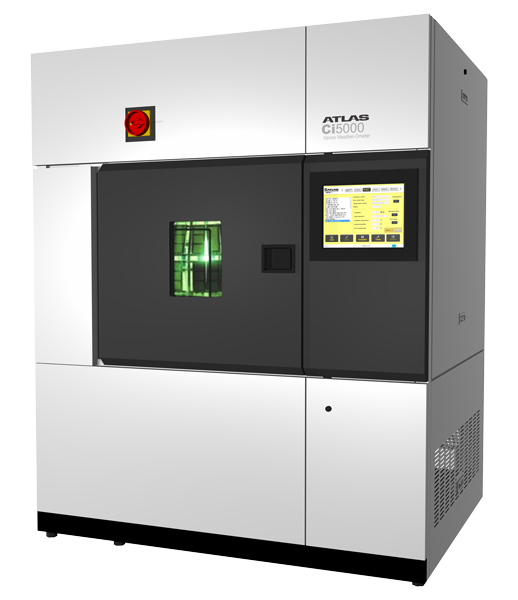
This testing method can produce aging effects similar to many years of natural exposure in a short period, making it a widely recognized and applied method in material development, quality control, and standards certification. It is incorporated into numerous international standards and is considered one of the most realistic accelerated aging simulations of natural sunlight.
Background
Natural Aging and Testing Needs
Materials such as plastics, coatings, rubber, textiles, and composites gradually degrade when exposed outdoors to sunlight, temperature fluctuations, humidity cycles, and rainfall. Common signs of aging include discoloration, cracking, chalking, and loss of mechanical strength. Natural aging is slow and highly dependent on environmental conditions, making it costly, time-consuming, and impractical to wait for years in real-world conditions to verify product durability.
Laboratory simulation provides a controllable method to accelerate this process. Xenon arc UV testing was developed to meet this need, enabling rapid, repeatable evaluation of material performance under controlled yet severe environmental conditions, thereby predicting long-term durability and service life.
Working Principle
The core of xenon arc UV testing is the xenon arc lamp. The lamp generates high-intensity light via an electric arc in high-pressure xenon gas. Its spectral energy distribution closely matches natural sunlight, covering ultraviolet (UV), visible, and some infrared (IR) wavelengths. Compared to traditional UV-only aging tests, xenon arc lamps more realistically simulate full-spectrum sunlight exposure.
Full-Spectrum Simulation
Solar radiation spans multiple wavelength bands. While UV is the primary cause of material degradation, visible and infrared light contribute to heat effects, color changes, and other aging mechanisms. Xenon arc lamps simulate sunlight, especially in the 280–800 nm range, allowing the combined effects of multiple aging mechanisms to be studied rather than focusing solely on UV.
The output can be modified using filter systems to suit different materials and environmental conditions, such as filters simulating direct sunlight or light transmitted through glass, ensuring the test environment closely reflects real-world applications.
Temperature and Humidity Simulation
Light is not the only factor affecting aging. Temperature fluctuations and humidity cycles also influence material degradation. Xenon arc testing systems typically include:
Temperature Control: Black panel or air temperature control to achieve desired sample or chamber surface temperatures, simulating natural thermal effects.
Humidity and Water Cycles: Relative humidity control combined with periodic water spray or condensation cycles to mimic rainfall, dew, and daily humidity fluctuations.
By combining these environmental factors, xenon arc UV testing can realistically simulate aging under diverse climatic conditions, such as tropical, temperate, or high-UV regions.
Technical Components
To ensure accurate and reliable testing, xenon arc UV systems generally consist of the following key elements:
Xenon Arc Light Source: The lamp is the core of the system, generating strong light across UV, visible, and IR spectra. Lamp power, filter configuration, and energy stability are critical for reliable results. Different filter types allow adjustment of the spectrum for specific standards or applications, such as full-spectrum daylight simulation or glass-filtered light.
Temperature and Black Panel System: Temperature control systems regulate chamber air temperature, while black panel sensors measure the actual sample surface temperature—a key reference for test cycles.
Humidity and Water Cycle System: Relative humidity is set and controlled, combined with periodic water spray or condensation cycles to simulate wet-dry environmental effects.
Control and Monitoring Systems: Modern xenon arc equipment features digital control and sensors to continuously monitor irradiance, temperature, and humidity, automatically adjusting conditions to maintain stable, repeatable test environments.
Differences Between Xenon Arc and Traditional UV Testing
While often confused with standard UV aging tests, xenon arc UV testing differs in principle and application:
Spectral Coverage: Traditional UV tests typically use fluorescent UV lamps (e.g., UVB-313. UVA-340) to simulate only the UV portion of sunlight, focusing on photodegradation but lacking visible and infrared spectrum simulation. Xenon arc testing simulates the full solar spectrum, including UV, visible, and IR, enabling comprehensive evaluation of aging, color change, and thermal effects.
Realism: Due to broader spectral coverage, xenon arc test results more closely approximate natural aging, making it suitable for a wider range of materials and applications.
Standards and Protocols
Xenon arc UV testing is standardized in multiple international and industry norms, forming a mature and reproducible testing workflow:
ISO Standards: Examples include ISO 4892-2 for plastics and ISO 16474-2 for paints and varnishes, specifying equipment, conditions, and procedures.
ASTM Standards: ASTM G155 defines xenon arc exposure practices for non-metallic materials, detailing irradiance, temperature, humidity, and water spray cycles.
These standards ensure global comparability, repeatability, and scientific credibility, making results widely accepted across industries.
Test Parameters and Settings
Key parameters in xenon arc UV testing include:
Irradiance: Light intensity per unit area, often measured at 340 nm in W/m². Typical ranges are 0.35–1.10 W/m² to simulate various solar intensities.
Black Panel Temperature: Indicates surface temperature under light exposure; commonly set at specific ranges (e.g., 63°C ± 3°C) to mimic sunlight heating.
Humidity and Water Cycles: Relative humidity usually set between 40%–90% RH, combined with periodic water spray or condensation cycles to simulate wet-dry conditions. Settings vary depending on standards and material types.
Applications
Xenon arc UV testing is widely applied due to its realistic simulation of natural conditions:
Plastics and Polymers: Evaluates color stability, cracking, and mechanical degradation under accelerated weathering to optimize formulations.
Coatings and Surface Treatments: Tests paints, coatings, and powders for color retention, adhesion, and long-term durability under light, temperature, and moisture stress.
Building Materials: Assesses exterior materials such as mortar, bricks, glass, and sealants for weathering performance affecting service life.
Automotive and Transportation: Evaluates exterior parts, seals, and dashboards for color change, aging, and performance loss over simulated years of use.
Textiles and Outdoor Materials: Tests fabrics for fading, strength loss, and colorfastness in sun and humid conditions.
Evaluation Metrics
Post-test evaluation typically includes:
Appearance: Color change (measured via colorimeters), gloss change, and surface degradation such as chalking, cracking, or peeling.
Physical Properties: Mechanical properties like tensile strength and elasticity, and structural integrity, checking for cracks, delamination, or holes.
Chemical and Microstructural Analysis: Techniques such as infrared spectroscopy or scanning electron microscopy reveal chemical reactions (oxidation, crosslinking) and microstructural changes due to aging.
Advantages and Limitations
Advantages:
Full-spectrum simulation closely matches sunlight for realistic aging.
Multifactor testing combines light, heat, and moisture for enhanced realism.
Standardized control ensures repeatability and scientific credibility.
Shortened test cycles allow rapid prediction of material durability.
Limitations:
Accelerated conditions may not perfectly replicate all real-world material behaviors and require contextual interpretation.
Equipment cost is high, imposing significant investment and maintenance requirements.
Xenon arc UV testing is an advanced, comprehensive accelerated aging method that simulates sunlight and environmental factors in the laboratory. Its full-spectrum irradiation, multi-factor simulation, and standardized protocols make it a critical tool for evaluating weather resistance, lightfastness, and material performance. It is widely applied in plastics, coatings, building materials, automotive, and textiles, supporting reliable product development and quality assessment.
Overall, xenon arc UV testing meets stringent research and quality control requirements, while helping organizations efficiently develop and optimize products, enhancing competitiveness and material reliability.
Previous: Ci4400 Xenon Arc Weathering Test Chamber,ISO 105-B02
N e x t : SUNTEST CPS+ Compact Xenon Arc Weathering Test Chamber,ASTM C1442
