





What is the sweating guarded hot plate test method?
2026/02/05
Share:

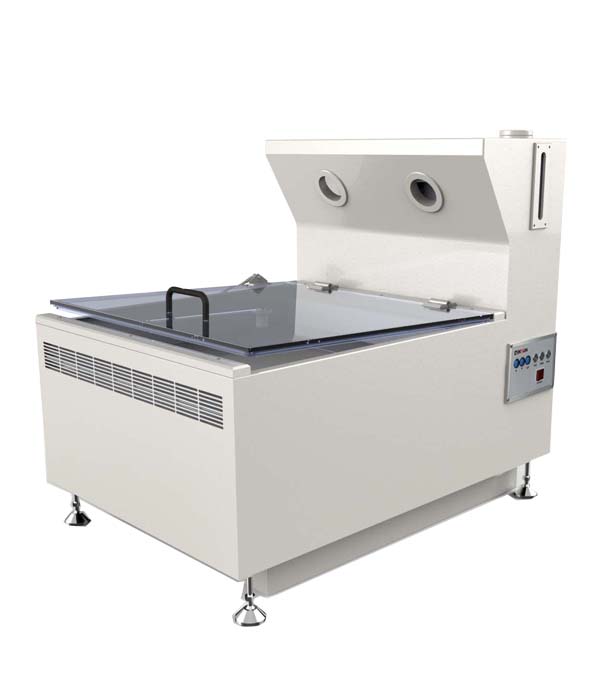
Background and Purpose of the Test Method
One of the primary functions of clothing is to maintain thermal balance on the human body surface, ensuring wearer comfort. Under different environmental conditions, the human body regulates its temperature by dissipating heat and evaporating sweat. If a material cannot effectively transfer heat and water vapor, it may hinder thermal balance, leading to discomfort such as heat buildup or damp chill.
Therefore, it is of great importance to quantitatively evaluate a material’s resistance to heat and water vapor through scientific testing. The Sweating Guarded Hot Plate test method was developed for this purpose. It simulates the real heat and moisture transfer processes of human skin and evaluates the thermal resistance and evaporative resistance of materials under steady-state conditions.
Standard Basis of the Test Method
The Sweating Guarded Hot Plate test method is supported by well-established international standards, mainly including the following two:
ISO 11092
ISO 11092. titled “Textiles — Physiological effects — Measurement of thermal and water-vapour resistance under steady-state conditions (sweating guarded-hotplate test)”, specifies the method for measuring the thermal resistance and water vapor resistance of textiles, films, coatings, foams, leather, and similar materials under steady-state conditions using a Sweating Guarded Hot Plate apparatus. This standard is applicable to materials used in clothing, sleeping bags, bedding, and related products, emphasizing steady-state measurements under controlled temperature and humidity conditions.
ASTM F1868
ASTM F1868. titled “Standard Test Method for Thermal Resistance, Evaporative Resistance, and Total Heat Loss Measurements of Clothing Materials Using a Sweating Hot Plate”, also employs a Sweating Guarded Hot Plate to measure thermal resistance, evaporative resistance, and total heat loss (THL) under steady-state conditions. This standard is mainly used to evaluate the thermal and moisture performance of clothing materials, particularly multilayer material systems.
Together, these two standards establish a comprehensive and widely adopted framework for the SGHP test method, providing a unified scientific basis for material development and quality control in textile performance testing.
Instrument Principle and Structure
Basic Operating Principle
The core principle of the Sweating Guarded Hot Plate apparatus is to simulate the surface of human skin using a temperature-controlled hot plate within a controlled environment (temperature, humidity, and air velocity). The hot plate is capable of supplying controlled moisture to simulate sweating. A test specimen is placed on top of the hot plate, and the energy required to maintain a constant temperature under steady-state conditions is recorded.
Based on the input energy and the heat loss caused by evaporation, the thermal resistance and evaporative resistance of the material can be calculated.
Key Components
Sweating Guarded Hot Plate
The hot plate is heated to a temperature close to human skin temperature (typically around 35 °C) and continuously supplies water to create a sweating surface through capillary action.
Guard Ring
A heated guard ring surrounds the hot plate to minimize lateral heat loss, ensuring that heat transfer occurs primarily in the vertical direction through the test specimen.
Environmental Control System (Climatic Chamber)
This system controls ambient temperature, relative humidity, and air velocity to ensure that test conditions comply with standard requirements.
Data Acquisition and Control Unit
Sensors continuously monitor the hot plate temperature, surface conditions, and required heat input, while the control system records and processes the data.
Through coordinated operation of these components, the instrument enables quantitative analysis of heat and moisture transfer properties of materials.
Test Parameters and Theoretical Calculations
The Sweating Guarded Hot Plate test primarily evaluates the following parameters:
Thermal Resistance (Rct)
Thermal resistance represents a material’s ability to resist heat transfer and is a key indicator of insulation performance. In the test, Rct is calculated based on the temperature difference and the power input required to maintain the hot plate temperature under steady-state conditions. The unit of thermal resistance is typically m²·K/W.
Evaporative Resistance (Ret)
Evaporative resistance indicates the resistance of a material to water vapor diffusion and reflects its moisture permeability. Ret is calculated based on the additional energy required to maintain steady-state conditions when the hot plate surface is sweating under a controlled vapor pressure gradient. The unit of evaporative resistance is usually m²·Pa/W.
Total Heat Loss (THL)
Total Heat Loss considers both dry and sweating conditions and provides a comprehensive evaluation of a material’s thermal comfort performance. It is derived by combining data from dry and wet tests. A higher THL value indicates that the material can dissipate heat more effectively under sweating conditions.
ASTM F1868 specifically defines the measurement and calculation of THL, making it an important indicator for overall thermal comfort assessment.
Overview of Test Procedure
The general testing process using the Sweating Guarded Hot Plate method includes the following steps:
1. Specimen Preparation
Test specimens are cut to the required dimensions specified by the standard (commonly around 250 mm × 250 mm) and conditioned under standard atmospheric conditions for a specified period, typically at least 24 hours, to ensure moisture equilibrium.
2. Instrument Setup
The hot plate and guard ring are preheated to the target temperature (e.g., 35 °C). The environmental control system is set to the required temperature, humidity, and air velocity, and the system is allowed to reach steady-state conditions.
3. Dry Thermal Resistance Test
With the specimen in a dry state, it is placed on the hot plate. The system maintains the hot plate temperature and records the required power input. Thermal resistance (Rct) is calculated based on steady-state heat flow.
4. Wet Evaporative Resistance Test
Water is supplied to the hot plate surface to simulate sweating. The specimen is placed over the sweating surface, and the system maintains steady-state conditions. The additional heat input required due to evaporation is used to calculate evaporative resistance (Ret).
5. Data Collection and Calculation
All test data are collected in real time and processed by the instrument software or external calculation tools to obtain Rct, Ret, THL, and related performance parameters.
Applications and Significance
The Sweating Guarded Hot Plate test method is widely applied in the following areas:
Evaluation of Clothing Comfort
Thermal and water vapor resistance directly affect clothing comfort, especially for sportswear and outdoor functional garments. SGHP testing supports the development of materials that better meet human thermal balance requirements.
Performance Testing of Protective Equipment
The method is used to evaluate the thermal and moisture performance of protective clothing such as firefighting gear, military garments, and safety apparel, supporting compliance with stringent safety standards.
Functional Fabric Development and Material Comparison
Research institutions and material developers use SGHP testing to compare insulation and moisture permeability of different fabrics, providing scientific guidance for the design of functional fibers and composite structures.
Process Control and Quality Assurance
In textile manufacturing and garment production, standardized SGHP testing helps ensure product consistency and verifies that finished products meet specified performance requirements.
Advantages and Limitations of the Test Method
Advantages
Realistic simulation of human conditions
Test conditions are based on human skin temperature and sweating behavior, closely reflecting actual wearing situations.
Reliable steady-state measurements
Standardized steady-state testing improves repeatability and comparability of results.
Comprehensive performance evaluation
Multiple parameters, including thermal resistance, evaporative resistance, and total heat loss, can be obtained for a holistic assessment of thermal comfort.
Limitations
Exclusion of garment design factors
The test focuses on material properties and does not account for garment construction, fit, or layering effects.
Environmental constraints
Measurements are conducted under specific steady-state conditions, limiting the ability to describe dynamic thermal responses.
The Sweating Guarded Hot Plate test method is one of the most important standardized techniques for evaluating the thermal comfort performance of textile and clothing materials. By simulating heat and moisture transfer at the human skin surface, it quantitatively measures key parameters such as thermal resistance and evaporative resistance. This provides a solid scientific foundation for material research, product design, and quality control. Although the method has certain limitations, when combined with other test methods and real wearing condition analyses, SGHP remains a core tool for assessing the thermal and moisture performance of materials.
Previous: How to measure for conduit bending?
N e x t : Dental material color stability tester,YY0270.1-2011
