



Search keywords:
product name, product type, model number,
test method, manufacturer, technique, application
-
Cone Calorimeter
The import of American VTEC, cone calorimeter ultra high cost performance
more
-
Digital Elmendorf Tearing Tester
Pendulum method test material tear strength, operating more simple, more accurate data
more
-
ZwickiLine Materials testing machines
Top of the world's leading universal material testing machine
more
Dry heat shrinkage tester
BACK

Standards:
Applications:
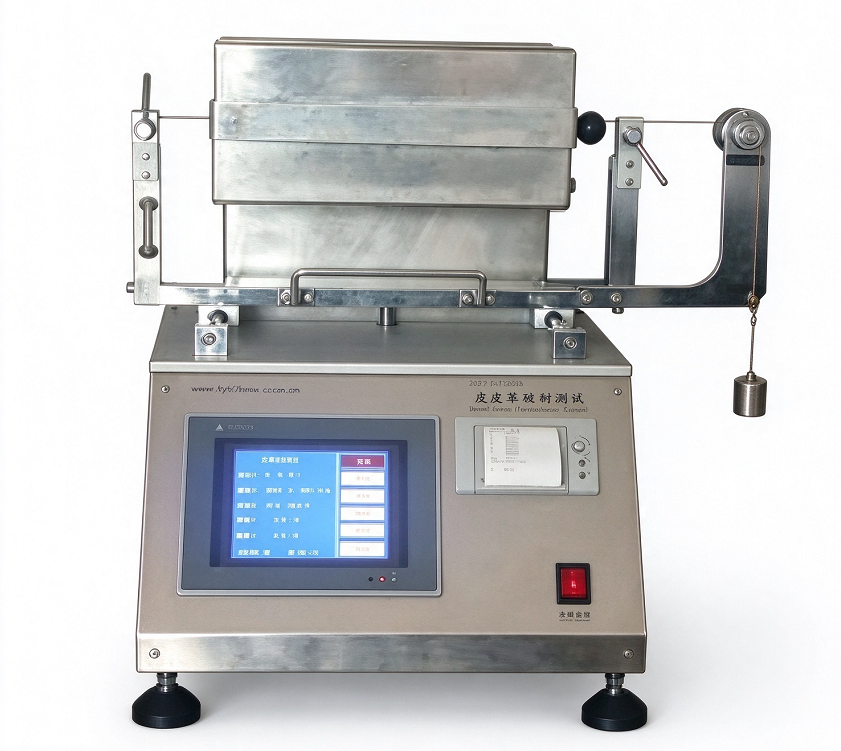
It is used to test the dry heat shrinkage performance of tire cord, yarn, polyester, cotton and other materials under certain temperature conditions.
Product Information:
The dry heat shrinkage tester is a crucial instrument for testing the dimensional changes of materials under high-temperature conditions, and is of great importance in ensuring product quality and stability.
Meet the standard:
GB/T9101-5.4-2017: Polyamide 66 dipped tyre cord fabric
GB/T9102-6.8-2016: Nylon 6 dipped tyre cord fabric
GB/T19390-7.4.1-2023: Dipped polyester cord fabric for tyres
ASTM D4974-2002: Standard Test Method for Rubber Thread - Determination of Dry Heat Shrinkage
Instrument features:
One machine for dual use, can separately test shrinkage rate and shrinkage force;
The system uses touch screen to carry out man-machine dialogue and input operation directly on the interface;
The temperature module is directly used to collect temperature, the thermocouple is built-in, PID control output heater, and heating temperature and heating speed can be set on the touch screen;
Through the LCD display, can directly display the current test data, while providing data storage function, can query multiple groups of test results, and can calculate the test results;
Equipped with a micro printer to print two values of shrinkage and shrinkage force respectively.
Technical parameters:
| Description | Details |
|---|---|
| Measuring length | 250 ± 1mm |
| Shrinkage measurement accuracy | 0.1% |
| Shrinkage force measurement range | 0 - 25N (can be customized) |
| Measuring accuracy of shrinkage force | 0.1N |
| Heating range | RT - 250°C |
| Temperature control accuracy | ±0.1°C |
| Timing range | 0 - 999S |
| Power supply | AC 220V 50Hz |
| Overall dimensions | 520x370x510mm (assuming the "37" is a typo and should be "370" for consistency in dimensions) |
| Weight | 35kg |
Accessoriess:
1. Main unit: 1 set
2. Weights: 8 pieces
3. Weight trays: 2 pieces
4. Fuses: 2 pieces
5. Grounding wire: 1 piece
6. Feet: 4 pieces
7. Packing list: 1 copy
8. User manual: 1 copy
9. Certificate of conformity: 1 copy
Test Procedures:
Preparation: Ensure the testing instrument is in normal working condition and check that the temperature control system and hot air circulation are functioning properly. Prepare the samples to be tested, ensuring the sample surface is flat and free of impurities, and cut them to the appropriate size according to the test requirements.
Sample Placement: Place the sample on the test platform or support, ensuring that the sample is heated evenly during the test and that uneven thermal shrinkage does not occur due to improper placement.
Parameter Configuration: Set parameters such as operator, sample specifications, date, temperature, time, and number of cycles.
Sample Clamping: Clamp one end of the sample to the right clamp, and attach the corresponding weight (pre-tension) to the other end of the sample, allowing it to pass over the left pulley.
Start Measurement: Push the movable carriage all the way in and start the measurement. The display screen will show the instantaneous shrinkage rate.
Test Completion: After the set time, the display screen will show that the test is complete. Replace the sample and slowly pull out the carriage.
Data Recording: Click on "Report" to view each data point and the average value. Click "Print" to print the report.
FAQ
1. What is a Dry Heat Shrinkage Tester?
The Dry Heat Shrinkage Tester is a device designed to measure the dimensional stability and shrinkage behavior of fabrics, textiles, or other materials when exposed to controlled high-temperature dry heat conditions.
2. How does the machine perform shrinkage testing?
The tester exposes material samples to a specified dry heat temperature for a predetermined period. After heating, the change in dimensions (length, width, or area) is measured to determine the shrinkage percentage.
3. What types of materials can be tested?
It is suitable for natural fibers, synthetic fibers, blends, woven and knitted fabrics, nonwovens, and other heat-sensitive materials used in textiles, garments, and technical fabrics.