




Search keywords:
product name, product type, model number,
test method, manufacturer, technique, application
-
Cone Calorimeter
The import of American VTEC, cone calorimeter ultra high cost performance
more
-
Digital Elmendorf Tearing Tester
Pendulum method test material tear strength, operating more simple, more accurate data
more
-
ZwickiLine Materials testing machines
Top of the world's leading universal material testing machine
more
Carbon Black Content Tester
BACK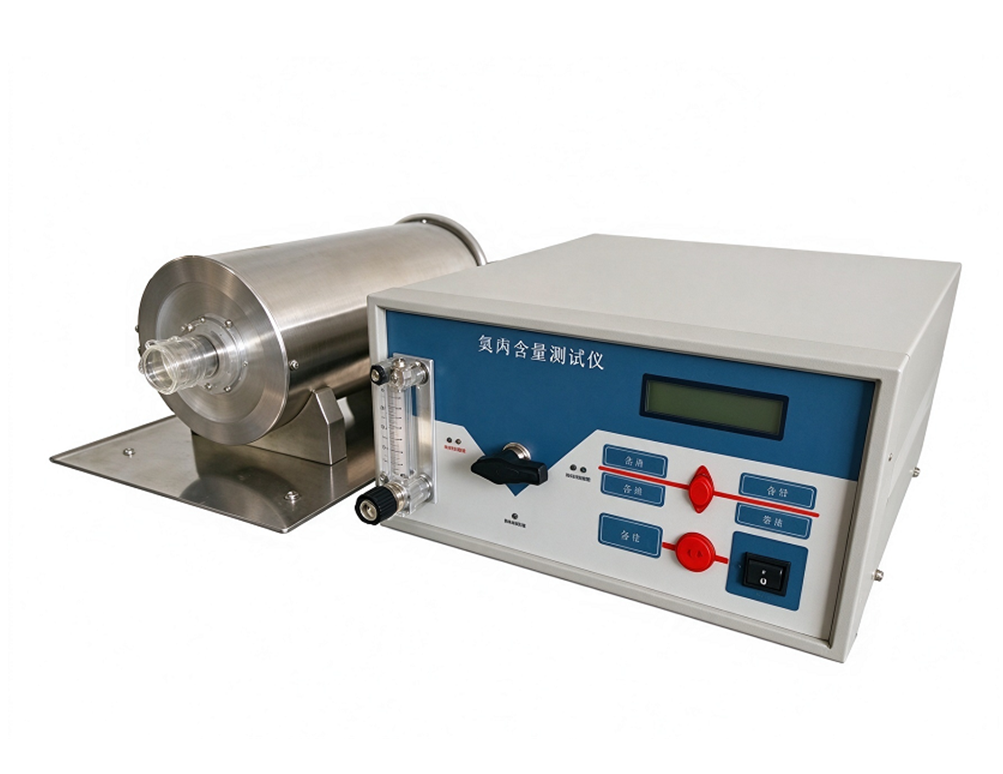


Standards:
Applications:
The Carbon Black Content Tester has wide applications in industrial production, scientific research, and quality control. In industrial production, it can be used to quantitatively analyze the carbon black content in raw materials, thereby controlling the raw material ratio and product quality during the production process. In scientific research, it can be used to quantitatively analyze the carbon black content in new materials, thus understanding the physical and chemical properties of the materials. In quality control, it can be used to quantitatively analyze the carbon black content in products, thereby ensuring the quality and safety of the products.
Product Information:
A Carbon Black Content Tester is an instrument used to measure the carbon black content in materials.
Standards
The applicable standards for carbon black content testers mainly include, but are not limited to, the following:
GB/T 2951.41 - 2008: General test methods for insulating and sheathing materials of cables and optical fibers.
GB/T 3515 - 2005: Determination of carbon black content in rubber - Pyrolysis method.
GB/T 13021 - 1991: Determination of carbon black content in polyethylene pipes and fittings (Thermogravimetric method).
ISO 6964: Relevant international standard.
IEC 60811 - 4 - 1: Standard of the International Electrotechnical Commission.
JTG E50 T1165: Standard of the transportation industry.
These standards specify requirements for the testing methods, testing conditions, testing procedures, and data processing of carbon black content testers, ensuring the accuracy and reliability of test results.
Features
Pyrolysis System:
Split-Tube Furnace: Rapid heating (0–1.000°C in 20 minutes) with silicone carbide elements.
NiCr-Ni Thermocouple: ±0.5°C accuracy across 300–1.000°C range.
Gas Control:
Mass flow controllers for nitrogen (1–5 L/min) and air (0.5–2 L/min).
Built-in leak detector with audible/visual alerts.
Weighing Module:
Integrated analytical balance (0.01mg resolution) with anti-vibration table.
Auto-tare function for crucibles and samples.
Data Management:
100-test memory with date/time stamping.
USB/RS-232 ports for PC connectivity and LIMS integration.
Safety Suite:
Emergency off button with E-Stop loop monitoring.
Fume extraction port for lab ventilation systems.
Technical Parameters
| Specification | Details |
|---|---|
| Temperature Range | 300°C to 1.000°C (max. operating temp.) |
| Temperature Accuracy | ±0.5°C (±0.1°C with calibration kit) |
| Heating Rate | 0–50°C/min (adjustable) |
| Gas Purity | 99.99% N₂ (inert) / Ambient air (combustion) |
| Sample Capacity | 1–5 samples per run (10g max. per sample) |
| Power Supply | 220V/50Hz (110V/60Hz available) |
| Dimensions (W×D×H) | 500mm × 400mm × 450mm |
| Weight | 45 kg (net) |
Accessoriess
(1)Standard Kit:
10 × Porcelain crucibles (ISO 6964 compliant).
Silicone tubing set with quick-connect fittings.
(2)Software Bundle:
LabCarbon Pro™: Automated data reduction with GPC/SEC integration.
CloudQC: Remote monitoring for 21 CFR Part 11 compliance.
(3)Safety Upgrades:
Fume scrubber with activated carbon filter.
Explosion-proof enclosure (ATEX Zone 2).
(4)Calibration Services:
Annual recalibration with NIST-traceable certificate.
(5)Consumables:
50 × Disposable sample boats.
1L Nitrogen purity indicator solution.
FAQ
1. What is a Carbon Black Content Tester?
The Carbon Black Content Tester is a device used to determine the precise amount of carbon black present in rubber, plastics, inks, or coatings. Accurate measurement is essential for quality control and consistency in material performance.
2. How does the machine measure carbon black content?
The tester typically uses chemical digestion, ashing, or optical analysis methods to quantify carbon black. The material is prepared according to standardized procedures, and the carbon black content is calculated based on weight loss or absorbance.
3. What types of materials can be tested?
It can test rubber compounds, plastics, coatings, inks, and other polymer-based materials containing carbon black as a reinforcing or coloring agent.
4. What parameters are measured during testing?
The machine measures the percentage of carbon black in the material, ensuring it meets formulation specifications. Some advanced models also provide reproducibility data and reporting for quality documentation.
5. Why is carbon black content testing important?
Accurate carbon black content ensures consistent mechanical properties, color uniformity, and wear resistance. It helps manufacturers maintain product quality, optimize formulations, and comply with industry standards.
