



Search keywords:
product name, product type, model number,
test method, manufacturer, technique, application
-
Cone Calorimeter
The import of American VTEC, cone calorimeter ultra high cost performance
more
-
Digital Elmendorf Tearing Tester
Pendulum method test material tear strength, operating more simple, more accurate data
more
-
ZwickiLine Materials testing machines
Top of the world's leading universal material testing machine
more
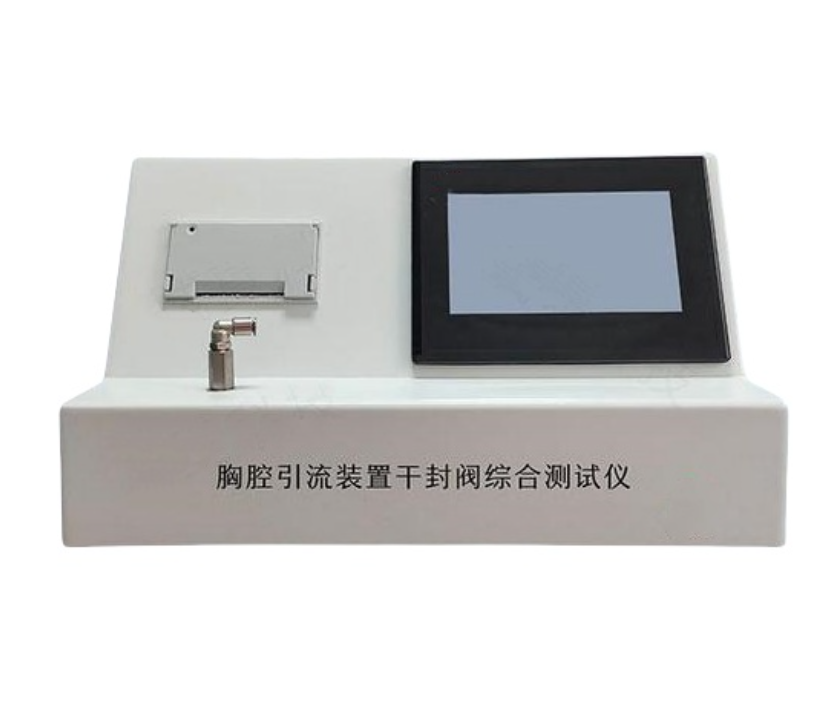
Chest Drainage Tester
BACK

Standards:
Applications:
Product Information:
The thoracic drainage tester is widely applied in the medical field, mainly used for monitoring and evaluating the performance of thoracic drainage devices and the thoracic drainage situation of patients. The following is a detailed introduction to the main uses, compliance standards, and technical parameters of the thoracic drainage tester.
Main Uses
Enhancing Treatment Efficacy: By providing accurate data and references for clinicians, the tester contributes to improving the treatment efficacy and recovery rate of patients. Doctors can carry out personalized treatment for patients based on the data provided by the tester and optimize the treatment plans. Surgical Monitoring and Condition Evaluation: After thoracic drainage surgery, the tester can promptly monitor the drainage status, assisting medical staff in understanding the surgical outcome and guiding further treatment. Meanwhile, through continuous monitoring of patients' physiological parameters, the tester helps medical staff evaluate patients' conditions and formulate more reasonable treatment plans. Adaptability Testing: Some thoracic drainage testers are also equipped with an adaptability testing function, which is used to assess the adaptability indicators of thoracic drainage devices, ensuring the stability and reliability of the devices when simulating changes in thoracic pressure.
Compliance Standards
The design, manufacture, and use of thoracic drainage testers should comply with relevant medical industry standards to ensure the accuracy and reliability of test results. Common compliance standards include YY/T 0583.1. etc.
Technical Parameters
Pressure Range:The pressure range of the tester is usually wide to adapt to the needs of different thoracic drainage devices and patients. For example, the pressure range can reach -10020kPa (-10010kPa, depending on the specific model), with an accuracy of 0.5%FS.
Flow Range: The flow range is also one of the important technical parameters of the tester, used to evaluate the drainage capacity of thoracic drainage devices. For instance, the flow range can be 0 - 1000mL/min, with the same accuracy of 0.5%FS.
Air Source Pressure and Interface: The tester is typically equipped with an air - source interface for connecting to air - source equipment (such as an air compressor) to supply the required air pressure for testing. The air - source pressure generally does not exceed 0.7MPa (the user needs to provide the air source), and the air - source interface is usually a Φ6mm or Φ8mm polyurethane tube.
Power Supply: The power supply of the tester usually supports a wide voltage range, such as AC100 - 240V, 50/60Hz, to adapt to the electrical standards of different countries and regions.
Operation Interface and Display: The tester is usually equipped with a color touch - screen operation interface, supporting Chinese - English switching (or other languages). The interface is clear and straightforward, making it easy for medical staff to operate and use.
Meanwhile, the tester also has real - time data display and recording functions, facilitating medical staff to view and analyze test results.
External Dimensions and Weight: The external dimensions and weight of the tester vary depending on the model, but it is generally designed to be compact and lightweight for easy portability and use.
For example, the external dimensions may be 390mm(L)×410mm(W)×190mm(H) (the specific dimensions depend on the model), and the weight is moderate, which is convenient for medical staff to move and operate.
Other Functions: Some testers are also equipped with additional functions such as automatic calibration, fault diagnosis, data export, and printing to improve testing efficiency and convenience.
FAQ
(1) What is this product?
It is a tester for disposable chest drainage devices with dry-seal valves.
(2) What is this product used for?
You use it to measure negative pressure display, valve opening/closing performance, and automatic release functionality.
(3) What is the working principle of this product?
The system uses precision pressure sensors and a controlled vacuum generator to simulate negative pressure conditions, recording valve responses and performance automatically.
(4) Why is this product important?
It ensures chest drainage devices operate safely and reliably, which is critical for patient care.
(5) What industries is this product suitable for?
It is suitable for hospitals, medical device manufacturers, quality inspection agencies, and research laboratories.