




Search keywords:
product name, product type, model number,
test method, manufacturer, technique, application
-
Cone Calorimeter
The import of American VTEC, cone calorimeter ultra high cost performance
more
-
Digital Elmendorf Tearing Tester
Pendulum method test material tear strength, operating more simple, more accurate data
more
-
ZwickiLine Materials testing machines
Top of the world's leading universal material testing machine
more
Metal Wire Repeated Bending Tester
BACK

Standards:
Applications:
Product Information:
The Metal Wire Repeated Bending Tester is designed to evaluate the bending fatigue performance of metal wires under repeated stress. It measures the wire’s ductility and identifies potential surface or internal defects that may lead to premature failure. By applying controlled bending cycles, the tester provides quantitative results for wire performance assessment, quality control, and material research. It is widely used in wire manufacturing, R&D, and quality inspection departments.
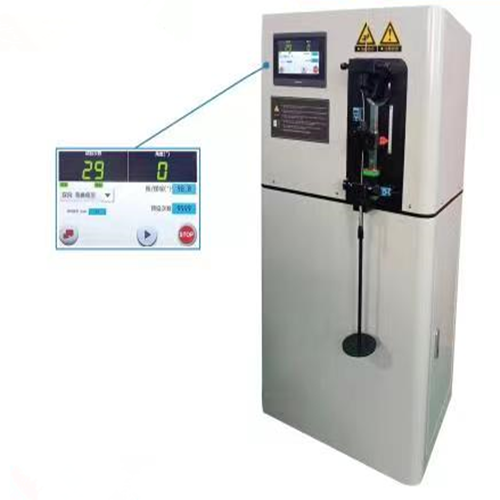
Application
(1) Testing bending fatigue resistance of metal wires.
(2) Evaluating ductility and plastic deformation under repeated bending.
(3) Detecting hidden surface or internal defects in wires.
(4) Quality inspection in wire and cable manufacturing.
(5) Research and development of elevator ropes, spring wires, and electrical conductors.
(6) Testing wires used in automotive, aerospace, and construction industries.
(7) Laboratory experiments and materials research in universities and technical institutes.
Standards
(1) GB/T 238-2013 – Metal Material Wire Repeated Bending Test Method.
(2) GB/T 235 – Metal Material Sheets and Thin Strips (≤3mm) Repeated Bending Test Method.
(3) ISO/DIS 7801-1983 – Repeated Bending Test of Metal Wire.
(4) ASTM standards related to metal wire fatigue and bending tests.
(5) JIS and DIN standards for repeated bending and torsion testing of metallic materials.
Features
(1) Evaluates wire bending fatigue and resistance to repeated stress.
(2) Quantifies ductility through the number of bends to failure.
(3) Detects surface and internal defects that may cause premature failure.
(4) Provides standardized testing according to national and international standards.
(5) Adjustable bending radius, angle, and speed to suit different wire specifications.
(6) Automated operation with cycle counting and automatic stop at fracture.
(7) Suitable for production, R&D, and quality inspection applications.
Parameters
| Parameter | Specification |
|---|---|
| Sample diameter | 0.3–6 mm or 4–10 mm |
| Sample length | 150–200 mm |
| Bending angle | Left and right bending 90° |
| Bending speed | 60 times/min |
| Counting range | 0–9999 times |
| Motor power | 1.1 kW |
Accessories
(1) Main testing machine
(2) Adjustable round rods for different wire diameters
(3) Bushings for bending position adjustment
(4) Power cable
(5) User manual
Test Procedures
(1) Secure the wire sample between two round rods of the appropriate size.
(2) Adjust the bending position and bushing according to the sample specifications.
(3) Press the start button to initiate bending.
(4) The machine bends the wire alternately to 90° left and right.
(5) The machine automatically stops when the wire fractures and records the number of bends.
(6) Repeat the test for multiple samples as needed and record results.
Maintenance Information
(1) Regularly inspect the bending rods, bushings, and motor for wear or damage.
(2) Ensure the counting system operates correctly and is calibrated.
(3) Maintain power supply stability and check electrical connections.
(4) Clean the machine to prevent debris interference.
(5) Lubricate moving parts according to manufacturer guidelines.
(6) Handle the machine components carefully to prevent misalignment or damage during operation.
