




Search keywords:
product name, product type, model number,
test method, manufacturer, technique, application
-
Cone Calorimeter
The import of American VTEC, cone calorimeter ultra high cost performance
more
-
Digital Elmendorf Tearing Tester
Pendulum method test material tear strength, operating more simple, more accurate data
more
-
ZwickiLine Materials testing machines
Top of the world's leading universal material testing machine
more
Metal Wire Wrap Tester
BACK

Standards:
Applications:
Product Information:
The Metal Wire Wrap Tester is designed to evaluate the ductility and winding performance of metallic wires. It measures the ability of wires to withstand plastic deformation under controlled tension and rotation, revealing surface defects such as cracks or inclusions that may not be visible otherwise. This instrument is widely used in metal wire production, quality control, research, and development to ensure consistent wire performance and compliance with national and international standards.
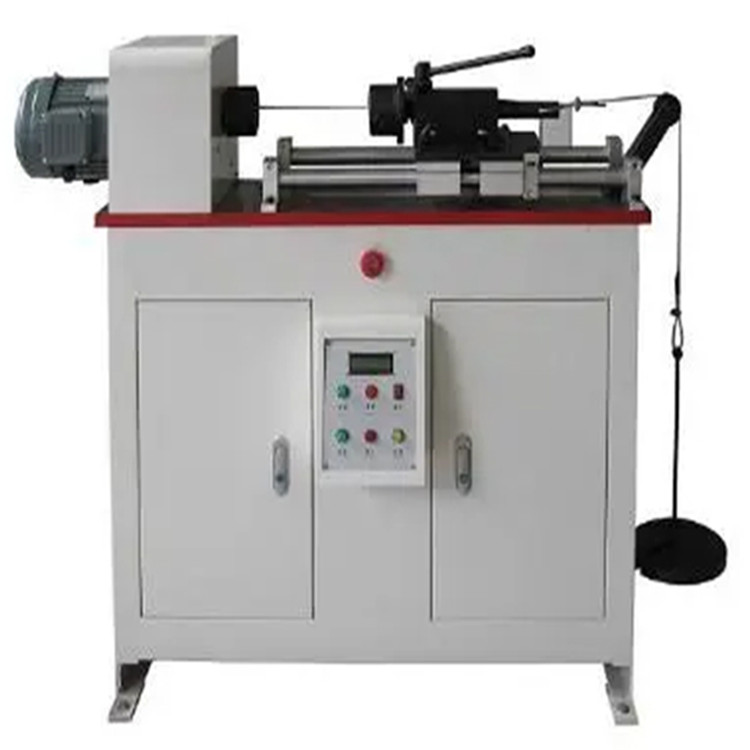
Application
(1) Testing ductility and plastic deformation of metallic wires.
(2) Detecting surface cracks, inclusions, and other defects in wires.
(3) Evaluating wire quality in steel manufacturing and wire production industries.
(4) Research and development of elevator ropes, cables, and spring wires.
(5) Quality inspection in factories producing bare or coated metal wires.
(6) Simulating forming and winding processes in wire-based applications.
(7) Testing wires used in automotive, aerospace, and construction industries.
(8) Educational and laboratory experiments in materials science and mechanical engineering.
Standards
(1) GB/T 2976 – Wire Winding Test Method for Metal Materials.
(2) ISO 4101 – Cold Drawn Steel Wire for Elevator Wire Ropes – Technical Specifications.
(3) ISO 7802:2013(E) – Method of Test for Wire Winding of Metallic Materials.
(4) GB/T 4909.7 – Bare Wire Test Methods – Part 7: Winding Test.
(5) ASTM standards related to metallic wire ductility and winding tests.
(6) DIN standards for wire winding and torsion evaluation.
Features
(1) Evaluates wire ductility under controlled tension and rotation.
(2) Detects surface defects such as cracks and inclusions.
(3) Provides standardized testing according to national and international standards.
(4) Ensures consistent wire quality and performance.
(5) Simulates real-world forming and winding processes.
(6) Adjustable parameters allow repeatable and precise testing.
(7) Suitable for production, R&D, quality inspection, and laboratory environments.
Parameters
| Parameter | Specification |
|---|---|
| Working power supply | AC 220V, 50Hz |
| Winding speed | 1–5 RPM, adjustable |
| Number of winding cycles | 1 cycle |
| Winding wheel diameter accuracy | ±0.5 mm |
| Damping system loading strength | 0–137 Kg |
| Damping system torque | 190 N·m |
| Pneumatic pressure | 0.4–0.7 MPa |
Accessories
(1) Main testing machine
(2) Winding wheel
(3) Pneumatic pressure system
(4) Damping system components
(5) Power cable
(6) User manual
Test Procedures
(1) Secure the wire sample on the winding station.
(2) Set the desired winding speed, number of cycles, and tension parameters.
(3) Start the machine and monitor the winding process.
(4) Observe the wire for any surface cracks, inclusions, or deformation.
(5) After the test cycle is complete, remove the wire and record the results.
(6) Repeat the procedure for multiple samples if necessary.
Maintenance Information
(1) Regularly inspect the winding wheel and damping system for wear or damage.
(2) Maintain pneumatic system pressure and check for leaks.
(3) Ensure electrical connections and power supply are stable and safe.
(4) Keep the machine and surrounding area clean to avoid contamination.
(5) Lubricate moving parts according to manufacturer guidelines.
(6) Handle wire and machine components carefully to prevent damage during testing.
