




Search keywords:
product name, product type, model number,
test method, manufacturer, technique, application
-
Cone Calorimeter
The import of American VTEC, cone calorimeter ultra high cost performance
more
-

Digital Elmendorf Tearing Tester
Pendulum method test material tear strength, operating more simple, more accurate data
more
-
ZwickiLine Materials testing machines
Top of the world's leading universal material testing machine
more
Cigarette Draw Resistance Tester
BACK

Standards:
(1) ISO 6565 – Cigarettes — Determination of draw resistance. (2) CORESTA Recommended Method No. 6 – International protocol for cigarette draw resistance testing. (3) GB/T 33029 – China national standard for cigarette draw resistance. (4) Other applicable national standards depending on the country of manufacture or sale.
Applications:
(1) Measurement of cigarette draw resistance for quality control during manufacturing.
(2) Evaluation of airflow characteristics for research and development of new tobacco blends, filter designs, and rolling processes.
(3) Random inspections by tobacco regulatory and inspection agencies to ensure products meet relevant standards.
(4) Monitoring and controlling batch-to-batch consistency of draw resistance in production lines.
(5) Verification of filter performance and ventilation design.
(6) Comparison of different cigarette types (e.g., king-size, slim, unfiltered) for sensory quality evaluation.
(7) Assessment of cigarette draw resistance in product optimization and consumer preference studies.
Product Information:
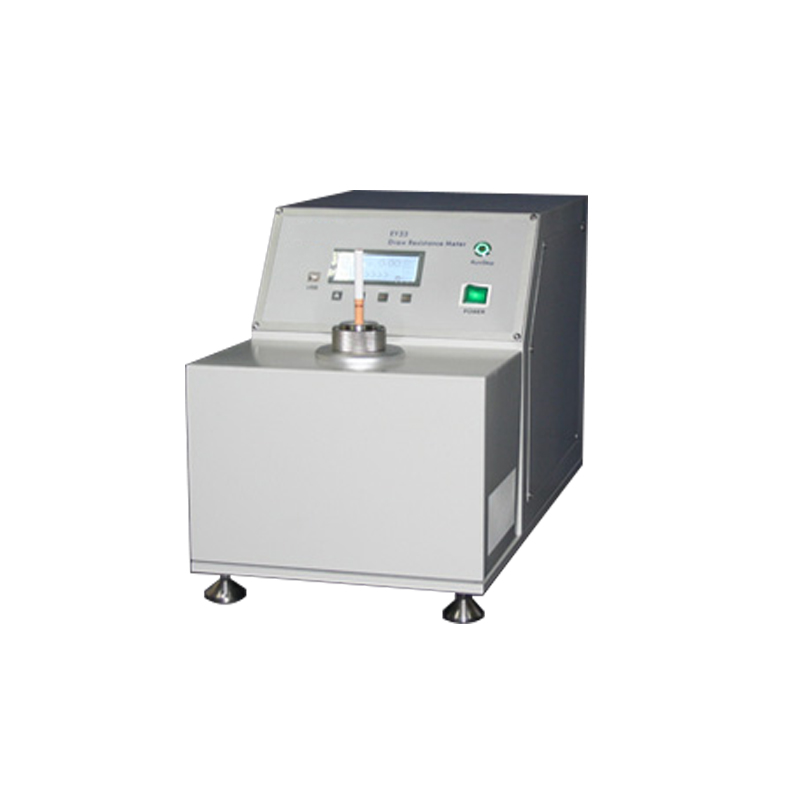
The Cigarette Draw Resistance Tester is designed to measure the airflow resistance encountered by a cigarette during the smoking process. By simulating normal smoking conditions, it provides precise and objective data that supports quality control, product development, and regulatory compliance in the tobacco industry.
Application
(1) Measurement of cigarette draw resistance for quality control during manufacturing.
(2) Evaluation of airflow characteristics for research and development of new tobacco blends, filter designs, and rolling processes.
(3) Random inspections by tobacco regulatory and inspection agencies to ensure products meet relevant standards.
(4) Monitoring and controlling batch-to-batch consistency of draw resistance in production lines.
(5) Verification of filter performance and ventilation design.
(6) Comparison of different cigarette types (e.g., king-size, slim, unfiltered) for sensory quality evaluation.
(7) Assessment of cigarette draw resistance in product optimization and consumer preference studies.
Standards
(1) ISO 6565 – Cigarettes — Determination of draw resistance.
(2) CORESTA Recommended Method No. 6 – International protocol for cigarette draw resistance testing.
(3) GB/T 33029 – China national standard for cigarette draw resistance.
(4) Other applicable national standards depending on the country of manufacture or sale.
Features
(1) Objective Measurement – Provides precise, quantitative evaluation of draw resistance.
(2) Rapid Testing – Average test time of 15 seconds per cigarette.
(3) Automated Operation – Many models offer automatic clamping, testing, and data processing.
(4) Non-Destructive Testing – Test performed on unlit cigarettes without altering their structure.
(5) Real-Time Data Display – Digital output for immediate analysis and quality monitoring.
(6) Versatile Application – Suitable for production, R&D, and regulatory inspections.
Technical Parameters
| Parameter | Specification |
|---|---|
| Measuring Range | 0–10 kPa |
| Resolution | 1 Pa |
| Test Error | <1 % |
| Test Time | ~15 seconds per sample |
| Test Port Inner Diameter | 7.7 mm |
| Test Port Depth | 9 mm |
| Power Supply | AC 100–240 V, 50/60 Hz |
| Data Output | USB port for computer communication |
| Operating Environment | Room temperature, standard laboratory conditions |
Accessories
(1) Standard cigarette holders/clamps.
(2) Calibration reference devices for pressure and airflow verification.
(3) Software for data logging, analysis, and reporting.
(4) Spare seals and gaskets for test ports.
Test Procedures
(1) Place the unlit cigarette into the clamping device.
(2) Configure the airflow speed according to the selected standard.
(3) Initiate the test; the system measures the pressure difference across the cigarette.
(4) Data processing system calculates the draw resistance value in Pascal (Pa).
(5) Display results on the digital interface or export via USB.
(6) Repeat for multiple samples to ensure batch consistency.
Maintenance Information
(1) Clean test ports and clamps after each use to prevent residue buildup.
(2) Calibrate pressure sensors and airflow system regularly.
(3) Avoid exposure to excessive dust, moisture, or vibration.
(4) Check USB connectivity and software updates periodically.
(5) Inspect mechanical clamps for wear or damage to ensure accurate readings.
FAQs
1. What is the main purpose of a Cigarette Draw Resistance Tester?
The Cigarette Draw Resistance Tester is used to measure the airflow resistance that a cigarette presents during the smoking process. By simulating normal smoking conditions, the instrument determines the pressure difference generated when air is drawn through an unlit cigarette. This objective and quantitative measurement supports quality control in manufacturing, product development activities such as filter or blend optimization, and compliance with relevant international and national standards in the tobacco industry.
2. How is the tester used in quality control and production monitoring? (Long Answer)
In quality control and production environments, the Cigarette Draw Resistance Tester is applied to monitor and control batch-to-batch consistency of cigarette draw resistance. Cigarettes are tested without lighting or damaging them, allowing manufacturers to evaluate airflow resistance during routine inspections or in-line quality checks. The rapid test time of approximately 15 seconds per sample enables efficient testing of multiple samples. Real-time digital data display and USB data output support immediate analysis, documentation, and traceability, helping ensure that finished products remain within specified draw resistance ranges throughout production.
3. Which standards does the Cigarette Draw Resistance Tester comply with?
The tester complies with several recognized standards for cigarette draw resistance measurement. These include ISO 6565 for the determination of draw resistance in cigarettes, CORESTA Recommended Method No. 6. which provides an international testing protocol, and GB/T 33029. the relevant Chinese national standard. Depending on the country of manufacture or sale, other applicable national standards may also be followed using this instrument.
4. What are the key technical parameters of this tester?
The Cigarette Draw Resistance Tester offers a measuring range of 0–10 kPa with a resolution of 1 Pa and a test error of less than 1%, ensuring precise and reliable results. Each test typically takes around 15 seconds per cigarette. The test port has an inner diameter of 7.7 mm and a depth of 9 mm, suitable for standard cigarette formats. The instrument operates on an AC 100–240 V, 50/60 Hz power supply and provides data output via a USB port for communication with a computer. It is designed to operate under room temperature and standard laboratory conditions.
