




Search keywords:
product name, product type, model number,
test method, manufacturer, technique, application
-
Cone Calorimeter
The import of American VTEC, cone calorimeter ultra high cost performance
more
-
Digital Elmendorf Tearing Tester
Pendulum method test material tear strength, operating more simple, more accurate data
more
-
ZwickiLine Materials testing machines
Top of the world's leading universal material testing machine
more
Rubber Resilience Tester
BACK

Standards:
Complies with ISO 4662:1986 (international), JIS K6255 (Japan), and GB/T 1681 (China) standards for standardized resilience testing of vulcanized rubber, ensuring global regulatory alignment.
Applications:
Rubber Manufacturing: Quality control for tires, seals, and industrial rubber components.
R&D Laboratories: Material optimization for enhanced resilience and durability.
Third-Party Testing: Certification support for ISO, JIS, and GB/T standards.
Product Information:
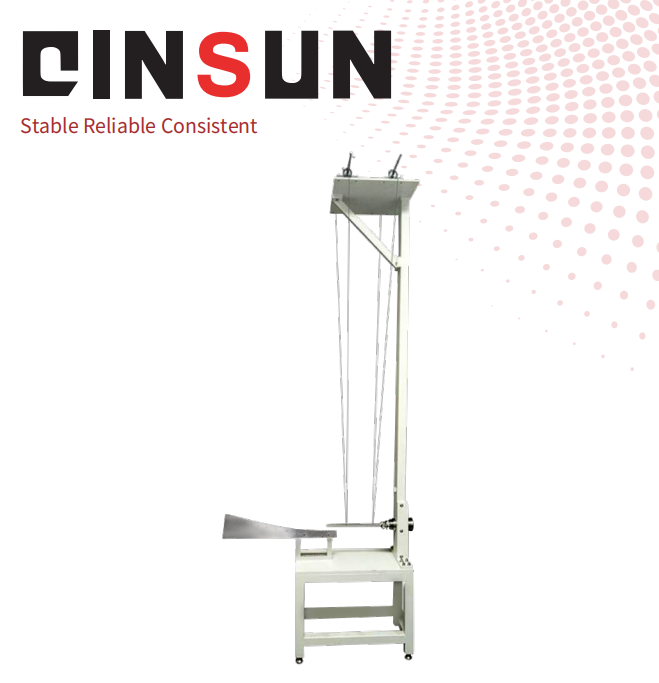
The Rubber Resilience Tester is an instrument used to determine the resilience of vulcanized rubber. It works by subjecting a rubber sample to a free-fall impact from a specified height, causing the impact head to strike the sample, and measuring the rebound height multiple times to directly read the rubber's resilience (%).
Applications
Rubber Manufacturing: Quality control for tires, seals, and industrial rubber components.
R&D Laboratories: Material optimization for enhanced resilience and durability.
Third-Party Testing: Certification support for ISO, JIS, and GB/T standards.
Standard
Complies with ISO 4662:1986 (international), JIS K6255 (Japan), and GB/T 1681 (China) standards for standardized resilience testing of vulcanized rubber, ensuring global regulatory alignment.
Product Advantages
Precision Engineering: High-precision impact head and dial system for accurate resilience rate measurements (±0.1% repeatability).
Robust Design: Heavy-duty base and detachable components simplify calibration and maintenance, enhancing longevity.
User-Friendly Operation: Direct-reading dial eliminates manual calculations, streamlining testing workflows.
Versatile Compliance: Meets multiple international standards, ideal for global quality control in rubber manufacturing.
Consistent Performance: 4 suspension wires ensure vertical alignment during free-fall impact, minimizing experimental error.
Product Features
Impact Head Assembly:
Specifications: 12.50 ± 0.05 mm diameter, 356 mm length, 0.35 ± 0.01 kg mass.
Energy Delivery: 100 mm free-fall gravity impact with hemispherical striking end.
Testing Mechanism:
Free-fall iron rod triggers 4th-6th rebound height measurement for average resilience calculation.
Detachable base and impact head for easy equipment adjustment and inspection.
Dial System:
Direct-reading scale displays resilience rate (%), eliminating conversion tables for most applications.
Optional conversion formula provided for horizontally scaled intervals.
Structural Integrity: Rigid column and base support high-force impacts, ensuring stability during testing.
Technical Parameters
| Parameter | Specification |
|---|---|
| Impact Head | 12.50 ± 0.05 mm (diameter), 356 mm (length) |
| Mass | 0.35 ± 0.01 kg |
| Suspension Wires | 4 wires, 2000 mm length |
| Impact Energy | 100 mm free-fall gravity |
| Dial Accuracy | ±0.1% resilience rate |
| Testing Range | 0–100% resilience (direct scale) |
| Equipment Dimensions | 500 mm (W) × 400 mm (D) × 1200 mm (H) |
| Weight | 30 kg |
| Power Supply | Non-electrical (manual operation) |
Operation Method
Operation Method (Based on Product Structure and Testing Mechanism)
Place the rubber sample in the test position according to relevant standards, ensuring sample stability.
Check that the impact head assembly is securely installed and confirm that the four suspension wires are vertical.
Raise the impact head to the specified height to meet the 100 mm free-fall impact condition.
Release the impact head, allowing it to fall freely and impact the sample.
Record the rebound height from the 4th to the 6th impacts using the testing mechanism.
Read the rebound rate (%) directly from the direct-reading dial; no additional conversion is required.
If multiple tests are required, repeat the above steps to obtain a stable average result.
Maintenance Method
Maintenance Method (Based on Product Design and Maintenance Information)
Regularly inspect the impact head, suspension wires, and column structure to ensure there is no loosening or deformation.
Keep the contact area between the impact head and the sample clean to prevent impurities from affecting the test results.
Regularly inspect the removable base and impact head for easy calibration and condition verification.
Check the indications on the direct-reading dial to ensure accurate readings.
When not in use, store the equipment in a stable, dry environment to extend its lifespan.
FAQs
1. What is the primary application of the Rubber Resilience Tester?
The Rubber Resilience Tester is mainly used to measure the rebound resilience of vulcanized rubber materials under standardized free-fall impact conditions. It is widely applied in rubber manufacturing for quality control of tires, seals, and industrial rubber components. By providing direct-reading resilience rates, the tester helps manufacturers monitor material consistency and performance. In addition, it is used in R&D laboratories for material optimization and durability studies, as well as by third-party testing organizations for certification support according to ISO, JIS, and GB/T standards.
2. Which standards does the Rubber Resilience Tester comply with?
The Rubber Resilience Tester complies with multiple internationally recognized standards for rubber resilience testing. These include ISO 4662:1986 for international testing requirements, JIS K6255 for the Japanese standard, and GB/T 1681 for the Chinese national standard. Compliance with these standards ensures that test results are comparable, reliable, and suitable for global regulatory acceptance in rubber quality control and certification processes.
3. How does the tester ensure accurate and consistent resilience measurement?
The tester uses a precision-engineered impact head with a diameter of 12.50 ± 0.05 mm and a mass of 0.35 ± 0.01 kg to deliver a controlled 100 mm free-fall gravity impact. Four suspension wires maintain vertical alignment during the free-fall process, minimizing experimental error. The free-fall iron rod measures the 4th to 6th rebound heights to calculate average resilience. A direct-reading dial displays resilience values from 0 to 100% with ±0.1% accuracy, eliminating manual calculations and improving repeatability.
