




Search keywords:
product name, product type, model number,
test method, manufacturer, technique, application
-
Cone Calorimeter
The import of American VTEC, cone calorimeter ultra high cost performance
more
-
Digital Elmendorf Tearing Tester
Pendulum method test material tear strength, operating more simple, more accurate data
more
-
ZwickiLine Materials testing machines
Top of the world's leading universal material testing machine
more
Zipper Fatigue Tester
BACK

Standards:
ASTM D2060:Standard Test Methods for Strength Tests for Zippers BS 3084:Specification for Slide Fasteners (Zippers JIS S3015:Testing Methods for Slide Fastener DIN 3416:Slide Fasteners – Requirements and Testing
Applications:
Determining the number of opening and closing cycles a zipper can withstand before failure
Durability and lifespan evaluation of coil, Vislon, and metal zippers
Quality control in zipper manufacturing processes
Performance comparison of different zipper materials, designs, and finishes
Research and development of high-durability zipper components
Verifying zipper suitability for different end-use products, from light apparel to heavy-duty applications
Product Information:
The functional life of a zipper is often determined by its ability to withstand numerous opening and closing cycles without failure. A Zipper Fatigue Tester provides a standardized method to assess this characteristic, commonly referred to as reciprocation or cycling resistance.
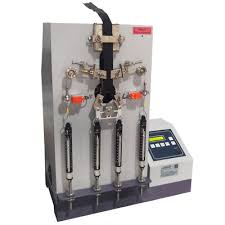
The test involves mounting a specimen of the zipper onto the tester. The zipper tapes are typically held securely at each end, and a specified lateral or transverse tension (or a combination) may be applied to simulate the stresses encountered in a finished product. The zipper slider is then grasped by a mechanism on the tester. A motorized drive system moves the slider back and forth along the zipper chain, causing the zipper to repeatedly open and close over a defined stroke length.
The instrument is used in laboratories for:
Determining the number of cycles a zipper can withstand before functional failure.
Evaluating the durability and lifespan of various zipper types (e.g., coil, Vislon, metal) and sizes.
Quality control during zipper manufacturing to ensure consistent performance.
Assessing the effect of different materials, designs, or finishes on zipper fatigue life.
Research and development of more durable zipper components and assemblies.
Ensuring zippers meet the performance requirements for the products they will be used in (e.g., heavy-duty applications vs. light apparel).
Product Advantages:
Provides objective, quantitative data on zipper durability under repeated opening and closing cycles.
Essential for predicting the service life of zippers and ensuring product quality and reliability.
Helps ensure zippers maintain smooth operation and structural integrity over time.
Standard compliant test methods (ASTM D2060. BS 3084) are widely used for zipper performance evaluation.
Allows for testing under controlled conditions of tension, speed, and stroke length.
Useful for quality control, product development, and material comparison.
Testers often have multiple stations for efficient testing of multiple samples.
Product Features:
Based on typical Zipper Fatigue Testers:
Mounting fixtures to securely hold the ends of the zipper tapes.
Mechanism to apply controlled lateral tension (pulling the tapes apart) or transverse tension (pulling the tapes away from the midline) to the zipper specimen, or a combination of both, as specified by the standard.
Motorized reciprocating mechanism to drive the zipper slider back and forth along the zipper chain.
Gripping mechanism to attach the tester's drive system to the zipper slider.
Adjustable stroke length to set the distance the slider travels during each cycle.
Adjustable speed control for the reciprocating mechanism, allowing the test to be run at a specified number of cycles per minute.
Digital cycle counter to accurately record the total number of opening and closing cycles performed.
Automatic stop function that halts the test when a predetermined number of cycles is reached or when a failure is detected (e.g., excessive force required to move the slider).
Safety guarding to protect the operator during testing.
Multiple testing stations (common) to allow simultaneous testing of several zipper specimens.
Specification
| Item | Detail |
| Reciprocation stroke | 75mm |
| Running speed | Adjustable |
| Width of lateral clamps | 25mm |
| Combined weight of longitudinal clamps, balances and swivel plate | 0.28kg-~0.34kg |
| Angle α | 30° (specimen open), 60° (specimen closed) |
| Count range | 1-999999 |
| Power supply | 220V 50Hz |
| Dimension | 280mm×550mm×660mm 11.02inch×21.65inch×25.98inch |
| Net weight | 35kg 77.16lb |
Accessories
Zipper tape mounting fixtures
Slider gripping mechanism
Lateral and transverse tension loading components
Digital cycle counter (built-in)
Safety guarding components
Test Procedures
Secure the zipper specimen by clamping both ends of the zipper tapes in the mounting fixtures.
Apply the specified lateral tension, transverse tension, or a combination as required by the test standard.
Attach the zipper slider to the reciprocating drive mechanism.
Set the required stroke length, running speed, and target cycle count.
Start the tester to allow the slider to move back and forth, repeatedly opening and closing the zipper.
Monitor the test until the preset cycle count is reached or functional failure occurs.
Record the total number of cycles and observe any performance degradation or failure mode.
Maintenance Information
Regularly inspect and clean clamps and gripping mechanisms to ensure secure specimen mounting
Check moving parts and reciprocating mechanisms for smooth operation
Verify the accuracy of the digital cycle counter periodically
Ensure safety guards are intact and properly positioned before testing
Keep the instrument in a clean, dry laboratory environment to maintain long-term stability
FAQs
1. What is the purpose of a Zipper Fatigue Tester?
The Zipper Fatigue Tester is designed to evaluate the durability of zippers under repeated opening and closing cycles, which is commonly referred to as reciprocation or cycling resistance. By driving the zipper slider back and forth along the zipper chain under controlled conditions, the tester determines how many cycles a zipper can withstand before functional failure occurs. This provides objective and quantitative data that can be used to predict service life, verify product quality, and ensure that zippers meet the performance requirements of their intended applications.
2. How is the zipper specimen mounted and tested during a fatigue test?
During testing, a zipper specimen is mounted onto the tester with the zipper tapes securely clamped at both ends. Depending on the test standard or application requirement, controlled lateral tension, transverse tension, or a combination of both may be applied to simulate stresses experienced in finished products. The zipper slider is connected to a motorized gripping mechanism, which moves the slider back and forth along a defined stroke length. This repeated motion causes continuous opening and closing cycles until a preset cycle count is reached or functional failure is detected.
3. What types of zippers can be evaluated using this tester?
The Zipper Fatigue Tester is suitable for evaluating a wide range of zipper types and sizes, including coil zippers, Vislon zippers, and metal zippers. It allows manufacturers and laboratories to compare durability performance among different zipper constructions, materials, finishes, and designs. This makes the instrument useful not only for routine quality control during production but also for research and development aimed at improving zipper components and assemblies.
4. Which standards does the Zipper Fatigue Tester comply with?
The tester is designed to meet widely recognized international and regional standards for zipper performance evaluation, including ASTM D2060. BS 3084. JIS S3015. and DIN 3416. These standards define test conditions, loading methods, and evaluation criteria for zipper durability under repeated cycling. Compliance with these standards ensures that test results are consistent, comparable, and acceptable for quality assurance, supplier evaluation, and product certification purposes.
5. What features help ensure accurate and repeatable test results?
Accurate and repeatable results are achieved through controlled test parameters such as adjustable running speed, defined reciprocation stroke length, and regulated tension applied to the zipper tapes. A digital cycle counter records the total number of opening and closing cycles, while an automatic stop function halts the test when a preset cycle count is reached or when abnormal operation is detected. Safety guarding protects the operator, and multiple testing stations allow efficient, parallel testing under identical conditions.
