




Search keywords:
product name, product type, model number,
test method, manufacturer, technique, application
-
Cone Calorimeter
The import of American VTEC, cone calorimeter ultra high cost performance
more
-
Digital Elmendorf Tearing Tester
Pendulum method test material tear strength, operating more simple, more accurate data
more
-
ZwickiLine Materials testing machines
Top of the world's leading universal material testing machine
more
Button Impact Machine
BACK

Standards:
ASTM D5171: Test Method for Abrasion Resistance of Inks and Coatings (referenced for impact-related durability assessments).
Applications:
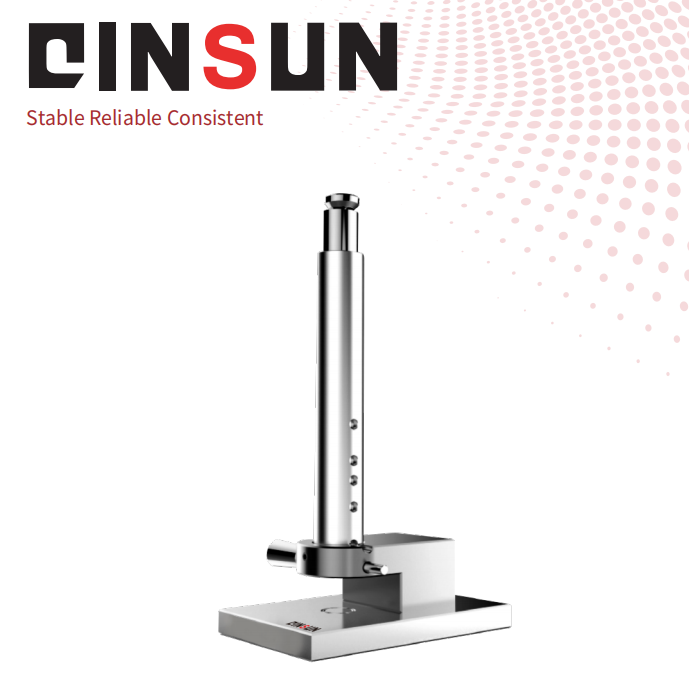
Button falling weight impact tester is used to determine the impact resistance of plastic sew-through flange buttons to a falling mass of 0.84kg (29.5oz), released from a height of 67mm (2.625 inches) or other heights as required. Evaluation Cracking, chipping and breakage, any of which constitutes damage. Test the remaining specimens.
Product Information:
With the equipment the impact resistance of plastic sew-through flange buttons can be determined that a falling mass of 0.84kg (29.5oz) is released from a height of 67mm (2.625inch) or other heights as required. Cracking, chipping or breakage constitute failure.
Features
1. Ensure the vertical alignment of tension;
2. Fixed button edge without affecting its adhesion;
3. Consistent force of 10s continuously;
4. Elevate and fix the position of the test meter through the handle, easy to change samples
5. Horizontal hand wheel, designed to cooperate with ergonomic principles to make operators more comfortable;
6. Safety buckle design makes operation more secure and reliable;
7. The long machine frame can extend the test scope more widely;
8. The concealed spring is designed to greatly increase the pin tightening and ensure the test repeatability;
9. Can reduce the damage caused by slid leakage during test process;
10. Simple design and accurate test results.
Parameter
| Parameter | Specification |
|---|---|
| Operating Mode | Manual |
| Impact Head Weight | 0.84kg |
| Impact Height | 32mm, 44mm, 67mm, 83mm, 95mm, 117mm |
| Body Material | Stainless Steel / Brushed Finish |
| Instrument Weight | 5kg |
| Power Supply | No (Manual Operation) |
| Appearance Size | 100mm (L) × 150mm (W) × 300mm (H) |
Accessoriess
The accessories for push-button impact drills (often referring to impact drills or similar equipment) mainly include the following types, each serving a different function to ensure the normal operation of the equipment:
Switch accessories: such as impact drill switches and gear selector switches, used to control the start, stop, and gear switching of the equipment, are key components for operating the push-button impact drill.
Transmission and impact components: including motors, shafts, sleeves, ratchet mechanisms, etc. These components work together to convert electrical energy into mechanical energy to achieve the impact function. For example, the motor drives the shaft to rotate, the shaft drives the sleeve and ratchet mechanism to move, thereby generating impact force.
Drill bits and chucks: The drill bit is the component that directly performs the drilling operation, while the chuck is used to fix the drill bit and ensure its stable operation. Different specifications and types of drill bits can be replaced according to the operation requirements.
Protective and auxiliary accessories: such as dust covers and limit ropes. Dust covers prevent dust generated during drilling from entering the equipment and protect it from damage; limit ropes are used to control the range of motion of the impact components and prevent them from separating from the main body of the equipment.
Battery and charger (for electric models): Provides power to the electric push-button impactor, ensuring continuous operation. Battery capacity and performance directly affect the device's runtime and efficiency.
Test Procedures
The operation of a button impact tester includes the following steps:
Confirm that the impact testing machine is connected correctly and the power supply is stable.
Prepare the impact specimen and confirm that its size, shape, and surface condition meet the test requirements.
Confirm that the ambient temperature and humidity meet the test standard requirements.
Wear appropriate protective equipment, such as safety glasses and gloves.
Turn on the power to the impact testing machine and start the operating system.
Place the impact specimen on the worktable of the impact testing machine, ensuring the specimen is stable.
Set the impact test parameters, such as impact energy and impact velocity.
Start the impact test program and begin the impact test.
Observe the changes in the impact specimen and record the impact test data.
After the impact test, turn off the impact testing machine and organize the test data.
During operation, always pay attention to safety precautions and perform regular maintenance and upkeep on the equipment to ensure its normal operation.
Maintenance Information
Regularly inspect the impact head and guide structure to ensure smooth impact movement without jamming.
Keep the button clamp clean to prevent residual debris from affecting sample positioning.
Check the tightness of the hidden springs and clamping mechanism to ensure test repeatability.
Clean the stainless steel body surface promptly after use to prevent stains or corrosion.
Store in a dry, stable laboratory environment, avoiding moisture or mechanical impact.
FAQs
1. What is the main function of the Button Impact Machine?
The Button Impact Machine is used to determine the impact resistance of plastic sew-through flange buttons by subjecting them to a controlled falling weight impact. A mass of 0.84 kg is released from a specified height, typically 67 mm, or from other selectable heights as required. The test simulates sudden mechanical impacts that buttons may experience during use. Any cracking, chipping, or breakage observed after impact is considered a failure, providing a clear and objective evaluation of button durability.
2. How is impact resistance evaluated during the test?
Impact resistance is evaluated by visually inspecting the button specimens after each impact. When the 0.84 kg impact head is released from the selected height, it strikes the mounted button specimen. After impact, the specimen is examined for cracking, chipping, or complete breakage. Any of these conditions constitutes damage or failure. If a specimen fails, it is removed from further testing, while the remaining specimens continue to be tested under the same conditions to assess overall performance consistency.
3. What impact heights and test conditions can be selected?
The Button Impact Machine allows multiple predefined impact heights, including 32 mm, 44 mm, 67 mm, 83 mm, 95 mm, and 117 mm. This range enables testing under different impact severities while using the same 0.84 kg impact head. The tester operates manually and does not require a power supply. Its stainless steel body and stable structure ensure consistent alignment and repeatable results during impact testing across different height settings.
4. What design features help ensure reliable and repeatable test results?
The machine incorporates several mechanical design features to improve test reliability. Vertical alignment of tension is ensured during testing, and the button edge is fixed securely without affecting adhesion. A concealed spring design increases pin tightening, which helps maintain consistent positioning and repeatability. The long machine frame expands the test scope, while the safety buckle improves operational safety. In addition, the simple mechanical structure minimizes sliding leakage and reduces unintended damage during testing.
