




Search keywords:
product name, product type, model number,
test method, manufacturer, technique, application
-
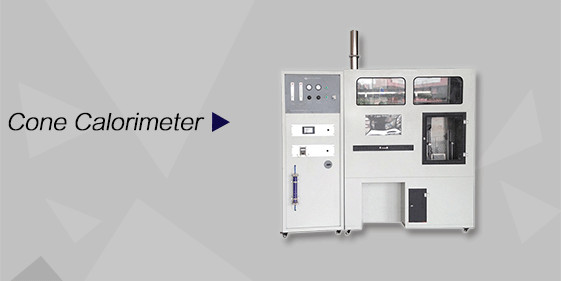
Cone Calorimeter
The import of American VTEC, cone calorimeter ultra high cost performance
more
-
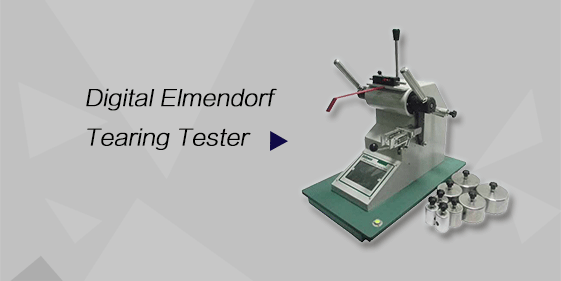
Digital Elmendorf Tearing Tester
Pendulum method test material tear strength, operating more simple, more accurate data
more
-
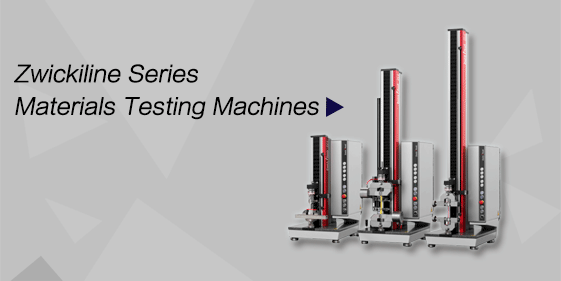
ZwickiLine Materials testing machines
Top of the world's leading universal material testing machine
more
Rattle tester
BACK

Standards:
(1) 16 CFR 1510 – US Regulation for Small Parts and Choking Hazards (2) ASTM F963 Section 4.6.2 – Standard Consumer Safety Specification for Toy Products (3) EN 71-1:1998 Clause 8.16 – European Toy Safety Requirements for Small Parts (4) GB 6675-2003 Annex A.5.3 – Chinese National Standard for Toy Safety
Applications:
Safety assessment of rattles, bells, and sound-emitting toys
Choking hazard evaluation of toy components and accessories
Compliance testing for toys intended for infants and young children
Quality control during toy manufacturing and assembly
Pre-shipment inspection and regulatory verification
Testing of spherical, circular-ended, and irregularly shaped toy parts
Product Information:
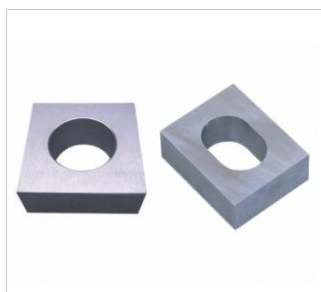
The Rattle Tester, also known as a Bell Rattle Toy Tester, Sound-Emitting Toy Tester, or Anti-Choking Test Device, is designed to simulate a child’s oral cavity capacity to assess potential choking hazards posed by toys or toy accessories. By verifying whether toy components can penetrate standardized elliptical or circular test templates under gravity alone, the tester provides a direct and objective evaluation of compliance with international toy safety regulations related to small parts and choking risk.
Parameters
| Parameter | Elliptical Tester | Circular Tester |
|---|---|---|
| Material | Aluminum Alloy | Aluminum Alloy |
| Dimensions | 80 × 65 × 30 mm | 72.6 × 72.6 × 30 mm |
| Shape | Elliptical | Circular |
| Weight | 320 g | 320 g |
| Operating Force | Gravity Only | Gravity Only |
Features
Accurately simulates the oral cavity capacity of young children
Dual-template design for testing both irregular and spherical toy components
Fully compliant with US, EU, and China toy safety regulations
Gravity-only testing method ensures objective and repeatable results
Lightweight aluminum alloy construction for durability and ease of use
Simple structure with clear pass/fail evaluation criteria
Accessories
(1) Elliptical test template
(2) Circular test template
(3) Fixing clamps for vertical alignment
(4) User operation guide
Test Procedures
Secure the elliptical tester using clamps and ensure vertical alignment.
Place the toy or component in the most likely orientation for insertion.
Allow the specimen to enter the tester under gravitational force only.
Observe and record the penetration depth.
Repeat the procedure using the circular tester for spherical or round-ended toys.
For ball-shaped components, conduct three consecutive tests.
Record the maximum penetration depth for each test orientation.
Maintenance Information
Keep test templates clean and free of debris to maintain measurement accuracy
Inspect templates regularly for deformation or surface damage
Store the tester in a dry environment to prevent corrosion
Avoid impact or dropping to maintain dimensional integrity
Verify dimensions periodically if used in high-frequency testing environments
FAQ
1. What is the core advantage of this product?
The core advantage of the Rattle Tester lies in its ability to directly simulate a child’s oral cavity size using standardized elliptical and circular templates. This enables clear and objective identification of choking hazards using a gravity-only test method that aligns with international safety regulations.
2. Are the test results reliable?
Yes. The tester relies solely on gravitational force and standardized penetration criteria, eliminating operator-induced variability. This approach ensures consistent, repeatable, and regulation-compliant results suitable for quality control and certification testing.
3. Which international or industry standards does it comply with?
The Rattle Tester complies with major toy safety standards including 16 CFR 1510. ASTM F963. EN 71-1. and GB 6675. making it suitable for global market access.
4. Why is this product important?
This tester plays a critical role in preventing choking incidents by identifying small parts hazards before products reach the market. It helps manufacturers meet regulatory requirements and reduce safety risks and recall potential.
5. Which industries or fields is this product suitable for?
The product is widely used in toy manufacturing, quality inspection laboratories, third-party testing organizations, product development centers, and regulatory compliance testing facilities focused on infant and children’s products.
