




Search keywords:
product name, product type, model number,
test method, manufacturer, technique, application
-
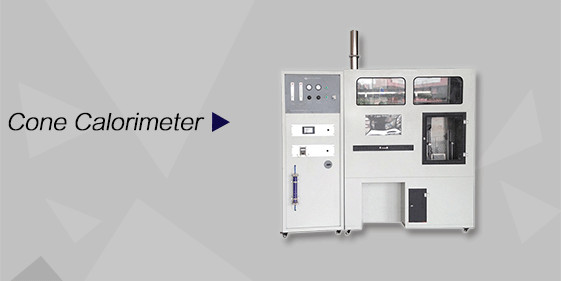
Cone Calorimeter
The import of American VTEC, cone calorimeter ultra high cost performance
more
-
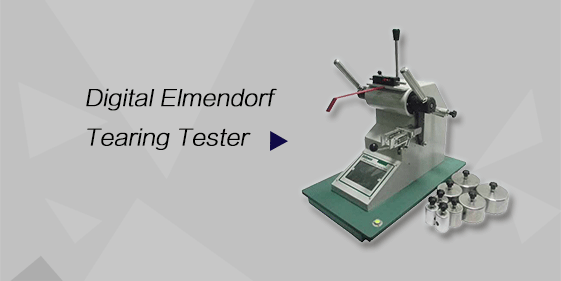
Digital Elmendorf Tearing Tester
Pendulum method test material tear strength, operating more simple, more accurate data
more
-
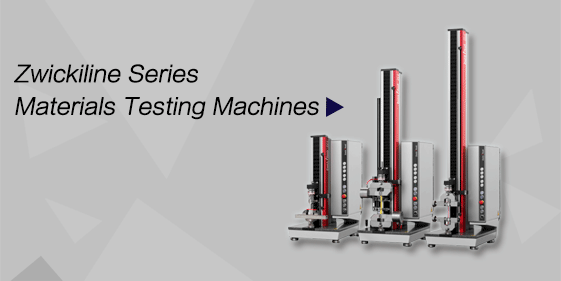
ZwickiLine Materials testing machines
Top of the world's leading universal material testing machine
more
Small Solar Simulator
BACK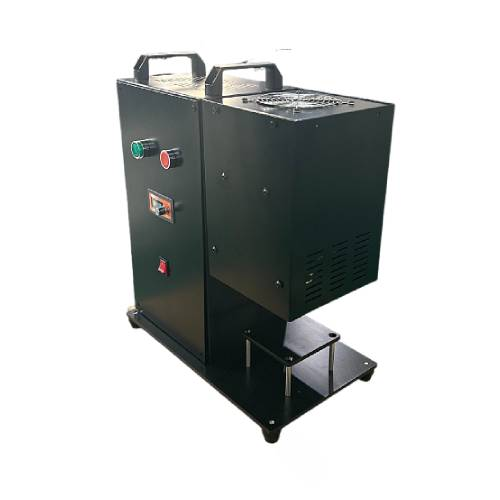


Standards:
Applications:
Photovoltaic Device Testing: Measure short-circuit current (Isc), open-circuit voltage (Voc), fill factor (FF), and photovoltaic conversion efficiency (η) for solar cells or modules.
Photocatalysis & Chemical Research: Conduct photocatalytic degradation, photochemical synthesis, and material response experiments under controlled light conditions.
Material Weathering Assessment: Simulate prolonged sunlight exposure to evaluate aging resistance of coatings, plastics, and cosmetics.
R&D of Photovoltaic Materials: Test new solar materials such as DSSC, PSC, and perovskite under standardized solar spectra.
Ground Testing for Spacecraft: Provide irradiation for solar sensors, thermal control systems, and satellite component verification under near-space conditions.
Product Information:
The Small Solar Simulator is a precision laboratory device designed for the controlled simulation of solar radiation. You can use it to replicate sunlight intensity and spectrum for research and development or production testing of photovoltaic cells, materials, and modules. This simulator enables accurate performance evaluation, material aging tests, and chemical or photocatalytic reaction studies. Its compact design, adjustable irradiance, and stable output make it ideal for laboratory environments requiring reliable and repeatable solar simulation.
Standards
(1) IEC 60904-9 – Photovoltaic Devices: Requirements for Solar Simulators
(2) ASTM E927 – Laboratory Simulation of Solar Radiation
(3) IEC 60904-3 – Measurement of Photovoltaic Current-Voltage Characteristics
(4) ISO 9060 – Solar Irradiance Measurement Standards
(5) ASTM G173 – Reference Solar Spectra for Testing
Features
High-Precision Solar Simulation: You achieve accurate replication of AM1.5G solar spectrum and intensity.
Adjustable Irradiance: You can vary intensity to simulate partial sun or full sun conditions.
Uniform Light Distribution: Ensures ≤±2% deviation across the test area, enhancing measurement reliability.
Versatile Light Source: Choice of xenon lamp or LED array provides flexibility between longevity and spectral fidelity.
Stable Continuous Output: Supports precise IV curve acquisition and photochemical experiments without transient errors.
Compact and User-Friendly: Easy to integrate into R&D labs or production testing stations.
Technical Parameters
| Performance Item | Specification | Notes |
|---|---|---|
| Spectral Matching | AM1.5G, Class A (≤±10% deviation) | Ensures output spectrum closely replicates sunlight |
| Irradiance | 350–1000 W/m², Adjustable | Supports 0.35–1 sun range for diverse testing |
| Spot Uniformity | ≤±2% | Uniform light distribution across the test plane |
| Light Source Type | Xenon lamp or LED array | LED: longer lifespan (~10.000 hours) and higher stability |
| Operating Mode | Continuous steady-state (CW) | Eliminates transient errors from pulsed sources |
| Illuminated Area | D50mm–D200mm | Customizable based on testing requirements |
| Power Supply | 220 V ±10% AC, 50/60 Hz | Standard laboratory power input |
| Cooling System | Air-cooled | Maintains stable light output and extends lamp lifespan |
| Equipment Dimensions | Approx. 0.6 × 0.4 × 0.5 m | Compact design for laboratory tables |
Accessoriess
(1) Light source module (Xenon lamp or LED array)
(2) Optical lens and reflector set
(3) Cooling fan and heat dissipation system
(4) Controller unit with intensity adjustment and spectral calibration
(5) Data acquisition interface for monitoring irradiance
(6) Mounting platform for test samples
Test Procedures
Position the solar cell, module, or material sample on the simulator platform.
Select the desired light source (Xenon or LED) and mode (steady-state CW).
Adjust irradiance to the target level (350–1000 W/m²).
Confirm spectral calibration and uniformity via built-in sensors.
Conduct the experiment, measuring photovoltaic or photochemical response as required.
Record and analyze data through the interface or external instruments.
Power down the simulator and follow cooling and safety procedures before removing the sample.
Conclusion
The Small Solar Simulator is a reliable, high-precision laboratory tool for simulating solar radiation in a controlled environment. You can use it for photovoltaic testing, material research, photocatalysis, and spacecraft component verification. Its compact size, adjustable irradiance, and stable, uniform output make it an indispensable tool for laboratories and R&D facilities.
FAQ
1. What is the maximum irradiance this simulator can provide?
The simulator delivers up to 1000 W/m², adjustable down to 350 W/m² for partial sun conditions.
2. Can I use LEDs instead of xenon lamps?
Yes, the LED array option provides longer lifespan (up to 10.000 hours) and stable spectral output.
3. How uniform is the light across the test area?
Spot uniformity is ≤±2%, ensuring reliable and reproducible results.
4. Can I use this simulator for photochemical experiments?
Yes, the continuous steady-state output supports photocatalytic and chemical reaction studies.
5. Is the simulator suitable for photovoltaic module testing?
Yes, it meets standards such as IEC 60904-9 and ASTM E927 for solar simulator testing of solar cells and modules.
6. What maintenance is required for long-term operation?
You should clean optical components, check calibration periodically, maintain the cooling system, and replace lamps when spectral output degrades.
7. Can it simulate solar exposure for spacecraft testing?
Yes, the simulator can approximate irradiation conditions for ground-based testing of solar sensors and thermal control systems.
