




Search keywords:
product name, product type, model number,
test method, manufacturer, technique, application
-
Cone Calorimeter
The import of American VTEC, cone calorimeter ultra high cost performance
more
-
Digital Elmendorf Tearing Tester
Pendulum method test material tear strength, operating more simple, more accurate data
more
-
ZwickiLine Materials testing machines
Top of the world's leading universal material testing machine
more
Carpet Peel & Tuft Tester
BACK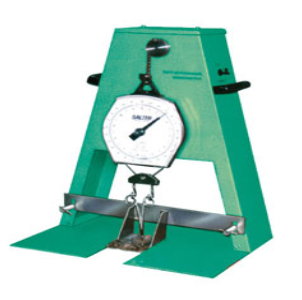


Standards:
Applications:
You can use this tester to assess tuft or loop retention under controlled conditions. Typical applications include:
(1) Laboratory testing of tufted carpets and loop-pile carpets for quality control
(2) Evaluating tuft retention in small sample batches before large-scale production
(3) Testing existing carpets on staircases, commercial areas, or high-traffic zones
(4) Research and development of new carpet constructions and backing materials
(5) Comparative testing of carpets with different fiber types, backing structures, or pile densities
This tester is suitable for all types of tufted and loop-pile carpets.
Product Information:
The Carpet Peel & Tuft Tester is designed to evaluate the retention performance of tufts in tufted and traditional carpets. It measures the force required to pull out individual tufts or loops, providing accurate assessment of the bonding strength between the carpet pile and backing. This instrument is essential for laboratories, quality control, and research applications where carpet durability and pile retention are critical.
Standards
The Carpet Peel & Tuft Tester is designed to comply with international standards, including:
(1) BS 5229: 1975 (1996) — Method for the assessment of pile yarn retention
(2) ISO 4919: 1978 — Determination of tuft or pile withdrawal force in carpets
Parameters
| Item | Specification |
|---|---|
| Maximum Force | 50 lbF / 25 kgF / 250 N |
| Peak Memory | Stores maximum tensile load recorded |
| Measurement Accuracy | ±0.3% of full scale ± 1 digit |
| Safe Overload | 150% of full scale accuracy maintained |
| Units of Measurement | kg, N, or lb (selectable) |
| Calibration | Push-button calibration |
| Control System | IPM – Intelligent Power Management system |
| Power Supply | Rechargeable battery or AC operation |
| Instrument Dimensions (W×D×H) | 430 × 300 × 535 mm |
| Power Consumption | 20 W |
Features
Accurately measures the tuft or loop retention force to assess carpet quality.
Compact and ergonomic design suitable for laboratory or on-site testing.
Peak force memory allows easy recording of maximum tensile load.
Selectable measurement units (kg, N, lb) for international use.
IPM system ensures reliable power management during testing.
Supports both battery and AC operation for flexible testing locations.
Push-button calibration simplifies setup and ensures measurement accuracy.
Accessories
(1) Surgical forceps for tuft gripping
(2) Metal hook for loop-pile carpets
(3) Force-measuring balance (standard 5 kg; optional 10 kg for higher load carpets)
(4) AC power adapter and battery pack
(5) User manual
Test Procedures
(1) Secure the carpet sample on the steel template.
(2) Identify the tuft or loop to be tested.
(3) Hold the tuft with surgical forceps or hook the loop with a metal hook.
(4) Connect the force holder to the measuring balance.
(5) Start the motorized system to gradually increase the pulling force.
(6) Record the maximum force required to pull out the tuft or loop.
(7) Repeat as needed for additional tufts or loops to obtain representative data.
Maintenance Information
Keep the force-measuring balance clean and free from debris.
Check the surgical forceps, metal hook, and template for wear regularly.
Ensure the battery is charged or the AC adapter is functioning properly.
Store the instrument in a controlled environment away from excessive humidity or dust.
Perform periodic calibration using the push-button system to maintain accuracy.
Conclusion
The Carpet Peel & Tuft Tester provides reliable and repeatable measurement of tuft and loop retention forces. It is a crucial tool for carpet manufacturers, quality control laboratories, and research institutions, enabling accurate assessment of carpet durability, pile bonding strength, and compliance with international standards.
FAQ
(1) What is this product?
It is a tester that measures the force required to pull out individual tufts or loops from carpets.
(2) What is this product used for?
It evaluates the retention strength of tufts and loops, helping ensure carpet durability and quality.
(3) How does this product work?
A controlled force is applied to a tuft or loop using surgical forceps or a metal hook, and the maximum pulling force is measured.
(4) Why is this product important?
It prevents premature tuft loss, ensures product quality, and helps comply with industry standards.
(5) Which industries is this product suitable for?
Carpet manufacturing, quality control laboratories, textile research institutions, and commercial flooring evaluation.
