




Search keywords:
product name, product type, model number,
test method, manufacturer, technique, application
-
Cone Calorimeter
The import of American VTEC, cone calorimeter ultra high cost performance
more
-

Digital Elmendorf Tearing Tester
Pendulum method test material tear strength, operating more simple, more accurate data
more
-

ZwickiLine Materials testing machines
Top of the world's leading universal material testing machine
more
Automotive Wire Hot Water(Salt Water)Resistance Tester
BACK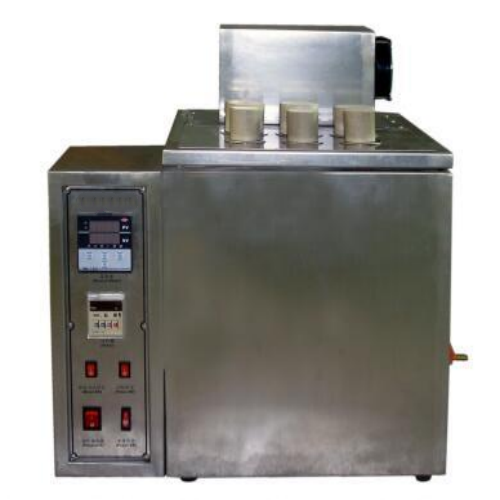


Standards:
Applications:
The tester is primarily used in the following applications:
Automotive primary wires and battery cables
Locomotive and industrial control wires
Connector and harness testing under hot water or saline immersion
Long-term durability assessment under DC voltage and corrosive environments
Verification of automotive wiring harnesses exposed to heat, water, or saline conditions
Product Information:
The Automotive Wire Hot Water (Salt Water) Resistance Tester is engineered for long-term (over 14 days) testing of automotive and locomotive wires under DC voltage and salt water immersion conditions. This system evaluates insulation resistance, voltage endurance, and corrosion resistance of wires exposed to hot water and saline environments. It ensures the durability and safety of wiring systems in automotive and industrial applications.
Standards
This tester complies with and supports the following international standards:
ISO 6722 — Road Vehicles: Low Voltage Primary Cables
SAE J1128 — Low Voltage Automotive Cables
QC/T 730 — Automotive Wire Test Method
JASO D611 — Automotive Wire Electrical Performance
EN 50305 — Electrical Test for Automotive Cables
EN 50395 — Long-term Electrical Performance of Automotive Wires
IEC 60811 — Electric and Optical Fiber Cables – Test Methods
Parameters
| Item | Specification |
|---|---|
| Power supply | 380 V, 50 Hz |
| Heating power | 6000 W (salt water type) |
| Temperature range | Room temperature ~ 99.9°C |
| Control accuracy | ±0.2°C, PT100 corrosion-resistant thermocouple |
| Tank material | Corrosion-resistant ceramic, Ø700 × 420 mm |
| Tank enclosure | PVC panel surrounding the tank |
| Overall dimensions | 800 × 800 × 600 mm (L × W × H) |
| Stirring method | Motor-driven, non-metallic stirrer |
| Water level control | Corrosion-resistant ball valve, automatic water replenishment pump |
| Optional | 48 V DC power supply |
| Optional | High-voltage DC stability tester (DC 0~5 kV) |
Features
Long-term immersion testing capability for over 14 days
Precise temperature control with PID digital controller
Corrosion-resistant tank and components designed for saline environments
Automatic water level maintenance via pump and ball valve
Optional DC voltage monitoring and leakage current recording
Compact design for easy operation and maintenance
Accessories
Motor-driven non-metallic stirrer
Corrosion-resistant ball valve
Water replenishment pump
Optional high-voltage DC stability tester (DC 0~5 kV)
48 V DC power supply (optional)
Test Procedures
Prepare the system by ensuring the water level is adequate and the tank is filled with salt water.
Set the temperature to the desired value (typically room temperature to 99.9°C).
Insert the wire samples to be tested into the test tank.
Activate the DC voltage (if applicable) and adjust the parameters for the testing procedure.
Monitor the temperature, voltage, and current during the test period.
Record the test data, ensuring the wire’s insulation and corrosion resistance are within acceptable limits.
After the test period, review results for insulation resistance and voltage endurance.
Maintenance Information
Regular Cleaning: Clean the tank and components regularly to avoid salt buildup.
Inspect Components: Ensure the ball valve and water replenishment pump are functioning properly.
Temperature Control Check: Verify the PID controller and temperature sensors for accurate readings.
Check for Corrosion: Periodically inspect the tank material and parts for any corrosion or wear.
System Calibration: Perform regular calibration of the voltage and temperature sensors to maintain accuracy.
