




Search keywords:
product name, product type, model number,
test method, manufacturer, technique, application
-
Cone Calorimeter
The import of American VTEC, cone calorimeter ultra high cost performance
more
-
Digital Elmendorf Tearing Tester
Pendulum method test material tear strength, operating more simple, more accurate data
more
-
ZwickiLine Materials testing machines
Top of the world's leading universal material testing machine
more
Water Vapour Permeability Tester
BACK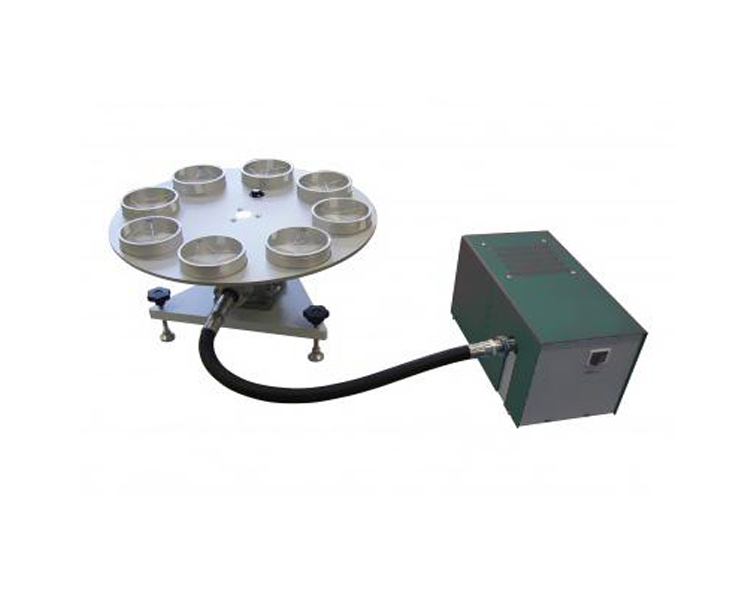


Standards:
Applications:
Suitable for testing water vapour permeability of sportswear fabrics, waterproof-breathable textiles, outdoor functional materials, composite membranes, polymer films, processed paper, and various moisture-proof packaging materials. Its rotating sample holder and adjustable airflow ensure uniform test conditions, making it ideal for high-performance moisture management fabrics.
Product Information:
The Water Vapour Permeability Tester is a constant temperature and humidity instrument designed to evaluate the moisture permeability of waterproof-breathable textiles, sportswear fabrics, polymer films, processed paper, and other moisture-resistant packaging materials. By sealing samples onto cups filled with anhydrous calcium chloride and exposing them to controlled climate conditions, the instrument calculates water vapour transmission through weight change. With precise PID environmental control, adjustable airflow, and a rotating sample holder, it ensures highly stable, repeatable, and multi-standard test results.
Standards
ASTM Standards
ASTM E96 / E96M – Water Vapour Transmission / Permeance Test
ISO / JIS / GB Standards
JIS L1099 – Water Vapour Permeability of Textiles
GB/T 12704 – Test Method for Water Vapour Transmission of Textiles
ISO (Equivalent methods referring to ASTM E96)
Features
Compatible with ASTM, ISO, JIS and GB standards for moisture permeability testing.
Rotating sample holder with adjustable speed for more uniform testing than fixed holders.
Adjustable airflow with imported wind speed sensors for excellent accuracy and stability.
PID temperature and humidity control to minimize fluctuations and prevent overshoot.
Built-in calibration functions to prevent long-term sensor drift.
High-precision temperature and humidity sensors provide stable and reliable data.
SCM control system with a color touch screen for intuitive and intelligent operation.
Automatic calculation of WVT, WVP and PV values directly on the touch screen.
PC software for data recording, temperature/humidity curve tracking and report printing.
Parameters
| Item | Specification |
|---|---|
| Temperature Range | 20–60 ℃ |
| Humidity Range | 40–95% RH (no load) |
| Temperature Accuracy | ±0.5 ℃ |
| Humidity Accuracy | ±3% RH |
| Freezer | Air-cooled airtight compressor |
| Cooler | Finned-type heat exchanger |
| Humidifier | Pot-type (with anti-dry protection) |
| Heater | Finned heater (with over-temperature guard) |
| Fans | 2 sets (upper and lower) |
| Airflow Speed | 0.5–1.5 m/s |
| Sample Holder | Rotating, 2 sections (270 mm diameter) |
| Test Chamber Size | W400 × D360 × H500 mm approx. |
| Power Supply | AC 220V, 50 Hz |
| Overall Dimensions | W1100 × D550 × H1470 mm approx. |
Accessories
Standard Accessories
Moisture permeability test cups
Anhydrous calcium chloride set
PC software and communication cable
Wind speed calibration device
Temperature and humidity sensors
Optional Accessories
Standard calibration membranes
Large-volume test cups
External T/H calibration kit
Data printing module
Operation & Maintenance
Inspect test cups, sealing rings and desiccant before installation.
Prepare and seal the sample according to the selected standard.
Set temperature, humidity, airflow and rotation speed.
Place sealed cups into the chamber and start constant climate control.
Record weight change according to test intervals.
Calibrate sensors periodically to maintain accuracy.
Keep the wind speed sensor and sample holder clean.
Remove scale from the humidifier regularly.
Ensure adequate ventilation for compressor operation.
Dry the chamber completely before long-term shutdown.
FAQ
1.What is a Water Vapour Permeability Tester?
A Water Vapour Permeability Tester is a device used to measure the ability of materials to allow water vapour to pass through them. This is crucial in various industries, including construction, textiles, and packaging, as it helps evaluate the moisture resistance and breathability of materials.
2.Why is Water Vapour Permeability important?
Water Vapour Permeability is essential because it affects the durability and comfort of materials. In construction, for example, materials with appropriate permeability prevent moisture accumulation, which can lead to mold growth and structural damage. In textiles, it ensures that clothing remains breathable and comfortable.
3.How does a Water Vapour Permeability Tester work?
A Water Vapour Permeability Tester typically measures the rate at which water vapour passes through a sample material. It often utilizes a controlled environment where one side of the material is exposed to moisture, and the other is kept dry, monitoring the diffusion over time to determine permeability.
4.What materials can be tested with a Water Vapour Permeability Tester?
Various materials can be tested using a Water Vapour Permeability Tester, including films, textiles, membranes, and coatings. This versatility makes it valuable across multiple sectors, from evaluating packaging materials to assessing the performance of building membranes.
5.How do I choose the right Water Vapour Permeability Tester?
Selecting the right Water Vapour Permeability Tester depends on factors such as the specific materials you need to assess, the range of moisture levels, and the precision required for your tests. It’s important to consider the tester's calibration, ease of use, and any industry-specific standards that need to be met.
6.Are there industry standards for Water Vapour Permeability Testing?
Yes, there are several industry standards for Water Vapour Permeability Testing, including ASTM E96. ISO 15106. and DIN 53122. These standards outline specific methods and conditions for testing to ensure consistency and reliability of results across different laboratories and applications.
