




Search keywords:
product name, product type, model number,
test method, manufacturer, technique, application
-
Cone Calorimeter
The import of American VTEC, cone calorimeter ultra high cost performance
more
-
Digital Elmendorf Tearing Tester
Pendulum method test material tear strength, operating more simple, more accurate data
more
-
ZwickiLine Materials testing machines
Top of the world's leading universal material testing machine
more
Dry Fallen Wadding Tester
BACK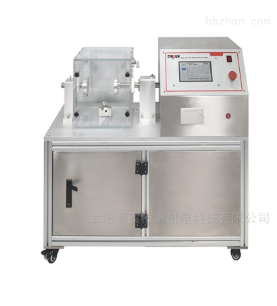


Standards:
Applications:
G275 dry fallen wadding tester, is mainly used for the evaluation of shedding of raw materials used in surgical orders, surgical gowns, and clean clothes.
It is applicable to the performance verification of new products, quality control of the production department, and the of material properties for the third-party testing organization, the product performance verification laboratory, and the quality and technical supervisiondepartment, etc.
Product Information:
The G275 dry fallen wadding tester evaluates shedding performance of medical nonwovens and textiles under dry conditions by subjecting samples to torsion and compression. Air drawn during twisting is analyzed with a laser dust particle counter to count and classify particles. It features a high-resolution touch screen, monitors 8 particle size channels, and stores extensive data, useful for air quality and filter tests.
Standards
YY/T 5056.6 Surgical sheets, surgical gowns and cleansing suits for patients, medical staff and equipment - Part 4: Dry fallen wadding test method;ISO 9073.10 Test method for textiles and nonwovens - Part 10: lint and other granules produced in a dry state;
EN 13795-2-2004 Surgical covers, long coats and non-contaminated suits for patients, medical staff and medical equipment, part 2: test methods
Features
Smart touch screen control panelMicrocomputer control system, more efficient and reliable, programmable 7-inch color LCD touch screen, to achieve control, detection, calculation, data display, printing and other functions.
Transparent anti-static test box
The test box of the instrument is made of special material which is transparent and anti static. The test will not have precision adsorption, and it can also observe the operation of the instrument in real time, which is safe and reliable.
Compact structural design
The special structural design of the instrument ensures that the test device producing combined action of torsion, compression and resetting to test pieces, fully meets the requirements of the standard. The test data has good repeatability and accurate data.
Parameters
| Control mode: smart touch |
Air sampling flow: 28.3L/min |
| Test speed: 60 times / minute |
Sampling time (ie sampling amount): 20 kinds from 0.5min to 10min. |
| Rotation angle: 180 degrees / per time (clockwise, counterclockwise alternate) |
Optional sampling time (ie: 14.15L,28.3L ...... 283L a total of 20 sampling quantities are available) |
| Diameter of disk:₲82.8mm |
Minimum measurable particle size: 0.3um |
| Starting distance: (between two discs) |
Interval time: 1s ~ 10s 10 options available |
| Stroke of moving plate: straight line) |
Weight:55kg |
| Maximum sample concentration allowed: 35.000 / L |
Power supply:220V 50Hz |
| Particle size channel: :0.3. 0.5. 0.7. 1.0. 2.0. 5.0. 7.0. 10.0 um (eight) |
Dimension:85cmX60cm×90cm |
Accessoriess
A brief description of the accessories for the atomization tester is as follows:Core Components: Fogging cup (for holding the sample), cooling tray/plate (providing a cooling environment), glass plate (for gloss method testing) or aluminum foil (for gravimetric method testing).
Measuring Instruments: Gloss meter (for measuring gloss changes), electronic balance (high precision, for weighing changes in aluminum foil weight).
Auxiliary Accessories: Sample clamping ring (for fixing the sample), beaker (for holding the medium), sealing ring (to ensure airtightness), sampler (for taking and placing samples).
Calibration Supplies: Calibration plate (for calibrating the measuring instrument), standard samples (for verifying test performance).
Test Procedures
The operation method of the atomization tester includes the following steps:Sample Preparation: Pre-treat the sample according to the testing standards, such as cleaning, drying, and aging under specific conditions.
Instrument Settings: Adjust the instrument's temperature, humidity, airflow speed, and other parameters according to the characteristics of the sample and testing requirements.
Test Execution: Place the sample in the test chamber, start the instrument, and record the test time and the amount of mist in the mist collection device.
Data Analysis: Calculate the atomization rate, mist distribution uniformity, and other indicators based on the test data to evaluate the sample's atomization performance.
When operating the atomization tester, users should pay attention to the following:
Ensure the sample is clean and dry before testing.
Adjust the instrument's temperature, humidity, airflow speed, and other parameters to simulate the temperature and humidity conditions in actual application scenarios.
Record the test time and the amount of mist in the mist collection device.
Calculate the atomization rate, mist distribution uniformity, and other indicators based on the test data to evaluate the sample's atomization performance.
FAQ
1. What is this product?The dry fallen wadding tester evaluates the tendency of textiles, nonwoven fabrics, carpets, and fiber-based materials to release fibers or lint under mechanical agitation in dry conditions. It provides quantitative data on fiber shedding, which is critical for product durability and quality control.
2. What is it used for?
It is used to assess shedding performance of clothing, home textiles, industrial fabrics, and nonwovens. It helps manufacturers control product quality, optimize fiber blends, evaluate surface treatments, and ensure compliance with industry standards.
3. How does it work?
Samples are subjected to standardized mechanical agitation or tumbling in the tester. Released fibers are collected on filter pads or trays, and the mass or quantity of fallen fibers is measured. Test parameters, such as duration, agitation speed, and sample size, are adjustable to simulate real-life wear conditions.
4. Why is it important?
Excessive fiber shedding affects product aesthetics, performance, and safety. Accurate testing ensures compliance with textile and nonwoven standards, improves consumer satisfaction, and supports R&D in fiber blends, finishing techniques, and surface coatings.
5. Which industries use it?
Widely used in apparel manufacturing, home textiles, automotive interiors, nonwoven production, filtration materials, and laboratory research for fiber-based products.
