




Search keywords:
product name, product type, model number,
test method, manufacturer, technique, application
-
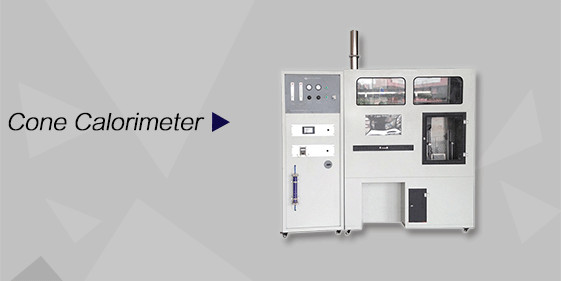
Cone Calorimeter
The import of American VTEC, cone calorimeter ultra high cost performance
more
-
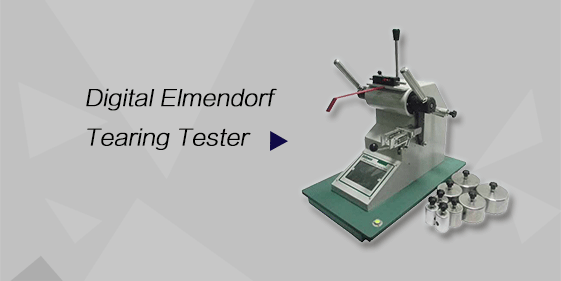
Digital Elmendorf Tearing Tester
Pendulum method test material tear strength, operating more simple, more accurate data
more
-
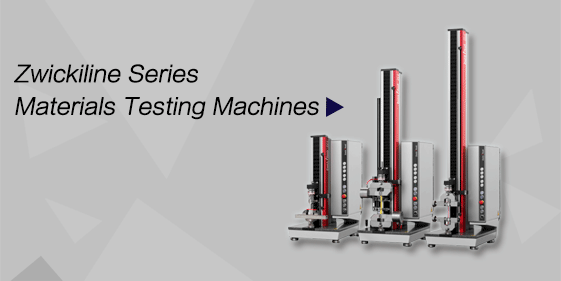
ZwickiLine Materials testing machines
Top of the world's leading universal material testing machine
more
Safety Helmets Impact and Penetration Resistance Tester
BACK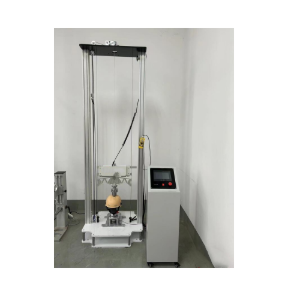


Standards:
Applications:
(1) Impact resistance testing for industrial helmets (e.g., construction safety helmets, GB/T 2812 certified)
(2) Impact testing for cycling helmets (road, mountain, BMX)
(3) Impact testing for motorcycle helmets (full-face, modular, open-face)
(4) Penetration resistance testing for climbing helmets and rope-access helmets
(5) Custom helmet testing for sports or military applications
(6) R&D and batch quality control for OEM helmet lines (including EN 960 S/M/L headforms)
(7) Certification testing for GB/T 2811-2019. ISO 6220-2. and CE/EN compliant helmets
Product Information:
The Safety Helmets Impact and Penetration Resistance Tester is a dual-function testing system designed to evaluate helmet safety under both impact and penetration conditions. It ensures compliance with national and international standards, supporting quality control, certification testing, and research applications.
Standards
(1) GB/T 2811-2019 – Helmet safety and impact resistance
(2) GB/T 2812-2006 – Testing methods for impact absorption and penetration resistance
(3) ISO 6220-2 – Road vehicles restraint systems energy absorption test methods
(4) EN 960 – Headforms for protective helmet testing
(5) CE Certification (Conformité Européenne)
Parameters
| Specification | Impact Test | Penetration Test |
|---|---|---|
| Drop Height | 1.000 ±5 mm | 1.000 ±5 mm |
| Hammer Weight | 5.0 ±0.1 kg | 3.0 ±0.05 kg |
| Tip Geometry | Hemisphere (R50 ±1 mm) | Cone (60° ±0.5°, 40 mm min.) |
| Force Sensor | 20.000 N, 5 kHz sampling | N/A (mechanical stop) |
| Data Resolution | 0.1 N | 0.1 mm displacement |
| Frame Height | 4.000 mm | 4.000 mm |
| Power Requirements | 220V/110V AC, 50/60Hz, 800 W | 220V/110V AC, 50/60Hz, 800 W |
Features
(1) Dual-Function Versatility: Rapid fixture exchange allows switching between impact and penetration tests in under 10 minutes
(2) Ultra-Precision Impact Analysis: 5 kg hemispherical hammer with 1.000 mm drop height and 20.000 N force sensor at 0.1 N resolution
(3) Penetration Resistance Validation: 3 kg conical tip hammer (60° ±0.5°, 40 mm min., 45–50 HRC) simulating sharp object impacts
(4) Smart Data Acquisition: Real-time force curves with pass/fail alerts and 1 ms resolution
(5) Industrial Durability: 4 m steel frame with anti-vibration design, IP65-rated control panel
(6) Safety Systems: Light curtain, energy-absorbing base, and emergency stop
(7) Universal Compatibility: EN 960 headforms (S/M/L) and custom 3D-printed headforms for specialized helmets
Accessories
(1) Headform Kit: EN 960 S/M/L sizes with polyurethane skin coating
(2) Hammer Set: Impact (5 kg) and penetration (3 kg) hammers with storage case
(3) Calibration Tools: NIST-traceable force gauge and Rockwell hardness tester
(4) Safety Kit: Light curtain, energy-absorbing base mat, emergency stop button
(5) Software License: HelmetImpact Pro, cloud-connected with API integration for QMS systems
(6) Installation & Training: On-site setup by certified engineers, 16-hour virtual operator training
Test Procedures
(1) Install the helmet on the selected headform.
(2) Select impact or penetration test mode and attach the corresponding hammer.
(3) Set drop height, test parameters, and safety interlocks via the HMI.
(4) Conduct the test; monitor real-time force/displacement curves.
(5) Record peak forces and penetration measurements; evaluate against standard requirements.
(6) Generate automated pass/fail reports and export data for QC or certification.
Maintenance Information
(1) Inspect hammers, headforms, and force sensors regularly for wear or damage.
(2) Clean frame, rails, and fixtures with non-corrosive solution.
(3) Verify calibration of force sensors and drop heights periodically.
(4) Lubricate linear bearings and moving components as per schedule.
(5) Store in a clean, dry environment to maintain precision and service life.
FAQ
1. What is a Safety Helmets Impact and Penetration Resistance Tester?
This device evaluates the ability of helmets to resist impact forces and penetration by sharp objects, ensuring that head protection meets safety standards.
2. How does the impact and penetration test work?
The helmet is subjected to controlled impact drops and sharp-point penetration tests. Sensors or measurement systems record force, deformation, and penetration depth to assess protective performance.
3. What types of helmets can be tested?
It can test industrial safety helmets, construction helmets, bicycle helmets, motorcycle helmets, and other protective headgear designed to absorb impact and prevent penetration injuries.
4. What parameters are measured during testing?
The tester measures impact force, acceleration, deformation, penetration depth, and energy absorption. Data is used to verify helmet compliance with safety standards.
5. Why is impact and penetration resistance testing important?
Testing ensures helmets can protect the wearer from falling objects, collisions, and sharp impacts, reducing the risk of head injuries and ensuring compliance with standards such as EN 397. ANSI Z89.1. or ISO.
