




Search keywords:
product name, product type, model number,
test method, manufacturer, technique, application
-
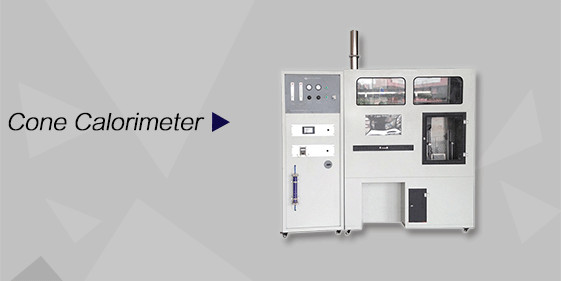
Cone Calorimeter
The import of American VTEC, cone calorimeter ultra high cost performance
more
-
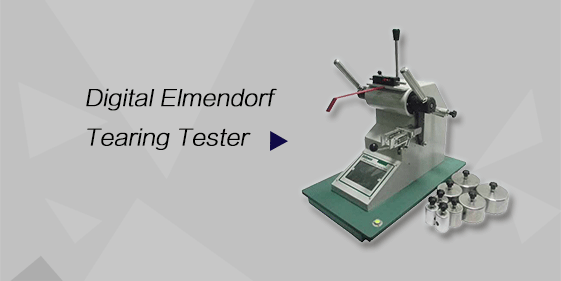
Digital Elmendorf Tearing Tester
Pendulum method test material tear strength, operating more simple, more accurate data
more
-
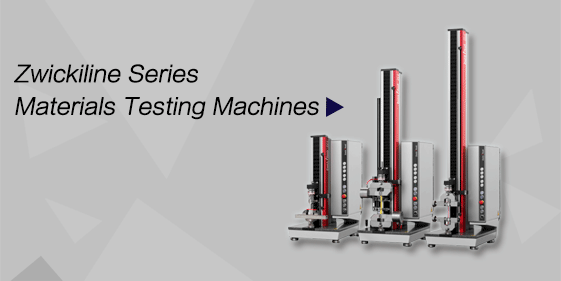
ZwickiLine Materials testing machines
Top of the world's leading universal material testing machine
more
Rubber Mooney Viscosity Tester
BACK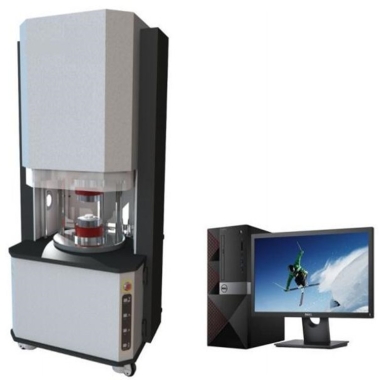


Standards:
Applications:
(1) Natural rubber and synthetic rubber: evaluation of processing viscosity for tire and automotive parts manufacturing.
(2) Rubber compounds: quality control during mixing and formulation.
(3) Footwear midsoles and outsoles: monitoring rubber flow and processability.
(4) Industrial rubber products: hoses, gaskets, belts, vibration dampers.
(5) Laboratory research: R&D on new rubber formulations and additives.
(6) Production monitoring: ensuring consistency of unvulcanized rubber batches.
Product Information:
The Rubber Mooney Viscosity Tester measures the viscosity of rubber under controlled temperature and shear conditions. A rubber sample is loaded into the viscometer cavity and preheated, then the rotor applies shear torque to the sample. The sample produces a resistance moment that is displayed either via a dial indicator or a connected computer, giving the Mooney viscosity value. This test is essential for evaluating processing properties and consistency of rubber compounds.
Standards
(1) GB/T 1232 — Unvulcanized rubber: Determination of Mooney viscosity
(2) GB/T 1233 — Rubber compound: Determination of initial vulcanization characteristics — Mooney viscometer method
(3) HG/T 3242-2017 — Rubber Mooney viscometer
(4) ISO 289 — Unvulcanized rubber: Determination by shear disc viscometer
(5) ISO 667 — Rubber compound: Determination of initial vulcanization characteristics — Mooney viscometer method
Technical Parameters
| Item | Specification |
|---|---|
| Measurement & control temperature range | Room temperature – 200℃ |
| Torque measuring range | 0 – 100 Mooney units |
| Calibration accuracy | 100 ± 0.5 Mooney units |
| Rotor speed | 2 ± 0.02 RPM |
| Measurement points | 0 – 200 points |
| Ambient temperature | 0 – 35℃ |
| Relative humidity | <80% |
| Test pressure | 11.5 kN ± 0.5 kN |
| Air pressure | 0.45 – 0.6 MPa |
Accessories
(1) User manual
(2) Delivery note
(3) Standard Mooney viscometer sample molds
(4) Electronic scale for sample weighing
(5) Scissors for sample preparation
(6) Heat insulation gloves
Features
(1) Measures key processing property: quantifies rubber viscosity under controlled shear and temperature.
(2) Standard compliant: designed to meet GB/T, HG/T, and ISO requirements for Mooney viscosity testing.
(3) High precision: rotor speed and torque measurement are accurately controlled.
(4) Suitable for quality control and R&D: evaluates unvulcanized rubber and compounds.
(5) Easy data acquisition: torque readings can be displayed on dial or computer.
Test Procedures
(1) Prepare two bubble-free rubber samples: diameter ~45 mm, thickness ~3 mm; one sample with a center hole ~8 mm. Total weight ~16 g.
(2) Load the samples into the Mooney viscometer cavity.
(3) Preheat the instrument to the target temperature.
(4) Start the rotor to apply shear torque to the sample.
(5) Monitor the torque resistance via dial or computer to obtain Mooney viscosity.
(6) Record the measurement for analysis.
(7) Repeat as necessary for multiple samples.
Maintenance
(1) Keep the instrument and molds clean; remove residual rubber after each test.
(2) Check and calibrate the rotor speed and torque measurement periodically.
(3) Inspect air pressure and connections to maintain stable operation.
(4) Verify temperature control accuracy with a certified thermometer.
(5) Ensure the environment is within the specified temperature and humidity ranges.
(6) Lubricate moving parts as recommended by the manufacturer.
FAQ
1. What is the primary purpose of this tester?
It measures the viscosity and processability of raw or compounded rubber by assessing its resistance to shear under controlled temperature and speed.
2. Which types of rubber can be tested using this device?
The tester is suitable for natural rubber, synthetic rubber, and rubber compounds used in tires, seals, hoses, and other industrial applications.
3. How does the tester operate?
It heats the rubber sample in a sealed chamber and measures the torque required to rotate a spindle, providing a Mooney viscosity value that reflects the material’s flow characteristics.
4. Which standards does this tester comply with?
It supports international rubber testing standards, including ASTM D1646. ISO 289. and GB/T 16584.
5. Who typically uses this equipment?
Rubber manufacturers, quality control laboratories, and R&D teams use it to evaluate processability, optimize formulations, and ensure consistent product performance.
