




Search keywords:
product name, product type, model number,
test method, manufacturer, technique, application
-
Cone Calorimeter
The import of American VTEC, cone calorimeter ultra high cost performance
more
-
Digital Elmendorf Tearing Tester
Pendulum method test material tear strength, operating more simple, more accurate data
more
-
ZwickiLine Materials testing machines
Top of the world's leading universal material testing machine
more
Reciprocating Friction and Wear Testing Machine
BACK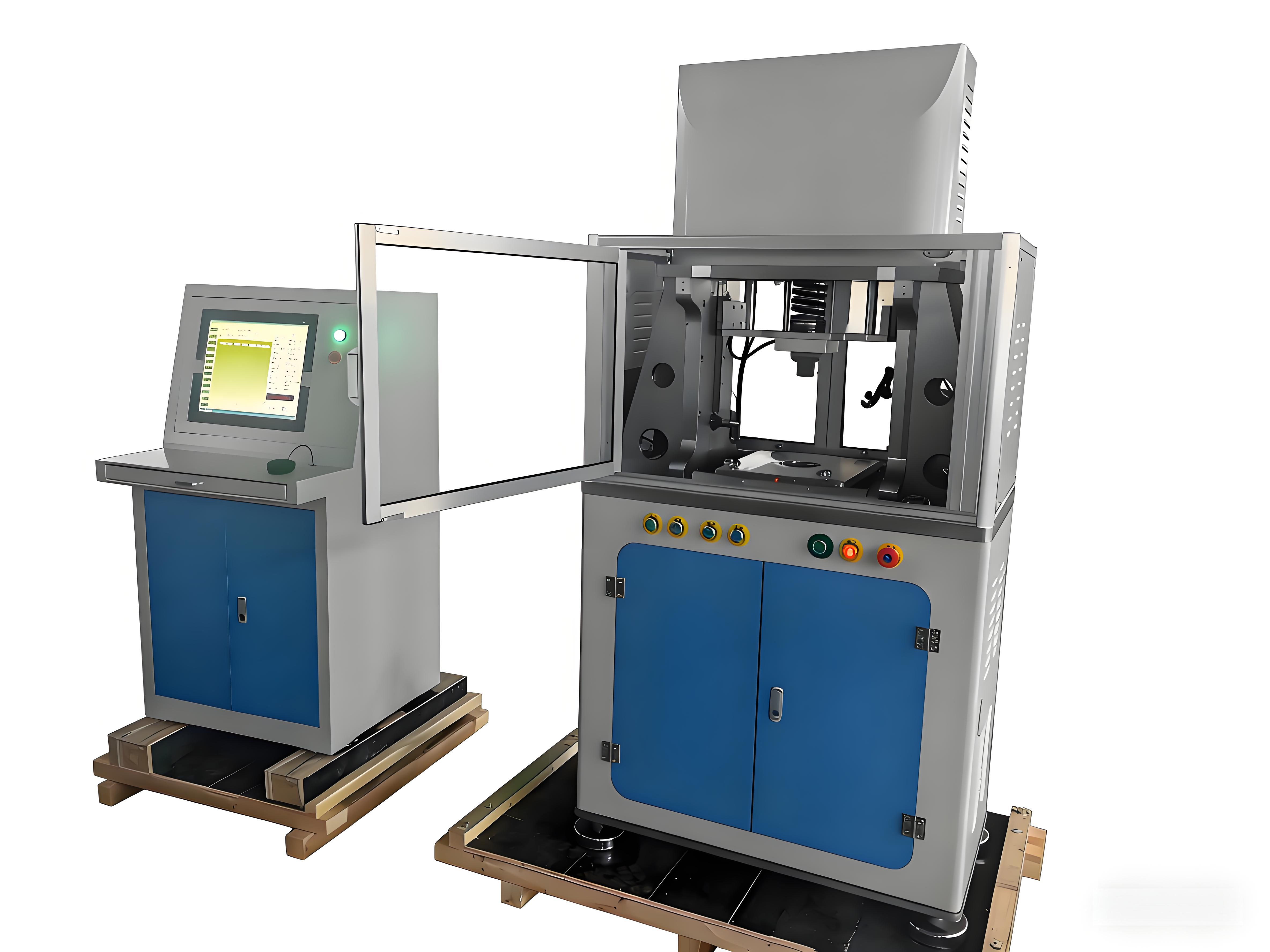


Standards:
Applications:
Product Information:
 Main Applications and Functions
The Linear Reciprocating Friction and Wear Testing Machine is a multifunctional, digitally controlled device primarily designed for evaluating the wear and friction performance of various metals, alloys, ceramics, and coatings under both dry and lubricated conditions. Testing is performed through reciprocating sliding contact under variable loads and sliding frequencies. The equipment is compliant with ASTM G181 and ASTM G133 standards and is suitable for assessing the friction and wear properties of shaft-type, transmission-type, and motion-related component materials.
The device employs a pin/ball-on-disk contact configuration (point contact), capable of simulating point, line, and surface contact friction. Motion modes include reciprocating, rotational, and compound friction. Tests can be conducted under both lubricated and dry conditions. Tested materials include metallic materials such as steel alloys, copper alloys, aluminum alloys, titanium alloys, as well as non-metallic materials such as polyurethane and coated materials.
Primary test parameters include wear volume and friction coefficient. By controlling and varying the applied load, speed, frequency, stroke, test duration, counter-material, surface roughness, hardness, and coating, the system can comprehensively evaluate the performance of materials or surface coatings.
The machine is equipped with an industrial control computer and proprietary software for full-process monitoring. It provides real-time display of applied load, test duration, frequency, temperature, friction force, and friction coefficient. The software automatically records and stores real-time data while plotting live curves. After testing, it can generate and save complete curves and datasets for further processing and reporting.
Safety features include automatic shutdown protection if critical parameters such as applied load or friction force exceed preset limits.
Key Features
Standard Compliance: Fully meets ASTM G181 and ASTM G133 requirements.
Stability and Reliability: Servo-controlled Scotch yoke mechanism ensures precise reciprocating motion.
High Adaptability: Multiple interfaces compatible with desktop and industrial control computers.
Intelligent Control: User permission management; intuitive and user-friendly software interface.
Temperature Control: Equipped with a heating chamber; dry condition: room temperature to 150°C; lubricated condition: room temperature to 400°C.
Expandability: Supports optional modules including helical track tests, electrochemical friction testing, current-carrying tribology testing, and contact resistance testing.
Main Technical Specifications and Parameters
|
No. |
Item |
Technical Specification |
|
1 |
Applicable Standards |
ASTM G181. ASTM G133 |
|
2 |
Contact Type |
Pin/Ball-on-Disk (Point Contact) |
|
3 |
Ball Specimen |
φ6mm, φ10mm; Material: AISI 52100 |
|
4 |
Pin Specimen |
φ6mm, φ10mm; Material: EN8 |
|
5 |
Flat Specimen |
EN31. 40×40×5 mm; Hardness: 60 HRC |
|
6 |
Load Range |
5–200 N (Deadweight Loading) |
|
7 |
Load Resolution |
0.1 N |
|
8 |
Frequency Range |
1–50 Hz (Digital Control, Stepless Adjustment) |
|
9 |
Stroke Range |
1–30 mm (Adjustable; high frequency → short stroke, low frequency → long stroke) |
|
10 |
Friction Force Range |
±200 N |
|
11 |
Friction Force Accuracy |
±1% |
|
12 |
Friction Force Resolution |
0.1 N |
|
13 |
Temperature Control Range |
Dry: Room Temperature ~150°C ±2°C; Lubricated: Room Temperature ~400°C ±2°C |
|
14 |
Motion Mechanism |
Servo-Controlled Scotch Yoke Mechanism |
|
15 |
Reciprocating Friction Mode |
Ball-on-Disk, Pin-on-Disk |
|
16 |
Friction Medium |
Dry, Oil-Lubricated, Grease-Lubricated, Simulated Body Fluids, etc. |
|
17 |
Test Duration Control Range |
1 s – 9999 h |
|
18 |
Control System |
Windows-Based Industrial Control Computer; Real-Time Data Acquisition and Display; Supports User Permission Management |
Measurement and Control System
The control system is independently developed using MATLAB, enabling comprehensive feedback control of parameters such as frequency and stroke. The system architecture is simple, stable, and reliable. The testing machine is computer-controlled using proprietary software developed by the manufacturer, providing real-time monitoring, data acquisition, and control of the testing process.The figure below shows the main interface of the testing system.
The software performs real-time data acquisition and displays all test parameters, including spindle speed and revolutions, reciprocating frequency and stroke, test duration, temperature, friction force, and friction coefficient. The software features rotational and reciprocating modules, which can be switched according to the test requirements.
During the test, the software plots real-time curves such as friction force vs. time, applied load vs. time, temperature vs. time, and friction coefficient vs. time, allowing users to view and analyze the data immediately.
Parameter Setting and Control Panel
The operation and control software integrates data acquisition, real-time display, data storage, test curve plotting, and report generation into a single platform.
Test Report Charts and Graphs
Software Control and Data Processing
The software acquires signals via a controller connected to multiple corresponding sensors. During testing, it automatically records and displays test curves. Test parameters and procedures can be set, while real-time data acquisition, analysis, processing, and storage are performed continuously.
The main software interface displays real-time test parameters including applied load, friction force, test frequency, and friction coefficient. The curve display module allows real-time visualization and storage of test curves, such as applied load vs. time, applied load vs. friction coefficient, and speed vs. friction coefficient.
The report generation module allows users to input relevant test information, including test material ID, lubrication condition, report number, test date, etc. The data sampling interval for output can be configured according to user requirements, with a minimum interval of 1 second.Test data is saved according to the configured sampling interval, outputting parameters such as applied load, friction force,friction coefficient, and temperature in .TXT or .RTF formats. Data can also be exported in Excel format for convenient further analysis.
Main Configuration List
|
Category |
No. |
Name |
Specification / Quantity |
Remarks |
|
Product |
1 |
Friction Testing Machine Main Unit |
1 unit |
— |
|
2 |
Electrical Control Box |
1 unit |
— |
|
|
3 |
Control Computer |
1 set |
Includes LCD monitor, computer host, keyboard & mouse |
|
|
Technical Documents |
1 |
User Manual |
1 copy |
— |
|
2 |
Certificate of Conformity |
1 copy |
— |
|
|
3 |
Packing List |
1 copy |
— |
|
|
4 |
Backup of Data Processing Software |
1 copy |
— |
|
|
Accessories |
1 |
Dedicated Tools |
1 set |
Includes Allen key set |
|
2 |
Special Clamping Fixtures |
4 sets |
— |
|
|
3
|
|
|||
