




Search keywords:
product name, product type, model number,
test method, manufacturer, technique, application
-
Cone Calorimeter
The import of American VTEC, cone calorimeter ultra high cost performance
more
-
Digital Elmendorf Tearing Tester
Pendulum method test material tear strength, operating more simple, more accurate data
more
-
ZwickiLine Materials testing machines
Top of the world's leading universal material testing machine
more
Moisture Management Tester
BACK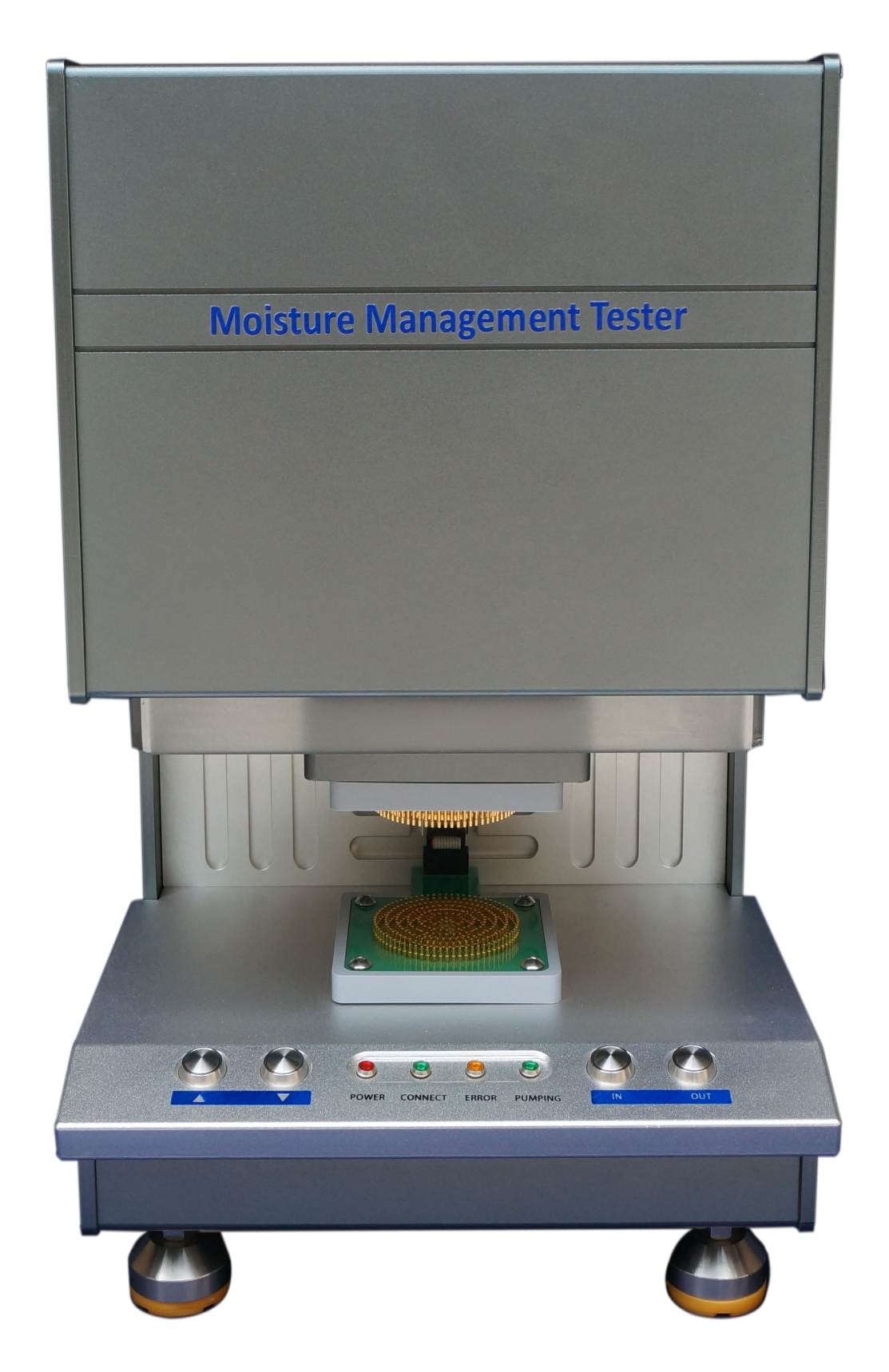


Standards:
Applications:
Quality control for textile and garment manufacturers
Research and development of functional fabrics and apparel
Grading of fabrics based on liquid moisture transport properties
MMTest can classify fabrics into seven types:
Waterproof fabrics;
Water-repellent fabrics;
Slow absorbing and slow drying fabrics;
Fast absorbing and slow drying fabrics;
Fast absorbing and fast drying fabrics;
Highly permeable fabrics;
Liquid moisture management fabrics;
Product Information:
 Functional fabrics have gained wide recognition in the consumer market. For quick sweat absorption and fast-drying textiles, the MMTest liquid moisture management tester evaluates and classifies the liquid moisture transfer properties of fabrics through simple measurements, meeting industry demand for performance assessment.
 Standards
AATCC 195 and GB/T 21655.2 standards are both developed based on the MMTest liquid moisture management tester.
AATCC 195-2017
GB/T 21655.2-2019
Product Specifications
|
Item |
Specification |
|
Dimensions (L × W × H) |
280 mm × 420 mm × 420 mm |
|
Weight |
26 kg |
|
Data Interface |
Wireless WiFi |
|
Power Supply |
AC 110V–220V, 50/60 Hz, 1A |
|
Operating Temperature |
18°C – 29°C |
|
Operating Humidity |
50% – 80% (non-condensing) |
|
Pumping Time |
20 seconds |
|
Liquid Volume |
0.22 g (adjustable) |
|
Test Solution Conductivity |
16 mS ± 0.2 mS |
Standard Configuration
MMTest Moisture Management Tester Main Unit
Conductivity Meter
Spare Silicone Tubing Set
Unlimited Installation Testing Software
Advantages
The MMTest features a durable aluminum alloy anodized housing for long service life. Its open design allows easy placement of specimens without size restrictions, supporting samples from 8 cm × 8 cm up to large formats of 100 cm × 20 cm.
The sensor adopts a magnetic detachable structure for easy cleaning and maintenance.
The liquid pumping system uses a speed-adjustable stepper motor, allowing precise control of liquid volume to meet standard requirements. A built-in “suction button” on the control panel enables one-click reverse suction of liquid back into the reservoir, preventing salt crystallization in the tubing.
The instrument also features a self-check function that automatically detects whether liquid has dripped onto the test plate. If the yellow error indicator flashes, it signals that the tested fabric needs to be removed or the test plate requires cleaning.
Testing Procedure
The specimen is placed on the testing plate with the skin-contact side facing upward. A defined amount of saline solution is dropped onto the center of the fabric surface to simulate human perspiration.
Through testing, the following parameters are obtained:
Wetting time on the skin-contact side
Absorption rate
Wetting radius
Spreading speed
Cumulative one-way transport capability
Overall liquid moisture management capability
The upper and lower testing heads consist of multi-ring gold-plated probes. Saline solution is dropped onto the center of the upper test head and diffuses through the fabric, simulating perspiration. The probes measure resistance changes between adjacent rings in real time, transmitting dynamic data to the computer analysis system.
The software processes the resistance signals and calculates liquid diffusion behavior. The entire test cycle is completed within 2 minutes.
Test Grading and Report Output
The test results can be graded either for each individual fabric specimen or based on the average value of multiple samples. The grading criteria can follow either the AATCC standard or the GB standard. The final grading results help customers easily understand the performance level of the fabric.
All test results and grading levels are displayed in the results list. The data can be printed or saved as an Excel file.
